Maharaja Bhim Singh Rana


Maharaja Bhim Singh Rana (महाराजा भीमसिंह राणा) (1702-1756) was the most powerful ruler of princely state Gohad in northwestern Madhya Pradesh, India. Rana Bhim Singh, son of Rana Jaswant Singh (1690 - 1702), Rana of Gohad, received his education from the privately engaged tutors. He succeeded his father on his death in 1702. He occupied Gwalior 1740-1756. He died due to wounds he had received in the treacherous attack by Marathas at Saloo, near Gwalior Fort.[1]
Contents
- 1 History
- 2 Pachaira War
- 3 Alliance with Maharaja Suraj Mal
- 4 Captures Gwalior fort
- 5 Death
- 6 Constructed historical monuments
- 7 Assessment by Maratha historian
- 8 Suraj Mal responds to Bhim Singh Jat of Gohad
- 9 Suraj Mal Defeats The Mir Bakhshi
- 10 The Jats And The Second Afghan Expedition
- 11 His successor
- 12 महाराजा भीम सिंह राणा गोहद ,ग्वालियर नरेश
- 13 राणा भीमसिंह (1702-1756)
- 14 सुजस प्रबंध में राजा भीम सिंह का वर्णन
- 15 जटवारे के जाट भीमसिंह के ठाठ
- 16 Gallery
- 17 External links
- 18 See also
- 19 References
History
According to Cunningham and William Crooke, Bamraulia gotra jats from village Bamrauli (near Agra) in 1505 founded the city Gohad near Gwalior.[2] [3]
Sinhandev was the founder of Gohad state. Later it developed into an important Jat State. The Jat rulers of Gohad were awarded the title of Rana.
The Ranas were zamindars or Landholders of Gohad, then a small village 28 miles north east of the fortress of Gwalior. They belonged to the Jat caste, they were industrious and of a very warlike disposition. [4]
By the exercise of qualities the family brought themselves between the years 1725 and 1740 to the prominent notice of the Peshwa, Bajirao, and amid the lawlessness and disruptions of the times, managed to assume a quasi independence as lords of Gohad under suzerainty of Marathas. The chief, (Bhim Singh Rana), who accomplished this feat died about the middle of the 18th century, and was succeeded by his nephew. He, (Chhatra Singh Rana), being likewise a clear headed man, contrived to enlarge his borders. [5]
When Bhim Singh Rana succeeded as Rana of Gohad on the the death of his father in 1702, he had 4362 soldiers. He posted 100 soldiers on each garhi. His trusted chieftains were 125 out of them main samants were :Rao Balju of Nirpura, Pancham Singh, Jujhar Singh, Kunwar Aniruddh Singh of Chitora, Kunwar Madho Singh of Itayli, Kunwar Guman Singh of Mudaina, Hamir Singh, Aman Singh, Achal Singh and Thakur Das of Karwas, Vikramdutta of Pipara. [6]
Pachaira War
The ancestor of Bamraulis Jagdeo Singh had come from Agra and stayed at Bhind which was ruled by Aniruddh Singh Bhadauria. There was war between Bamraulias and Bhadauria rulers at place called Pach'hara in which Bhadauria was defeated. This war was fought on bhado sudi 10 friday vikram samvat 1794 (1737 AD). 12000 soldiers of Bhadaurias and 7000 soldiers of Jats took part in this war. Bhim Singh captured 11 elephants, nishans of nagaras, big canons and kept them at Chitora, Karwas, Gohad etc places in his state.[7] In 1739 AD Peshwa accepted the rights of Rana rulers on Gohad. [8][9]
The Ranas kept their capital at Pach'hara for some time and later shifted the capital to Gohad. The brother of Gohad ruler Jagdeo Singh constructed a fort here in samvat 1680 (1623 AD). [10]
After the Pachaira war there was no powerful ruler left on the south of Chambal River who could compete with Raja Bhim Singh.[11]
Alliance with Maharaja Suraj Mal


Maharaja Bhim Singh Rana played an important role in keeping a power balance in Malwa. Delhi Mughal ruler sent Jay Singh of Jaipur as satrap of Malwa in 1729. Malharrao Holkar, Udaji Panwar and Kanthaji Panwar encountered Jay Singh in Mandavgarh fort. Jay Singh succeeded in defeating Marathas with the help of Maharaja Suraj Mal of Bharatpur state. Maharaja Bhim Singh Rana helped Suraj Mal in this mission. This alliance made them the enemies of Marathas.
Even when Maharaja Suraj Mal was so busily engaged in the affairs to his north and east, he did not forget to respond to the frantic call of his tribesmen. Maharaja Bhim Singh Rana had built a fort at Gohad and enlarged his possessions[12] as a result of which Gohad grew into one of three power centres of the Jat rule (The other two being Bharatpur and Patiala). He had occupied the imperial fort of Gwalior when its commandant preferring him to the waiting Marathas capitulated that fort. This ran contrary to the Maratha ambitions and they besieged Gohad (about June 1755). [13] Now the local Jats knocked at the doors of their big brethren, the the Jats of Bharatpur, for help and Bhim Singh sent his emissary Fateh Singh to Suraj Mal. The later thus obliged and despatched with Fateh Singh a force of 500 horse and 2000 foot to Gohad. Encouraged by this support, the Jats initially worsted force of 15000 Marathas. But with the arrival of reinforcements, the Marathas ultimately overpowered the Jats. Those perished in the fighting include 125 Jat horsemen. [14], [15] It is relevant here to take note of an important reference in Marathi despatch. Speaking about the Gohad Jats, it refers at one place, that they lay banking upon the support of Suraj Mal. This shows that as in the case of Jat Rai of Ballamgarh, Suraj Mal all along displayed a patronizing attitude towards the Jat Ranas of Gohad as well. [16] This may account for the grateful Rana [17], [18] as also the Rai often marching in person under the Bharatpur banners. Suraj Mal also displayed similar attitude, among others, towards the Jat chieftains of Bajhor, Kajraura and Karauli [19]as well. Significantly Sudan also makes a casual hint in this direction.
[20]
Captures Gwalior fort
Maharaja Bhim Singh Rana increased his powers and was planning to expand his territories. He marched to Malwa in 1736 but came back and targeted the Gwalior Fort. Marathas were also in race to win the Gwalior Fort. The weak and easy-going Mughal satrap Alikhan, looking to the power of Jats, surrendered the fort to Maharaja Bhim Singh Rana. Meanwhile there was a severe fight between Marathas and Jats to win the Gwalior Fort but Jats won and the Gwalior fort came under Jats. Maharaja Bhim Singh Rana occupied the Gwalior fort from 1740-1756.[21]

Death
In 1756 Marathas attacked the Gwalior Fort under the leadership of Mahadji Sheetole, Yammaji Rahalkar and Motiram Bani with a huge army. Maharaja Bhim Singh Rana was wounded and died in war on Chaitra sudi nawami (Ram nawami) in 1756. His queen Roshani became sati. The fort came in occupation of Marathas.[22]
Constructed historical monuments
Maharaja Bhim Singh had constructed a historical monument Bhimtal in 1754 on the Gwalior fort. His successor Maharaja Chhatra Singh Rana constructed a grand Chhatri near Bhimtal in memory of Maharaja Bhim Singh on the Gwalior Fort. Jat Samaj Kalyan Parishad Gwalior organizes a fair on Gwalior fort on Ram Navami every year in honour of Maharaja Bhim Singh Rana.[23]
Assessment by Maratha historian
The Maratha Historian Balwantrao Bhaiya Saheb Sindhia[24], though a historian and ancestor of Madhav Rao Sindhia four generations back appreciated the bravery of Rana Bhim Singh and has written about Bhim Singh Rana in his book “History of Gwalior fort” as under:
- “They (Kishwar Ali Khan and his people) decided to surrender the fort to Rana Bhim singh. Accordingly some 300 men of Rana were allowed to enter the fortress by the way of Kabootar Khana. They were soon followed by Rana Bhim Singh himself, who accompanied with soldiers on foot and on horse back and took up a position at the village of Goorganwan.
- ...The people of Gwalior were well cared and more protected during the Rana’s regime.
- One day, as the Rana came out of the fort and took his stand at the village of Saloo merely to take a view of the position, and to give battle, the forces on both sides took the initiative without any word of command from their respective leaders.
- The Rana being armless in the midst of the field of battle performed prodigies of valour and receiving wounds retired to Citedal, where he expired and three days after was cremated near the great Tank built by him in accordance with Hindu rites.”[25]
Suraj Mal responds to Bhim Singh Jat of Gohad
Girish Chandra Dwivedi[26] mentions.... Even when he was so busily engaged in the affairs to his north and east, Suraj Mal did not forget to respond to the frantic call of his tribesman, Rana101 Bhim Singh Jat, the zamindar of Gohad Chakla
100. TAL., 105-109; Also Sarkar, Fall II, 438-439; Nur. 32b.
101. Murtaza Husain relates that one of the ancestors of Bhim Singh was a brave but one eyed man. He, therefore, went by the nickname of "Kana". He marched under Birbal to Kabul, where he was killed in fighting. In reward for his services, Akbar granted to the Kana's descendants the zamindari of Gohad. Murtaza Husain records two current version explaining how the word "Rana" came to be associated with names of the Gohad chiefs. According to the one, file above Kana, while accompanying a royal hunting party, bravely killed a lion. Seeing it the Emperor exclaiming "he is Rana not Kana". Thence for- ward he and his successors began calling themselves Rana. The other version goes that the Jat chiefs of Gohad hailed from the family of Nusherwan. As such in order to emphasize their high lineage, they used the word 'Rana' before their names. See Hadiqat. 164.
[p.111]: Gwalior). Having built a fort at that place, this Rana enlarged his possessions102 and in the process occupied the imperial fort of Gwalior when its Commandant preferring him to the waiting Marathas capitulated that fort. This ran contrary to the Maratha ambitions and they besieged Gohad103 (bout June, 1755). Now the local Jats knocked at the doors of their big brethren, the Jats of Bharatpur, for help and Bhim Singh sent his emissary Fateh Singh to Suraj Mal. The latter thus obliged and despatched with Fateh Singh a force of 500 horse and 2,000 foot to Gohad. Encouraged by this support, the Jats initially worsted force of 15,000 Marathas. But with the arrival of reinforcements, the Marathas ultimately overpowered the Jats. Those perished in the fighting included 125 Jat horsemen.104 It is relevant here to take note of an important reference in a Marathi despatch. Speaking about the Gohad Jats, it, at one place, refers to that they lay "banking upon (the support of) Suraj Mal". This may be taken as a prima facie evidence to prove that as in case of the Jat Rai of Ballamgarh, Suraj Mal all along displayed a patronizing attitude towards the Jat_Rana of Gohad as well.105 This may account for the grateful Rana106 as also the Rai often marching in person under the Bharatpur banners.
102. As a result of the effort of Bhim Singh and his successors, Gohad grew into one of the three most powerful centres of the Jat rule (the other two being Bharatpur and Patiala) by the time Wendel penned down his account. See Memoires des Jats, 4, footnote.
103. Hadiqat, 164-165.
104. SPD. II, 45, XXIX, 60 XXVII, 118, also 113; Hadiqat, 165; Also see SPD., I, New series, ed. P.M. Joshi (Bombay: 1957), P. 175. Murtaza Husain Bilgrami reproduces a fanciful story that, during the siege of Gohad, Suraj Mal seized and later married a beautiful female relation of Rana Bhim Singh and that he (Suraj Mal) was then killed by Chitra Singh (a future ruler of Gohad, styled Rana Chitra Singh Lokendra Bahadur). On verification, however, he found the whole thing false Hadiqat, 164-165.
105.SPD., II 45.
106. S.P.D., XXI. 26; William Irvine's article, 'The Bangash Nawab of Farrukhabad' (in J.A.S.B., 1879),97.
Suraj Mal Defeats The Mir Bakhshi
G.C.Dwivedi[27] mentions ....[p.130]:A few weeks later the Mir Bakhshi, Salabat Khan Zulfiqar Jang, who held the governorship of Agra and Ajmer, including the faujdar of Narnaul,8 forced a foolish contest on Suraj Mal. Leaving Delhi in November, 1749 with 15 to 20 thousand men,9 Salabat was proceeding to Ajmer following an agreement between the Court and Bakht Singh (the chief of Nagor) requiring the Bakhshi to extend armed help to the latter in seizing the gaddi of Jodhpur from his nephew and the reigning King Ram Singh. In return Bakht Singh was to assist Salabat Khan in defending Agra and Ajmer against the Maratha interlopers and other local rebels.
8. TAH, 29a and 21a, Siyar, III, 311; cf. Sujan, 40.
9. TAH. 21b is silent about the number. Another contemporary work, Sujan Charitra, (38) seemingly puts it at 20,000, while the author of Siyar (III, 311) whose uncle was present in the Bakhshi's army, speaks of "about 15000 troops".
[p.131]: Halting at Pataudi for some time, Salabat Khan proceeded, ravaging Mewat, to The fort of Nimrana (33 miles south-west of Pataudi), which he wrested from the Jat garrison on 30th December, 1749. The Bakshi now changed his original plan and decided first to go to Agra and attack the Jats. The reversal dismayed his lieutenants who counselled him that "a quarrel with the Jat was improper" at this stage and it should be thought about only when Bakht Singh had Joined them and the Mughal troops had been heartened following their success in the Rajput expedition. But me easy success against an insgnificant garrison had inflated the Bakhshi. He disregarded their reasonable advice, recalled his advance camp and set out for Agra. The night halt was made at Sarai Sobhachand.10
Meanwhile, Suraj Mal had advanced with his forces to a nearby place, Naugaon. Herefrom he sent his Vakil to the Bakshi, entreating him not to despoil the country (Mewat) as it had been assigned to him (by Muhammad Shah)11 and he was living as a royal vassal of the Emperor. Salabat Khan, however, arrogantly rejected his petition. Demanding an explanation for killing Asad Khan, he asked Suraj Mal to pay Rupees two crores, vacate the lands of his jagir and "join the Emperor". The last demand, in the light of Suraj Mal's former affiliations with the late Qamar-ud-Din, impliedly meant that he (Suraj Mal) should break off relations with his son, Intizam-ud-Daula and his group and join the Mir Bakhshi and his friend, the Wazir instead. In the end the Bakhshi warned Suraj Mal either to accept these terms or be prepared for war.12
Suraj Mal accepted the challenge and he swiftly moved with his lieutenants (Gokul Ram, Surati Ram, Balram, Pratap Kachhwaha etc.) the Rana of Gohad and picked a force of over 6,000 horses (rest he left behind) . He divided it into five squadrons to attack and invest the Bakhshi from all sides and he overtook him on the night of 31st December, 1749. Next day (lst January, 1750) at midday hi men surrounded and harassed Salabat's troops under Fateh Ali (the same whom Suraj Mal had helped against Asad Khan, 1745) some 3 miles away from the Sarai. Ali Rustam Khan and Hakim Khan and HakimKhan Kheshgi led re-inforcements two hours-before sunset. But the Mughals could not cope with the mounted Jat matchlockmen. Pannic gripped the Bakhshi's camp. The Jats fired the volley of muskets causing heavy slaughter. Hakim Khan, the commander of the Bakhsni's right wing, was fighting on an elephant. Har Narain charged his horse upon
10. Styar, 111,311-313 SPD., XXVII, 58, XXI, 26; TAH, 21b; Sarkar, Fall, I, 306-308: cf. Sujan, 37-39.
11. cf. Supra. Ch. V, f.n 76.
12. Sujan, 39f. TAH., 21 b, says that Ishawari Singh had called in Suraj Mal's troops.
[p.132]:the elephant and killed the Khan. Ali Rustam who led the vanguard was severely wounded. The Jats achieved a singular victory. They fell upon Salabat Khan's camp and plundered it for four "gharres". The Amrr-ul- Umra was so much struck with terror that it was only the vigilance of his commanders that prevented his cowardly flight.13 At last, after two or three days of strict confinement, the helpless Bakhshi sued for terms, He sent his Vakil (probably Fateh Ali) to Suraj Mal, offering to vacate the lands he had just recovered. Jawahar Singh was then sent to the Bakhshi to dictate peace (c:4th January, 1750) on the following terms
- (i)--the Bakhshi's men would refrain from cutting the 'Peepal' trees,
desecrating the temples or any other object of Hindu worship, (ii) that Suraj Mal would realize Rupees 15 lakhs from the Rajputs as the revenue of Ajmer, by personally sharing in his (Bakhshi's) Rajput expedition, provided that the latter did not proceed beyond Narnaul.14
The phenomenal encounter at Sarai Sobhachand marks a glorious stage in the career of Suraj Mal. No other Jat leader had ever before succeeded in humbling the commander-in-chief of the Mughal Empire. The material gains of this success were neglgible beyond the recapture of his former possessions in Mewat. It, however, enhance is prestige and increased his self-confidence as is evidenced by his accepting the onerous task of realizing the revenue of Ajmer. As for the Empire, the defeat of its highest military official revealed once more its rottenness to the core.
The Bakhshi had to lament his own rashness for his utter disgrace. He did not exercise due caution while embarking upon the hazardous expedition. More than one authority testifies that the contest was forced on Suraj Mal and it was "only in his own defence"15 that he had arisen to confront him. It is noteworthy that despite his being in a position to do so, Suraj Mal refrained from capturing or killing the Amir-ul-Umra. Instead he expressed his regrets over his "impertinence" and assured him of his loyalty as well.16 Undoubtedly, this humility demonstrated his practical wisdom. He attempted to assuage the wounded pride of the Bakhshi, now that his immediate object had been attained. At the same time, it symbolizes his chivalrous magnanimity towards the fallan foe. His extending of asylum later on to his arch enemy, the Wazir, Imad, furnishes another similar example.
It can be inferred from Siyar that after the contest Salabat Khan and Suraj Mal marched to Narnaul, where Bakht Singh came to know of the
13. Siyar, III, 313f; Sujan; 41-51; S.P.D., XXI, 26; XXVII, 58; TAH., 21b
14. Siyar, III, 314-315; Sujan, 51f.
15. Siyar, III, 314; S.P.D., XXVII, 58, Sujan, 40.
16. Sujan, 52; Siyar, III, 314.
[p. 133]: Bakhshi's recent understanding with Suraj Mal. His prospects in Marwar now appeared to be adversely affected by it. He, therefore, prevailed upon the Bakhshi to revert to the original plan, namely to march to Ajmer in his company. This offended Suraj Mal and he personally left his camp, leaving 5,000 horses under Jawahar Singh. His protege,the Rana of Gohad, followed him, leaving 200 horses under Fateh Singh.17
Whatever the justifications, it was perhaps a tactical lapse on the part of Salabat Khan to discard Suraj Mal in preference to Bakht Singh. It is true that both of them were largely inspired by their selfish motives. But the question was one of their relative merit, Salabat could not judge that Suraj Mal-whose superior prowess he had the occasion to taste just then - was unquestionably better to deliver the goods than the one (Bakht Singh) who himself depended upon his (the Bakhshi's) might. As it was, Salabat Khan returned a ruined man, wrapped in disgrace and bankruptcy, neither gaining victory nor money in his Rajput campaign.18 With this also ended the last attempt to retrieve the Mughal fortunes in Rajasthan.
17. Siyar, III, 315; Sujan (52) gives an interesting information here that after this campaign Suraj Mal celebrated his marriage at Mathura; SP.D., XXI, 25, 26 also 34.
18. cf Sarkar's comments (Fall, I, 357). His (Salabat Khan) subahdari of Agra and Ajmer yielded him no revenue, thanks to his fatuous policy of antagonizing the Jats, who alone could have kept that region in order. For details of Rajput expedition see Fall, I, 310ff.
The Jats And The Second Afghan Expedition
G.C.Dwivedi[28] mentions .... [p.138]: Safdar Jang now seriously planned for avenging his (Javed Khan) defeat, the thoughts of which had kept him occupied ever since his return. Ismail Beg, Raja Lakshmi Narain, Raja Nagar Mal and Suraj Mal and others were called in and after consulations to acquire the Maratha help as well was decided upon. Safdar Jang promised to pay Rupees twenty five thousand (or thirty five thousand) and rupees fifteen thousand a day for the Maratha and the Jat armies respectively. Necessary preparations having been made, the Wazir resumed his march. On reaching Agra, he detached 20,000 Marathas against Shadil Khan (the Bangash governor of Kol and Jalesar) while the rest of the army, including the Jats, marched towards Farrukhabad. The Maratha contingent overpowered and put to flight Shadil Khan's small force at Qadirganj (c. 20th March, 1751).42
41. TAH., 39a ff.
42. Siyar, III, 304-305; Amirat, 83; Sujan, 92; S.PD., [I, 32, XXVI, 176; Majma- ul-Akhbar in Elliot VlII, 362; Irvine Bangash Nawabs, 83 and 86; Srivastava, Oudh, 176, 179-180; [bra/nama by Khair-ud-Din Muhammad Allahabadi (My own extract Micro Film copy from Sr. Mus. Or. 1932), l5a. TAH. 27b is wrong in its assertion that Safdar lang did not take the Jats with him that time.
[[p.139]: On hearing about it, Ahmad Bangash raised the siege of Allahabad, rushed to his Capital and entrenched himself at Fatehgarh. Here he worsted a Maratha contingent under Gangadhar Tantia. Meanwhile, Safdar Jang accompanied by the Marathas and the Jats reached the spot and besieged Fatehgarh from three sides except the east. Daily skirmishes took place at the fort but with no decisive gain to either side. When the siege had dragged on for over a month Sadulla Khan with his Rohilla re-inforcement of 12,000 came to the riverside (Ganga) opposite Fatehgarh. Here-from he sent a message to Ahmad Bangash boasting that next day he would bring in the heads of Safdar Jang, Suraj Mal and the Maratha generals.
His approach caused some anxiety to the Wazir and he called Suraj Mal, Malharrao Holkar and Jayappa Scinde for consultation. The decision taken was that Sadulla Khan be prevented from effecting a junction with the Bangash troops across the river. Accordingly, the Marathas under Khanderao and Tantia and the Jats under Jawahar Singh and Rana Bhim Singh (of Gohad) moved forward and crossing the river at Singirampur, they attacked Sadulla Khan's van under Bahadur Khan. The latter fought bravely but could not cope with the Marathas charging him from one side and the Jats from the other. Ultimately he was defeated and killed. Ten to twelve thousand Afghans were either slain or wounded (April, 1751). Bahadur Khan's rout changed the complexion of the campaign. Sadulla, now growing fearful, fled to Amla. Hearing of his flight, Mahmud Khan Bangash also lost heart and hurried across the river to his father at Fatehgarh. Jawahar Singh might have intercepted him effectively but for the objection of Bhim Singh of Gohad who was friendly to the Bangash family. Meanwhile, the Marathas and the Jats, who now commanded the northern side of the Ganga, set ablaze Sadulla Khan's camp. Already disheartened, now the sight of its high flames completely unnerved Ahmad Bangash and the fort garrison. During the same night he left the fort and fled across the Ganga towards Amla. With the Marathas and the Jats pursuing the fugitives closely, their flight while crossing the river at Shikarpur presented a pathetic sight. Many of them either fell to the enemy or were drowned in the river. Next morning (19th April) Fatehgarh was occupied by the victors. Hereafter, the approaching rains brought a lull in the fighting and Safdar Jang went to Lucknow. But the Marathas remained busy ravaging the Afghan country and in the process they amassed huge plunder.43
43. Siyar, Ill, 305-307; Shakir, 84; Sujan, 93-95 (Hereafter it ignores the course of operations in Rohilkhand. May be its author accompanied most of the Jats back home following the suspension of the campaign (cf. Qanungo. Jats, 83), Suraj Mal, however, stayed on till the end); Irvine, Bangash Nawabs, 87-100 (His figures putting Jats at 40,000 seems over stretched); Srivastava, Oudh-180-l85.
His successor
Rana Bhim Singh had no son. Girdhar Pratap Singh fourth and youngest son of Samant Rao Balju, of Nimrol was dopted by Rana Bhim Singh, and succeeded him on his death, 1756. But he could not rule for long as he expired in 1757. [29]
महाराजा भीम सिंह राणा गोहद ,ग्वालियर नरेश
बमरौलिया गोत्र के जाट शासकों का शासन इतिहास की दृष्टि से सबसे गौरवशाली ,गरिमामय , लम्बा और पुराना है , तथा आजादी वर्ष 1947 के समय तक निरन्तर शासन रहा । बमरौलिया जाट शासकों की राजधानी गोहद जिला भिंंड ,ग्वालियर ,बाद में धौलपुर रही है ।गोहद शासन काल सन् 1505 से लेकर 1805 कुल 300 वर्ष उसके बाद धौलपुर सन 1805 से सन 1947तक 142 वर्ष ,देश आजादी तक 442 वर्ष का रहा है , और ग्वालियर दुर्ग पर महाराजा भीमसिंह राणा ने शासन सन् 1754 से सन 1756 मृत्यु पर्यन्त तक किया उनके बाद महाराजा छत्र सिंह राणा ने सन् 1761से 1765 व सन 1781से सन 1783 तक किया । महाराजा छत्र सिंह के शासनकाल में तीन राजधानियां ,गोहद जिला भिंड ,ग्वालियर और बेहट जिला ग्वालियर थीं। विस्तृत शासक विवरण -
गोहद - राणा सिघन देव 1505-1512
राणा अभय सिंह 1512-1531
राणा रामचन्द्र 1531-1550
राणा रत्न चन्द्र 1550-1588
राणा उदय सिंह 1588-1619
राणा नागराज 1619-1654
राणा गज सिंह 1654-1690
राणा जसवन्त सिंह 1690-1702
राणा भीम सिंह 1702-1756
राणा गिरधर प्रताप सिंह 1756-1757
राणा छत्र सिंह 1757-1784
राणा कीर्ति सिंह 1784-1805
धौलपुर राजस्थान शासनकाल -
राणा कीर्ति सिंह 1805-1836
राणा पोहप सिंह अप्रैल1836-दिसम्बर 1836
राणा भगवन्त सिंह 1836-1873
राणा निहाल सिंह 1873-1901
राणा राम सिंह 1901-1911
राणा उदयभान सिंह 1911-1947
राणा उदयभान सिंह धौलपुर ऐसे महाराजा रहे जो शुद्ध सात्विक प्रवृत्ति के थे और जिन्होंने दिल्ली स्थित बिरला मंदिर की आधार शिला तत्कालीन समय के सात्त्विक प्रवृत्ति के हिन्दू महाराजा का चयन महामना पंडित मदन मोहन मालवीय के द्वारा करने के कारण रखी थी ।
वर्तमान में बेहट जिला ग्वालियर दुर्ग ,गोहद जिला भिंड दुर्ग ,ग्वालियर दुर्ग पर महाराजा भीमसिंह राणा छत्री व सरोवर तथा शहर में महाराजा भीम सिंह राणा मूर्ति और धौलपुर महल व छतरियां आदि भी दर्शनीय हैं ।वर्तमान सांसद श्री दुष्यन्त सिंह (झालावाड़,बारां राजस्थान )और उनकी माता श्रीमती बसुन्धरा राजे ,पूर्व मुख्यमंत्री राजस्थान इसी बमरौलिया जाट राज परिवार से हैं।दूसरे दौदेरिया गौत्र के जाट परिवार भी ग्वालियर दतिया जिले के क्षेत्र में पंजाब से आकर बसे और शासन किया । इनके किले पिछोर ,मंगरौरा ,इंदरगढ़ किटोरा ,आदि मुख्य थे ।जिनके वंशज आज भी डबरा में रह रहे हैं ।चम्बल और सिन्ध नदी का क्षेत्र जटवारा कहलाता है ।विस्तृत जानकारी आज के आई टी युग में जाट लैंड डोंट कोम की वेव साइट पर उपलब्ध है। प्रत्येक वर्ष चैत्र मास की रामनवमी के दिन महाराजा भीम सिंह राणा के बलिदान दिवस पर श्रद्धांजलि समारोह तथा हवनयज्ञ के साथ अखिल भारतीय किसान राणा मेला आयोजित होता है ,जो इस वर्ष कोरोना के मद्देनजर स्थिगत किया गया ।
संदर्भ: रणवीर सिंह ग्वालियर
राणा भीमसिंह (1702-1756)
राणा जसवन्त सिंह की मृत्यु के बाद उनके पुत्र राणा भीमसिंह गोहद के राज सिंहासन पर आसीन हुए. उनका समारोह बड़ी धूमधाम से गोहद दुर्ग में मनाया गया. इस समय जाटों की शक्ति बहुत बढ़ गयी थी. गोहद दुर्ग अपनी सृदृढ़ चहार दीवारी के कारण प्रसिद्ध था तथा आस-पास के गाँवों में जाटों के छोटे-छोटे पक्के दुर्ग बने थे. राणा भीमसिंह ने आसपास के छोटे दुर्गों पर सुरक्षा हेतु सैनिक रखे. जाट सेना में लगभग 5000 सैनिक थे. उनके जाट सरदारों की संख्या 125 थी. कुछ प्रमुख जाट निम्न थे. [30] (Ojha,p.60)
- नीरपुरा - राव बलजू
- इटायली - कुंवर माधो सिंह
- करवास - हमीर सिंह
- पिपाड़ा - विक्रमदत्त
- मुढ़ैना - कुंवर गुमान सिंह
राणा भीमसिंह को अपने पिता राणा जसवन्त सिंह से एक सुव्यवस्थित एवं विस्तृता राज्य मिला था. चम्बल तथा सिंध नदियों के बीच गोहद शक्तिशाली राज्य के रूप में अभ्युदय हो चुका था. राणा भीमसिंह 1707 तक निर्विवाद रूप से गोहद पर शासन करता रहा तथा अपने राज्य की सीमाओं के विस्तार हेतु प्रयासरत रहा. [31] (Ojha,p.61)
गोहद दुर्ग पर भदौरिया का आधिपत्य : 4 मार्च 1707 को औरंगजेब की मृत्यु हो गयी. चूड़ामन जाट को मुग़ल सम्राट का जागीरदार बना दिया गया था जिससे गोहद राज्य अकेला पड़ गया था. अटेर राजा गोपाल सिंह भदौरिया ने अवध के नवाब की सहायता से 1707 में गोहद पर आक्रमण कर अधिपत्य कर लिया. गोपाल सिंह का केवल गोहद दुर्ग पर अधिपत्य हुआ था शेष राज्य भीम सिंह के अधिकार में ही था. गोहद दुर्ग पर भदौरिया का अधिकार 1707 से 1739 तक रहा. इस अवधी में भीम सिंह झाँकरी चला गया. उस समय झाँकरी का सामंत राव बलजू था, राणा भीम सिंह का परिवारी चाचा था. राणा भीम सिंह ने 1739 तक झाँकरी गढ़ से शेष शेष राज्य का संचालन किया। [32] (Ojha, p.62)

गोहद दुर्ग पर राणा भीमसिंह का पुनः आधिपत्य : पेशवा बाजीराव (1720-40) दिल्ली अभियान पर आगरा जा रहा था तब गोहद दुर्ग पर अनुरूद्ध सिंह भदौरिया का आधिपत्य था. पेशवा ने भदौरिया से सैन्य सहायता मांगी. अनुरूद्ध सिंह भदौरिया मुगलों का पुस्तैनी सामंत था इसलिए पेशवा को सैन्य सहायता देने से इनकार कर दिया. जिससे नाराज होकर पेशवा ने अटेर के राजा पर आक्रमण कर दिया. (Ojha, p.62)
राणा भीमसिंह जो अपने गोहद दुर्ग पर अधिकार पाने के लिए 32 वर्ष से प्रतीक्षारत था, जाकर पेशवा से मिल गया. [33] जाट-मराठा संयुक्त सेना ने अनिरूद्ध सिंह भदौरिया की सेना के विरुद्ध जटवारे में पचेहरा नामक स्थान पर घमासान युद्ध हुआ. अचानक पेशवा ने मराठा सेना की एक टुकड़ी को जैतपुर के रास्ते अटेर की ओर भेजा। अनिरुद्ध सिंह युद्ध का मैदान छोड़कर अपनी राजधानी बचने अटेर पहुंचा. अनिरुद्ध सिंह के भागने पर राणा भीम सिंह को उसकी कुछ तोपें, नगाड़ों के निशान तथा 11 हाथी मिल गए जिन को वह गोहद लेकर गए. [34] यह युद्ध मराठा सेना की सहायता से भीम सिंह ने जीत लिया.[35] राणा भीम सिंह का भादो सुदी 10 बृहस्पतिवार संवत 1796 के दिन गोहद पर पुनः आधिपत्य हो गया. [36] (Ojha, p.63)
जाट मराठा युद्ध - कुम्हेर दुर्ग 1754 : 20 जनवरी 1754 को मराठा सेनाओं ने कुम्हेर दुर्ग का घेरा डाला था. राजा सूरजमल ने मराठा सेनाओं का सामना करने के लिए पर्याप्त प्रबंध किये. राणा भीम सिंह अपनी 5000 की सेना लेकर सूरजमल के पक्ष में मराठों के विरुद्ध युद्ध में भाग लेने कुम्हेर पहुंचे. [37] इस युद्ध में 15 मार्च 1754 को मल्हार राव होल्कर का पुत्र खांडेराव मारा गया. 18 मई 1754 के दिन मराठा सेनाओं ने कुम्हेर का घेरा उठा लिया. कुम्हेर दुर्ग पर सूरजमल का आधिपत्य बना रहा.(Ojha, p.63)
राणा भीमसिंह का ग्वालियर दुर्ग पर आधिपत्य (1754)
मराठो का ग्वालियर दुर्ग पर आक्रमण - जब मराठा सेनाये 1754 में कुम्हेर दुर्ग का घेरा उठाकर दक्षिण की ओर लौट रही थी, तब उनके एक सेनानायक विठ्ठल शिवदेव विंचुरकर ने ग्वालियर में अपना सैन्य पड़ाव डाला. विंचुरकर ने ग्वालियर दुर्ग पर घेरा डाल दिया और आक्रमण कर दिया.(Ojha, p.64) किलेदार किश्वर अली खां के नेतृत्व में मुग़ल बादशाह की और से नियुक्त राजपूत सैनिक एक माह तक मराठों का सामना करते रहे.[38] मुग़ल साम्राज्य में उस समय षड्यंत्रों का दौर चल रहा था. जिसकी वजह से दिल्ली दरबार ग्वालियर दुर्ग पर मराठों का सामना करने के लिए सेना नहीं भेज सका. किलेदार किश्वर अली ने दुर्ग पर नियुक्त उच्च अधिकारियों से विमर्श किया. किश्वर अली खां के वकील किशनदास ने सलाह दी कि 'दक्षिण के लुटेरों के सामने आत्म समर्पण करने के बजाय गोपाचलगढ़ गोहद के राणा भीम सिंह को सौंपना उचित होगा'.[39] (Ojha, p.65)
किलेदार किश्वर अली खां ने वकील की सलाह के अनुसार गोहद के राणा भीम सिंह को पत्र भेजकर ग्वालियर दुर्ग राणा भीमसिंह को सौंपने के निर्णय से अवगत कराया. [40] (Ojha, p.65)
जाट सेना का ग्वालियर दुर्ग में प्रवेश - किलेदार किश्वर अली खां की अधिकृत सूचना पर राणा भीम सिंह ने मराठों को ग्वालियर से खदेड़ने तथा ग्वालियर दुर्ग पर आधिपत्य करने के लिए जाट सेना फ़तेहसिंह के नेतृत्व में 1000 बन्दूक सैनिक ग्वालियर दुर्ग पर भेज दिए. जिन्हें कबूतरखाने के रास्ते से दुर्ग में प्रवेश करा दिया गया. [41] जाट सेनापति फ़तेह सिंह ने मराठा सेना का सामना करने के लिए मोर्चा लगाया. [42] (Ojha, p.65)
जाट मराठा युद्ध 1754 - मराठा सरदार विट्ठल शिवदेव विचुंरकर बहादुरपुर गांव के निकट मोर्चा लगाये थे. राणा भीमसिंह अपने साथ 5000 पैदल, 1000 घुडसवार, 1000 बंदूकों वाले सैनिक की विशाल सेना लेकर युद्ध के मैदान में पहुंचे. ग्वालियर, नरवर आदि राज्यों के अमीर, सामंत, जमींदार तथा सरदार इकट्ठे होकर मराठों का सामना करने के लिये राणा भीमसिंह के पक्ष में पहुंचे.[43](Ojha, p.66)
राणा भीमसिंह ने गिरगांव के निकट अपना मोर्चा लगाया. जाट सेना तथा मराठा सेना मे घमासान युद्ध हुआ. जाट सेना के सामने मराठा सेना ठहर न सकी. मराठों के बहुत से सैनिक मारे गये तथा घायल हो गये. मराठा सेना बुरी तरह परास्त हुई. राणा भीमसिंह ने विट्ठल शिवदेव विचुंरकर के मोर्चे को बुरी तरह ध्वस्त कर दिया. [44] विट्ठल शिवदेव विचुंरकर अपनी सेना लेकर ग्वालियर से 20 मील दूर स्थित आंतरी भाग गया.[45] कुछ मराठा सैनिकों को भीम सिंह की सेना ने कैद कर लिया. [46](Ojha, p.66)
राणा भीमसिंह का ग्वालियर दुर्ग पर आधिपत्य (1754) - राणा भीमसिंह ने मराठों को बुरी तरह पराजित कर ग्वालियर दुर्ग पर आधिपत्य कर लिया. उसने दुर्ग की सुरक्षा की नये सिरे से व्यवस्था की. किले पर रह रहे उन लोगों को हटा दिया, जिन्हें युद्ध कला का कोई ज्ञान नहीं था. बादशह की ओर से नियुक्त राजपूत दुर्ग रक्षकों को भी हटा दिया, जब्कि किलेदार किश्वर अली खां को उसके पद पर बना रहने दिया. [47](Ojha, p.66)
मराठा रघुनाथ राव का ग्वलियर दुर्ग पर आक्रमण -1755 -
अग्ले वर्ष 1755 मे जब मराठा सेनापति दादा रघुनाथ राव अपने दिल्ली अभियान से दक्षिण की ओर सेना सहित वापस लौट रहा था, तब ग्वालियर दुर्ग पर पुन: घेरा डाला गया. जाट सेना ने भी दुर्ग पर मोर्चा लगाया. दोनों पक्षों मे लगभग एक माह तक युद्ध चलता रहा, लेकिन किसी पक्ष को कोई विशेष नुकसान नहीं हुआ. [48](Ojha, p.67)
मराठों का राणा भीमसिंह पर धोखे से हमला 1756
मराठा सरदार विट्ठल शिवदेव विचुंरकर बहादुरपुर गांव के पास व राणा भीमसिंह ग्वालियर दुर्ग पर अपना मोर्चा लगाये थे. एक दिन राणा भीमसिंह अपने कुछ अंगरक्षकों के साथ दुर्ग से नीचे उतर के ’सालू’ गांव के पास खडे होकर स्थिति का आंकलन कर रहे थे, कि उनको मराठा गुप्तचरों ने देख लिया, उन्होंने मराठा सेनापति विट्ठल शिवदेव विचुंरकर को इसकी सूचना दे दी.(Ojha, p.67)
मराठा सरदार विट्ठल शिवदेव विचुंरकर ने अपने साथ मराठा सरदार महादजी सौतेले को लाकर राणा भीमसिंह को घेर लिया. राणा भीम सिंह घोडे पर भी सवार नहीं थे, फ़िर भी उन्होने युद्ध के मैदान में वीरता और साहस का परिचय दिया. मराठा सरदार विट्ठल शिवदेव विचुंरकर ने राणा भीमसिंह के सिर में तलवार से कई वार कर दिये, जिससे वह गंभीर रूप से घायल हो गये. घायल राणा को उनके अंग रक्षक पालकी में लिटाकर दुर्ग पर ले गये.[49](Ojha, p.67)
घायल राणा भीमसिंह का उपचार किया गया. लेकिन घाव बहुत गहरे थे, जिसकी वजह से तीन दिन बाद सम्वत 1812 चैत्र मास शुक्ल पक्ष नवमी (राम नवमी) (1756 ई.) के दिन उनकी म्रुत्यु हो गई. [50]
राणा भीमसिंह की अन्त्येष्टि: राणा भीमसिंह की अन्त्येष्टि ग्वालियर दुर्ग पर विशाल सरोवर के किनारे पूर्ण हिन्दू धार्मिक कर्म काण्डों के अनुसार हुई. राणा भीमसिंह की छोटी रानी ’रोशन’ भी चिता में बैठ कर सती हो गई.[51](Ojha, p.68)
सुजस प्रबंध में राजा भीम सिंह का वर्णन
सुजस प्रबंध में छठे छंद से 68 वें छंद तक राजा भीम सिंह राणा के युद्धों का विशद वर्णन किया है. इसमें बड़े विस्तार के साथ, अनिरुद्ध या अनुरुद्ध (अटेर का शासक), सिरजा (महादजी सिंधिया) आदि मराठा सरदारों के साथ राजा भीमसिंह राणा के भीषण संग्राम का वर्णन है. कवि राजा भीमसिंह और उनके सैनिकों को सूर्य के प्रकाश के समान और शत्रु सेना को अंधकार के समान बताता है. गोहद राजा भीम सिंह राणा ने अनुरुद्ध (अटेर का शासक) के दल पर जीत प्राप्त की. फलतः संसार में उनका यश असीम होकर स्थापित हुआ. [52] १६ वें छंद में, राजा भीमसिंह राणा के भावसिंह तथा मदन सिंह नामक दो सरदारों के रण कौशल का भी वर्णन किया गया है.
वाजीराव के हाथों से उन्होंने दक्षिण से राज्य छीना था. उनके बल के सामने अनेक राजा भयभीत हुए थे और बड़े बड़े किले वाले शासक हिल गए थे. उन्होंने युद्ध में संघर्ष करके विकट किलों के मालिकों को भी अपने बस में किया था और हिन्दुओं के तिलक के समान गोहद के किले की स्थापना की थी. [53]
गोहद नरेश भीमसिंह ने सिंधु और चम्बल नदी के बीच में एक छत्र राज्य गोहद में किया. महाराजा भीम सिंह राणा अपने तेज के बल पर आगे बढ़ते गए. फ़िर उन्होंने गोपाचल (ग्वालियर दुर्ग) को भी अपने अधिकार में कर लिया. कवि ने भीमसिंह द्वारा ग्वालियर दुर्ग पर अधिकार करने का विशद वर्णन किया है.[54]
कुछ छंदों (छंद 19-31) में , मराठा सरदार ईठल (ईठ्ठल अर्थार्त विठ्ठल शिवदेव) के साथ राजा के युद्ध का वर्णन है इस वर्णन में, कवि ने ईठ्ठल को वर्षा ऋतु के समान कहा है, कहीं दु:शासन के समान और इसका संहार करने वाला भीमसिंह को बताया गया है. कुछ छंदों में, राजा के एक सेनापति फ़तेह सिंह का वर्णन है. राजा भीम सिंह ने कुछ सेना का संहार किया. तब बलसाली सेना को आगे की ओर लगाया. बीच में फतेहसिंह को खड़ा किया और उनकी पीठ पर अर्थात उसकी रक्षा के लिए स्वयम जम गए.[55] सिरजा (महादजी सिंधिया) के दल ने मैदान में दलों को देखा. परिणामस्वरूप तलवारें लड़ गई और विशेष भयंकर युद्ध होने लगा. [56] एक समय ऐसा आया जब जब यदुवंश के योद्धा अति क्रोधित हो गए थे. उनके सेनापति फौजदार फतेहसिंह थे. उन्होंने वागली काट कर घोर युद्ध किया और शत्रु-दल को मैदान से उखाड़ कर धरती पर सुला दिया. इस प्रकार भीमसिंह के सामंत सरदारों ने राजपुत्र की मर्यादा का निर्वहन किया. फलतः महादजी सिंधिया के सैनिकों के सिर मैदान में गिरने लगे. राजा भीम सिंह ने भी तलवार से युद्ध किया. इसका फल यह हुआ कि दक्षिण दिशा से आई सेना मैदान छोड़ गई. वह सेना पाँच कोस पीछे हट गई. [57] गोहद नरेश राजा भीमसिंह ने युद्ध जीत लिया. फतेहसिंह सुरपुर चले गए. [58] युद्ध में पूर्ण विजय पाकर गोहद नरेश राजा भीमसिंह का यदुवंशी दल घर लौट आया. इस विजय ने राजा का यश बहुत बढाया. ने युद्ध जीत लिया. फतेहसिंह सुरपुर चले गए. विजय के बाद राजा गोपाचल (ग्वालियर दुर्ग) आ गए. [59]
ईठ्ठल ने एक बार हारने के बाद कुछ दिन पूरी तरह संभलकर फ़िर से आक्रमण कर दिया. [60] संदेश वाहक ने सूचना दी कि ईठ्ठल ने सेना लेकर तथा अच्छे योद्धा एवं हथियारों के साथ फ़िर मैदान में आया है. [61] फ़िर लड़ाई की ख़बर पाकर राजा के सभी सरदार एकत्रित हुए. उनकी सेनाओं के बम्ब तथा नगाड़े बजने लगे. सबको विश्वास था कि फ़िर तीसरी बार महाभारत होगा. [62] स्वयं महादजी सिंधिया, उसके शूरवीर तथा समस्त सरदार आदि गोपाचल (ग्वालियर) और उसके राजा भीमसिंह की शक्ति को जानते थे. साथ ही इस बार उनकी परीक्षा लेने का इरादा रखते थे. [63]युद्ध भूमि में ऐसा अवसर आया की महादजी सिंधिया के दलों से गोपाचल के दलों की मुठभेड़ होने लगी. तब दक्षिण की मराठा सेनाओं का रंग देखकर राजा भीमसिंह भी मैदान में कूद पड़े. [64] इस प्रकार महाराजा भीमसिंह ने युद्ध में एक बार भी जीत अपने हाथों से बाहर नहीं जाने दी. उन्होंने दुष्ट आक्रमणकारियों के दलों को जीत कर पृथ्वी को अपने अधिकार में कर लिया. उन्होंने दक्षिण से आए मराठा दलों को पीट कर गोपाचल (ग्वालियर) को ले लिया.[65] राजा भीमसिंह के साथ युद्धभूमि में भाग लेने वाले अनेक शूरवीर शहीद हो गए थे, लेकिन राजा ने उनको (शत्रुओं) को हराकर यश कमाया और रण में शहीद शूरवीर स्वर्ग को चले गए. [66]
वसंत ऋतू के चैत माह में राम का अवतार हुआ था. इसीलिए उस दिन को रामनवमी कहा गया है. इस दिन स्वर्ग के द्वार खुले हए थे. इसी दिन गोहद नरेश महाराजा भीमसिंह स्वर्ग सिधार गए थे. [67]
राजा भीमसिंह का बलिदान हो गया. मराठा दल को हनन के बाद राणा भीमसिंह ने ऐसा युद्ध रचा कि सागर के तटों के पार तक उनका यश गया.[68] सभी ने एकसाथ उस सम्पति की रक्षा की और दुःख को सहन करते हुए कमर बाँध कर यह कार्य किया और हरनाथ ने अपने समस्त यौद्धा सरदार और पंचों को बुलाकर बड़े संयम के साथ एक बात कही. अब दक्षिण के समस्त दल क्रोधित होकर हमारे ऊपर आक्रमण करेंगे. अतः हम सब का परम धर्म है कि अपनी मातृ-भूमि को दांतों से पकड़ कर अपने पास रखें. किसी भी स्थिति में शत्रु को उस पर अधिकार न करने दें. [69]
ईठ्ठल के नेतृत्व में दक्षिण के दल सज-धज कर, संगठित होने के बाद, गढ़ गोहद पर आक्रमण के लिए आ गए. उनके आक्रमण से अनेक राजा कांपने लगे. दक्षिण दिशा अर्थार्त मराठा क्षेत्र में यह ख़बर फैली हुई थी कि मध्यदेश में एक राजा ऐसा था, जो वीर एवं शक्ति शाली था. भीमसिंह उसका नाम था. तलवार के बल में उसकी आन थी. उसने सब देशों को जीता और इसमें नीति और मर्यादा का पालन भी किया. ...इस तरह गोहद देश के वीर संग्राम करते हैं. उनके यौद्धा भी मिलकर युद्ध में सामिल होते हैं. अतः उन वीरों के सामने महादजी सिंधिया का बल क्षीण हो जाता है. पराजित सेना निकल कर जाने का मौका तलाश करती है और अंततः दक्षिण की ओर वापिस हो जाती है. गोहद की वीरता का यश देश-देश में फ़ैल जाता है. [70]
- गढ़ गोहद सब सिमिट लरि सिरजा कौ बल षोई ।।
- राषी सब वम्हरोलियानि सार धार धर सोई ।।59।। [71]
अर्थ- गढ़ गोहद की रक्षा के लिए सब लोग एक होकर लड़े हैं और इस तरह सिंधिया के बल को ख़त्म किया है. इस तरह बमरौली से गोहद आए बमरौलियों ने तलवार की धार से अपनी मान-मर्यादा की शान रखी. ।।59।। [72]
गढ़ गोहद पर ईठल की हार हो जाती है. और इस प्रकार गोहद को जीतने का उसका गर्व ख़त्म हो जाता है. [73] शत्रुदल संघर्ष त्याग कर दक्षिण दिशा की ओर चला गया. वहां पर करबद्ध होकर पेशवा के सामने उपस्थित हुआ और हाथ जोड़कर प्रार्थना की, कि मैंने गोहद की शक्ति को न समझ कर खंग धारण करके उससे लड़ाई लड़ डाली थी, लेकिन बात बनी नहीं. मैंने जब रणभूमि में देखा सिर लुढ़क रहे हैं, शरीर कटे पड़े हैं और राजा को युद्ध में देखा तो समझ लिया कि इसको झुकाना और गोहद पर अधिकार करना सम्भव नहीं है. [74] ईठ्ठल की बातें सुनकर पेशवा के मन में इस बार एक खटक पैदा हो गई. वह सोचने लगा कि मैंने दसों दिशाओं में फैले राजाओं को हरा दिया है, लेकिन मेरी सेना गोहद पर हार गई है.[75]
छंद 63 से 68 तक में कवि राजा भीमसिंह के पचैरा युद्ध का वर्णन करते है. राजा भीमसिंह ने हाथी के कंधे पर बैठकर पचैरा का युद्ध किया था. जदुवंश के उस श्रेष्ठ राजा ने एक शूरवीर की भांति भली प्रकार पचैरा के क्षेत्र में उत्साहपूर्वक युद्ध किया. [76]
यदुवंशियों की सेना आगे सामने की ओर चल रही थी और हरनाथ राजा की दाहिनी ओर का मोर्चा संभाल रहा था. गर्जना करते हुए तोपों के गोले सेना के बीच में गिर रहे थे. राजा के साथ लाल सिंह तथा चामुण्डराय जसे योद्धाओं का भी उल्लेख मिलता है.ये योद्धा शत्रु सेना के बीच घुस जाते थे. इस पर उनके साथ भयंकर युद्ध होने लगता था. इस युद्ध को बालि के साथ हुए युद्ध जैसा कहा जा सकता है. योद्धा लालसिंह कट कर मैदान में गिर गया. उसके साथ जितने शूरवीर थे, उन्होंने भी युद्ध भूमि में अपने शरीरों को समर्पित कर दिया. इन सब के बल पर राजा युद्ध में आया था और विजय प्राप्त की.[77] गोहद नरेश युद्ध भूमि में योद्धाओं को मारकर सुशोभित हुए. उन्होंने उदंड राजाओं को दण्डित करके नीति के तेज की रक्षा की. उनकी वीरता और नीति रक्षण की प्रकृति का यश, समुद्र पार के राजाओं तक भी पहुँच गया था. वे समझ गए थे कि गोहद नरेश दुर्बलों के प्रति सोचते हैं और सब के साथ नीति का पालन करते हैं. उनके सामने जो मैदान में खड़ा होता है उनके साथ संघर्ष करता है और जिस तरह पानी का बुलबुला थोडी देर में ख़त्म हो जाता है, उसी तरह रण भूमि में खड़ा होने वाला शत्रु का दल, थोडी देर में ख़त्म हो जाता है. ऐसे राजा समर भूमि में, शत्रु सेना का सफाया करके, एक बलशाली योद्धा की भांति गोहद लौट आए थे. [78]
जटवारे के जाट भीमसिंह के ठाठ
- गोहद के राजा हुये सच मे बहुत महान।
- जटवारे की आप थे सच मे ऊंची शान।।
- किया तिरेपन वर्ष तक जटवारे पर राज।
- गोहद को जो दुर्ग है पहचान बना है आज।।
- मददगार सबके रहे किया न कोई भेद।
- मगर मराठा ने किया खानी थाली मे छेद।।
- नीरपुरा इटायली बनी गढ़ी करवास।
- गांव मुढ़ैना पिपाहड़ा है जाटों का वास।।
- तौमर और भदौरिया चंबल रही कछार।
- पर जाटों ने क्षेत्र मे मानी कभी न हार।।
- सन पंद्रह सौ पांच मे हुआ दुर्ग निर्माण।
- जीर्णशीर्ण उस दुर्ग का हो फिर से निर्माण।।
- महाराज यशवंत ने दिया भीम को राज।
- भीमसिंह के दुर्ग पर अब शासन कि राज।।
- मगर धरोहर जाट की है जाटों के बीच।
- जाटों का दायित्व है उसे पुनः दें सींच।।
रचना: भूपेन्द्र सिंह राणा
Gallery
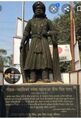
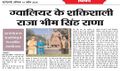
Maharaja Bhim Singh Rana of Gohad
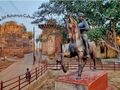
Bhim Singh Rana Statue Gwalior
Bhim Singh Rana ki Chhatri
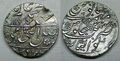
Silver Rupee of Rana Bhim Singh from Gwalior Fort Mint with Pistol as Mintmark


External links
See also
- Akhil Bharatiya Kisan Rana Mela Gwalior
- Girdhar Pratap Singh
- Maharaja Chhatra Singh Rana
- Kirat Singh Rana
- Bamraulia: For the gotra history of Maharaja Bhim Singh Rana
- Jat Samaj Kalyan Parishad - Organization of Jats in Gwalior
References
- ↑ http://www.4dw.net/royalark/India/dholpur2.htm
- ↑ Dr. Ajay Kumar Agnihotri (1985) : Gohad ke jaton ka Itihas (Hindi), Nav sahitya Bhawan, New Delhi, p.14-15
- ↑ JN Sharma: Jaton ka navin Itihas,p.46
- ↑ An Historical Sketch of the Native States of India in Subsidiary Alliance with the British government, Elibron Classics,p.93
- ↑ An Historical Sketch of the Native States of India in Subsidiary Alliance with the British government, Elibron Classics,p.93
- ↑ Dr. Ajay Kumar Agnihotri (1985) : Gohad ke Jaton ka Itihas (Hindi), p. 19
- ↑ Dr. Ajay Kumar Agnihotri (1985) : Gohad ke Jaton ka Itihas (Hindi), p. 21
- ↑ Dr. Ajay Kumar Agnihotri (1985) : Gohad ke Jaton ka Itihas (Hindi), p. 21
- ↑ K.C.Luwai:Gwalior State Gazetteer, Part I, p. 217
- ↑ Bachchoo Singh Nauhwar: “Karwas Ki Garhi (Bhind), Jat-Veer Smarika, Gwalior. 1992, p. 48
- ↑ Dr. Ajay Kumar Agnihotri (1985) : Gohad ke Jaton ka Itihas (Hindi), p. 24
- ↑ Memoires des Jats, 4, f.n.]
- ↑ Hadiqat, 164-165
- ↑ S.P.D. II, 45, XXIX, 60 XXVII, 118, 113
- ↑ Hadiqat, 165
- ↑ S.P.D., II, 45
- ↑ S.P.D., XXI, 26
- ↑ William Irvines article, 'The Bangash Nawab of Farrukhabad' (in J.A.S.B.
- ↑ Hadiqat, 165, 169
- ↑ G.C.Dwivedi, The Jats, Their role in the Mughal Empire, Ed Dr Vir Singh, Delhi, 2003, p.110-112
- ↑ Dr Natthan Singh (2004) : Jat-Itihas, Jat Samaj Kalyan Parishad, Gwalior,p.359
- ↑ Dr Natthan Singh (2004) : Jat-Itihas, Jat Samaj Kalyan Parishad, Gwalior,p.359
- ↑ Dr Natthan Singh (2004) : Jat-Itihas, Jat Samaj Kalyan Parishad, Gwalior,p.360
- ↑ Historian Balwantrao Bhaiya Saheb Sindhia,Gwalior ke Qile ka Itihas,Mumbai, 1890
- ↑ Jat Vir Smarika 2005,p.6
- ↑ The Jats - Their Role in the Mughal Empire/Chapter V,p.110-111
- ↑ The Jats - Their Role in the Mughal Empire/Chapter VII ,pp.130-133
- ↑ The Jats - Their Role in the Mughal Empire/Chapter VII ,pp.138-139
- ↑ Dr. Ajay Kumar Agnihotri (1985) : Gohad ke jaton ka Itihas (Hindi), Nav sahitya Bhawan, New Delhi,p.25
- ↑ Jagaon Ki Pothi
- ↑ Jagaon Ki Pothi
- ↑ Rana Jai Singh: Gohad Ki Dayari
- ↑ Rustam Ali, Tarikh-e hindi,p.40
- ↑ Indrapal Singh, Bhadawar Rajya Ka Sankshipt Itihas, p. 155
- ↑ Luard C.E. Gwalior Gazetteer, p.217
- ↑ Niranjan Singh Rajauria, Maharana Punya Smriti Visheshank Patrika 2005, p.22
- ↑ V.G. Khobrekar, Maratha Kalkhand, p.237
- ↑ Harihar Niwas Dwivedi, Dilli Ke Tomar, p.101,132
- ↑ Harihar Niwas Dwivedi, Dilli Ke Tomar, p.132
- ↑ Harihar Niwas Dwivedi, Dilli Ke Tomar, p.38
- ↑ Harihar Niwas Dwivedi, Gopachal Akhyan, p.132
- ↑ Nathan Kavi, Sujas Prabandh, p.40
- ↑ Anand Rao Bhau Falke, Shindeshahi Itihas-sanchi sadhanen Part-3,p.213
- ↑ Anand Rao Bhau Falke, Shindeshahi Itihas-sanchi sadhanen Part-3,p.213
- ↑ Harihar Niwas Dwivedi, Gopachal Akhyan, p.132
- ↑ V.G. Khobrekar, Maratha Kalkhand, p.237
- ↑ Harihar Niwas Dwivedi, Gopachal Akhyan, p.132
- ↑ Harihar Niwas Dwivedi, Gopachal Akhyan, p.132
- ↑ Harihar Niwas Dwivedi, Gopachal Akhyan, p.102, 132
- ↑ Nathan Kavi, Sujas Prabandh,p.55
- ↑ Harihar Niwas Dwivedi, Gopachal Akhyan, p.132
- ↑ सुजस प्रबंध:छन्द 16, p. 31
- ↑ सुजस प्रबंध:छन्द 17, p. 32
- ↑ सुजस प्रबंध:छन्द 18, p. 33
- ↑ सुजस प्रबंध:छन्द 30, p. 40
- ↑ सुजस प्रबंध:छन्द 32, p. 42
- ↑ सुजस प्रबंध:छन्द 33, p. 45
- ↑ सुजस प्रबंध:छन्द 34, p. 45
- ↑ सुजस प्रबंध:छन्द 35, p. 46
- ↑ सुजस प्रबंध:छन्द 37, p. 47
- ↑ सुजस प्रबंध:छन्द 39, p. 49
- ↑ सुजस प्रबंध:छन्द 40, p. 49
- ↑ सुजस प्रबंध:छन्द 44, p. 51
- ↑ सुजस प्रबंध:छन्द 45, p. 51
- ↑ सुजस प्रबंध:छन्द 51, p. 55
- ↑ सुजस प्रबंध:छन्द 52, p. 55
- ↑ सुजस प्रबंध:छन्द 53, p. 55
- ↑ सुजस प्रबंध:छन्द 54, p. 56
- ↑ सुजस प्रबंध:छन्द 56, p. 57
- ↑ सुजस प्रबंध:छन्द 58, p. 60
- ↑ सुजस प्रबंध:छन्द 59, p. 60
- ↑ सुजस प्रबंध:छन्द 59, p. 60
- ↑ सुजस प्रबंध:छन्द 60, p. 61
- ↑ सुजस प्रबंध:छन्द 61, p. 61
- ↑ सुजस प्रबंध:छन्द 62, p. 62
- ↑ सुजस प्रबंध:छन्द 64, p. 63
- ↑ सुजस प्रबंध:छन्द 65, p. 63-67
- ↑ सुजस प्रबंध:छन्द 68, p. 68-69
Back to The Rulers