Lohagarh Fort
| Author: Laxman Burdak IFS (R) |


The Lohagarh Fort (लोहागढ़ क़िला, भरतपुर), constructed by Bharatpur Jat rulers, true to its name stood solidly in front of many British attacks, and frustrated them to ends. Lohagarh' means 'fort of iron'. and the fort was what its name suggested; virtually impregnable. protected by deep moats on all sides, it was said that it could fall "only when a crocodile swallowed up all the water of the moat." It is obvious that the Jats did not believe in laxity. So while other weaker forts gave way easily, Lohargarh always stood firm, giving Bharatpur town the security it needed.
Variants
- Lohagarh Fort लोहागढ़ क़िला, भरतपुर, राजस्थान (AS, p.660)
History
It faced the British onslaught four times and after a long siege they had to withdraw. General Lake invested Bharatpur on the 7th January 1805, but the Maharaja seeing that fall of the fortress would be a certain prelude to his own overthrow, resolved to defend it with all the resources at his disposal and repulsed four successive assaults made on the 9th and 21st January and 20th and 21st February 1805 subjecting the British army to a loss in killed and wounded of 3203 officers and men.[1]
Most of the English guns became unserviceable from incessant firing, the artillery stores and provisions were exhausted and the sick and wounded were very numerous. The army thus being no longer in a condition to renew hostile operations, the ordnance and troops were withdrawn, General Lake occupied a position to the north-east of Bharatpur, commanding the roads to Agra, Mathura and Dig and ordered supplies of all kinds from different parts and battering guns and ammunition from Fatehgarh and Aligarh.[2]
It is much to the credit of the Maharaja's prudence and sagacity that in spite of his success in the defence, he sued for peace and sent his son Kunwar Randhir Singh with keys of the fort to General Lake, whose elevation to peerage at the same time was taken advantage of, by offering congratulations. [3]
Col. Malleson in his Native States of India eulogizes the event in the following terms :-
- " But though the Raja of Bharatpur lost by the line he had taken both money and territory, he gained in prestige and credit. His capital was the only fortress in India from whose walls British troops had been repulsed, and this fact alone exalted him in the opinion of princes and people of India." [4]
Construction of the Fort

The fort sits on an artificial island in the middle of the town, with a somewhat forlorn look about it. Yet it is the focal point of Bharatpur today, just as it was of the town's history in the past. Begun by Maharaja Suraj Mal in 1732, it was completed only 60 years later (see Maharaja Suraj Mal). The strong point of this once-formidable fort were its thick outer mud walls, which lovingly absorbed all the firing from the Mughal and British armies. The cannon balls would sink into the mud, only to be collected later and fired back at the enemy! These terrific walls were about 7km in length and took as many as eight years to complete. Lohargarh was probably inspired by the mahi durg (mud fort) as described in ancient Sanskrit scriptures. But sadly, the walls were broken down by the British when they took over the fort in 1826, though portions of the inner walls still remain.
Ashtadhatu Gate - The main entrance to this grand fort is the Ashtadhatu Gate. Ashtadhatu means 'eight metals', for the spikes on this edifice are made of eight different metals. This north-facing imposing gateway with huge rounded bastions and paintings of war elephants carries a unique history. Originally it used to be the gate of the Chittorgarh Fort (in Rajasthan itself). From there it was carried to Delhi by Sultan Alauddin Khilji who plundered the Rajput city in the late 13th century. The victorious Jats then tore it down from the walls of imperial Delhi during their attack in 1764 and brought it back with them to Bharatpur. The Lohiya Gate in the south of the fort was also lifted from Delhi in a similar fashion.
The sandstone durbar (maharaja's meeting hall) with finely carved walls, pillars and archways now houses a museum.
भरतपुर
विजयेन्द्र कुमार माथुर[5] ने लेख किया है ...भरतपुर, राजस्थान, (AS, p.660): प्रसिद्ध भूतपूर्व जाट-रियासत का मुख्य नगर है, जिसकी स्थापना चूणामणि जाट ने 1700 ई. के लगभग की थी। इमादउस-सयादत के लेखक के अनुसार चूरामन (=चूड़ामणि) ने भरतपुर की नींव एक सुदृढ़ गढ़ी के रूप में डाली थी। यह स्थान आगरा से मात्र 48 कोस पर स्थित था। गढ़ी के चारों ओर एक गहरी परिखा थी। धीरे-धीरे चूरामन ने इसको एक मोटी व मज़बूत मिट्टी की दीवार से घेर लिया। गढ़ी के अन्दर ही वह अपना लूट का माल लाकर जमा कर देता था। आसपास के कुछ गाँवों में उसने कुछ चर्मकारों को यहाँ लाकर बसाया और गढ़ी की रक्षा का भार उन्हें सौंप दिया। जब उसके सैनिकों की संख्या लगभग चौदह हज़ार हो गई तो चूरामन एक विश्वस्त सरदार को गढ़ी का अधिकार देकर शक्ति-विस्तार करने के लिए कोटा-बूँदि की ओर चला गया।
भरतपुर की शोभा बढ़ाने तथा राजधानी को सुंदर तथा शानदार महलों से अलंकृत करने का कार्य राजा सूरजमल जाट ने किया, जो भरतपुर का सर्वश्रेष्ठ शासक था। 1803 ई. में [p.661]:लॉर्ड लेक ने भरतपुर के क़िले (लोहागढ़) का घेरा डाला। इस समय भरतपुर तथा परिवर्ती प्रदेश में आगरे तक राजा जवाहर सिंह का राज्य था। क़िले की स्थूल मिट्टी की दीवारों को अंग्रेज सेना तोप के गोलों से नहीं तोड़ पाई। उस समय भारत में भरतपुर ही एक मात्र किला था जिस पर अंग्रेज अधिकार नहीं कर सके थे.[6]
लोहागढ़ क़िला, भरतपुर
लोहागढ़ क़िला भरतपुर, राजस्थान में स्थित एक प्रसिद्ध क़िला है। राजस्थान शौर्य और वीरता की गाथाओं से भरा हुआ है। भरतपुर का लोहागढ़ दुर्ग भी ऐसा ही दुर्ग है, जिसने राजस्थान के जाट शासकों का वर्षों तक संरक्षण किया। छह बार इस दुर्ग को घेरा गया, लेकिन आखिर शत्रु को हारकर पीछे हटना पड़ा। लोहे जैसी मज़बूती के कारण ही इस दुर्ग को 'लोहागढ़' या 'आयरन फ़ोर्ट' कहा गया।
निर्माणकर्ता: लोहागढ़ दुर्ग राजस्थान के प्रवेशद्वार भरतपुर में स्थित है। यह लोहे जैसा मज़बूत दुर्ग भरतपुर के जाट शासक महाराजा सूरजमल द्वारा निर्मित कराया गया था। महाराजा सूरजमल एक शक्तिशाली और समृद्ध शासक थे। उन्होंने कई दुर्गों का निर्माण कराया। दुर्गों के इतिहास पर नजर डाली जाए तो लोहागढ़ सबसे मज़बूत क़िला नज़र आएगा। कहा जाता है कि अंग्रेज़ों ने इस दुर्ग की चार बार घेराबंदी की, लेकिन हर बार उन्हें घेरा उठाना पड़ा।
सन 1805 ई. में ब्रिटिश जनरल लॉर्ड लेक ने बड़ी सेना लेकर इस दुर्ग पर हमला कर दिया था। यह उसका दूसरा प्रयास था, लेकिन फिर भी वह दुर्ग हासिल नहीं कर सका और उसे 3000 सैनिक खोने के बाद राजा से समझौता कर पीछे हटना पड़ा। इस दमदार क़िले के दो दरवाज़े हैं, उत्तर में आठ बुर्जों वाला दरवाज़ा 'अष्टबुर्जा' कहलाता है, यह दरवाज़ा अष्टधातु से बना हुआ है। जबकि दक्षिणी छोर वाले दरवाज़े को 'चारबुर्जा' कहा जाता है।
स्मारक: दुर्ग में कई स्मारक, महल, छतरियां और जलाशय हैं। इनमें 'किशोरी महल', 'महल ख़ास' और 'कोठी ख़ास' महत्वपूर्ण हैं। यहां का 'मोती महल' और दो मीनारें जवाहर बुर्ज और फतेह बुर्ज अंग्रेज़ों और मुग़लों पर जीत के उपलक्ष में निर्मित की गई थी। दुर्ग के मुख्य द्वार पर पत्थर पर उकेरे गए विशाल हाथी आकर्षण का केंद्र हैं।
लोहे जैसी मज़बूती: लोहागढ़ का निर्माण अठारहवीं सदी में कराया गया था। सुरक्षा को और अधिक पुख्ता करने के लिए लोहागढ़ के चारों ओर गहरी खाई खुदवाकर पानी भरवाया गया। आज भी इस दुर्ग के चारों ओर खाई और पानी मौजूद है।

खास बात यह है कि यह क़िला दो ओर से मिट्टी की दीवारों से सुरक्षित किया गया था। इन मिट्टी की दीवारों पर तोप के गोलों और गोलियों का असर नहीं होता था और इनके अंदर छुपा दुर्ग सुरक्षित रहता था। मिट्टी की दीवारों से इतनी पुख्ता सुरक्षा के कारण एक कहावत घर-घर में चल पड़ी थी कि "जाट मिट्टी से भी सुरक्षा के उपाय खोज लेते हैं।"
दुर्ग के चारों ओर 150 फीट चौड़ी और 50 फीट गहरी खाई खोदकर भी उन्होंने दुर्ग की सुरक्षा को इतना मज़बूत बना दिया था कि इस छोटे दुर्ग पर कब्जा करने का अवसर न मुग़लों को मिला और न ब्रिटिश को। कहा जाता था कि दुर्ग के चारों ओर खाई में भरे पानी में सैंकड़ों मगरमच्छ छोड़े गए थे। अगर सेनाएं पानी में तैरकर दुर्ग तक पहुंचने की कोशिश करतीं तो ये मगरमच्छ उन्हें फाड़कर खा जाया करते थे। नौकाओं को पलट दिया करते थे और पानी में गिरे शख्स का बुरा हाल करते थे। दुर्ग के मुख्यद्वार को खाई के ऊपर ईंट और पत्थर के एक कृत्रिम पुल से जोड़ा गया था। मुख्यद्वार पर बने हाथियों के विशाल और खूबसूरत भित्तिचित्र समय की धूल खाकर धुंधले पड़ गए हैं, लेकिन लोहागढ़ आज भी अपनी मज़बूती और गौरवशाली इतिहास पर इतराता शान से खड़ा है।

चित्तौड़ का द्वार: ऐसा विश्वास किया जाता हे कि भरतपुर का लोहागढ़ दुर्ग असल में चित्तौड़गढ़ दुर्ग का प्रवेश द्वार था। लेकिन दिल्ली के सुल्तान अलाउद्दीन ख़िलजी ने इसे हथिया लिया। सत्रहवीं सदी में जाट सेनाओं ने एकजुट होकर मुग़लों से यह दुर्ग वापिस छीन लिया। यह दुर्ग राजस्थान के अन्य क़िलों से अलग है। स्थापत्य के लिहाज से भले यह चमत्कृत करने वाली खूबसूरती से ओत-प्रोत नहीं है, लेकिन मज़बूती में इस क़िले जैसा दूसरा उदाहरण नहीं मिलता। अपनी मज़बूत बनावट और शक्ति के बल पर यह असीम आभा से भरा हुआ दुर्ग प्रतीत होता है।
संदर्भ: भारतकोष - लोहागढ़ क़िला, भरतपुर
भरतपुर किले की बनावट
दलीपसिंह अहलावत[7] लिखते हैं - भरतपुर किले की बनावट - इस किले की बाहर वाली खाई लगभग 250 फुट चौड़ी और 20 फुट गहरी थी। इस खाई की खुदाई से जो मलबा निकला, उसमें 25 फुट उंची और 30 फुट चौड़ी दीवार बनवाई गई जिसने शहर को पूरी तरह घेरा हुआ था। इसमें दस बड़े-बड़े दरवाजे थे, जिनसे आवागमन पर नियन्त्रण रहता था। इनमें से किसी भी दरवाजे से घुसने पर रास्ता एक पक्की सड़क पर जा पहुंचता था, जिसके परे भीतरी खाई थी, जो 175 फुट चौड़ी और 40 फुट गहरी थी। इस खाई में पत्थर और चूने का फर्श किया गया था।
दोनों ओर दो पुल थे, जिन पर होकर किले के मुख्य द्वारों तक पहुंचना होता था। पूर्वी दरवाजे के किवाड़ आठ धातुओं के मिश्रण से बने थे, इसीलिए इसे ‘अष्टधातु द्वार’ कहा जाता है। महाराजा जवाहरसिंह इसे दिल्ली से विजय चिह्न के रूप में लाये थे1। मुख्य किले की दीवार 100 फुट ऊंची थी और उसकी चौड़ाई 30 फुट थी। इसका सामनेवाला भाग तो पत्थर, ईंट और चूने का बना था, बाकी हिस्सा केवल मिट्टी का था, जिस पर तोपखाने की गोलीबारी का कोई असर नहीं होता था। किले के अन्दर की इमारतें दोनों प्रकार की थीं, शोभा की भी और काम आने वाली भी। आठ बुर्ज बनाये गये थे। इनमें सबसे ऊंचा जवाहर बुर्ज था। सभी बुर्जों पर बहुत बड़ी-बड़ी तोपें लगीं थीं बड़ी तोपें सूरजमल ने स्वयं ढ़लवायीं थीं। इन सब तोपों को चलाना या प्रयोग में लाना भी आसान काम नहीं था। 48 पौंड का गोला फेंकने वाली एक तोप ऐसी थी, जिसे खींचने के लिए 40 जोड़ी बैल लगते थे। लूटकर या खरीदकर प्राप्त की गयी अनगिनत छोटी तोपें भी लगीं थीं।
1. महाराजा सूरजमल जीवन और इतिहास, पृ० 46, लेखक कुंवर नटवरसिंह। नोट - प्रारम्भ में यह अष्टधातु फाटक चित्तौड़ दुर्ग पर था, जहाँ से अलाउद्दीन खिलजी उसे विजय स्मारक के रूप में उतारकर दिल्ली ले गया था। (जाटों का नवीन इतिहास, पृ० 332, लेखक उपेन्द्रनाथ शर्मा)।
Fort Museum

Today most of the fort is occupied by government offices and a museum. One thing which strikes one immediately about the architecture is the lack of ostentation; Lohargarh is definitely much simpler as far as carvings, paintings and other frills go. With its emphasis on security and security only, there's almost no room for unnecessary ornamentation. It is modest and functional, which is perhaps something to do with the Jat way of life. Some of the residential chambers do have some adornment, but only very little.
Fort Palace

Inside the fort are three palaces, Mahal Khas, Kamra Palace and the Palace of Badan Singh. Some interesting monuments in the fort are Kishori Mahal, Mahal Khas and Kothi Khas. Moti Mahal and towers like Jawahar Burj and Fateh Burj were erected to commemorate the victory over the Mughals and the British army .
The palace (Mahal Khas) stands within the Lohagarh or Iron Fort, a citadel in the walled city of Bharatpur. The fort was built by the Sinsini Jat king Suraj Mal (r.1733-63) and the palace is one of three in the fort built by the Jats between 1730 and 1850, the others being Badan Singh’s Palace, also known as the Old Palace, and the Kamra Palace. The palace has bangaldar or curved roofs and balconies supported on heavy carved brackets, both characteristic of Jat royal architecture at Bharatpur and nearby Dig.

Badan Singh’s Palace in the Lohagarh or Iron Fort at Bharatpur, Rajasthan, is one of three palaces within the fort, a citadel built at the north-west corner of the walled city of Bharatpur by the Sinsini Jat king Suraj Mal (r.1733-63). Badan Singh’s Palace, also known as the Old Palace, stands at the highest point and was built in c.1733 by Suraj Mal’s father, who ruled between 1722 and 1733.
The Kamra Palace next to the Badan Singh Palace was the place for storing all the armory and treasury of the fort. The Kamra Palace, in the west section of the fort, is now the government museum. It has Jain sculptures, a 1st century BC carving of a yaksha, a weapons collection, and manuscripts in Arabic and Sanskrit. There is a good view of the area from the palace roof. The eastern Mahal Khas, built by Maharaja Balwant Singh (ruled 1826-53), contrasts sharply with the rest of the Spartan fort; it has some beautiful wall paintings. The chambers are small with ornate pierced stone windows, and lovely patterned marble tiled floors. Badan Singh’s Palace was created around 1733, but was elaborated greatly by the succeeding generations.
State Archaeological Museum
The Kamra Palace and the durbar hall of the Badan Singh Palace were converted into the State Archaeological Museum in 1944. The museum houses an interesting collection of sculptural findings of eastern Rajasthan, with some pieces from the 2nd century AD. The terra cotta toys of the early centuries excavated at the nearby village of Noh, and the 10th century Ganesha are some of the nicer exhibits. There's also a fine carving of Shiva as Nataraja (the cosmic dancer), belonging to the 10th century. But the best piece is perhaps the 2nd century red sandstone shivalinga (Shiva's phallic symbol).
It is very different from the other forts in state, there is no flamboyance associated to fort but it generates an aura of strength and magnificence. The fort is surrounded with moat which was previously filled with water to ward off the enemy attacks. The sandy ramparts were strengthened by sandy battlements, thus the enemy guns proved of no avail.
Located in the centre of the famous Lohagarh Fort, the Bharatpur Museum houses a rich collection of archaeological wealth of the nearby areas as from the old Bharatpiir State. The huge palatial building Kachahari Kalan, once the administrative block of the rulers of Bharatpur state, was converted into a Museum in 1944. Lateron, the Kamra Khas (personal chamber) building on the first floor was added to the museum. It exhibits sculptures found during the excavation of old villages e.g. Noh, Mailah, Bareh, Bayana etc. ranging from the Kushana period.

The Gateway has paintings of huge elephants.
Jawahar Burj and Fateh Burj
A few of the eight imposing towers still stand erect within the glorious ramparts of the fort. Especially two of them - Jawahar Burj and Fateh Burj are of special interest. These were built by Maharaja Sawai Jawahar Singh and Maharaja Ranjeet Singh respectively to commemorate their victories over the Mughals and British respectively. The coronation ceremony of the Jat rulers of Bharatpur was also held at the Jawahar Burj. The Jawahar Burj was built by Maharaja Swai Jawahar Singh in 1765, in celebration of his attack on Delhi. There are a series of pavilions here, the ceilings of which display some badly deteriorating frescoes. The Fateh Burj is a victory tower too, raised after driving away the British forces in 1805. It was from these towers that the Jat Maharajas happily surveyed their fast-growing kingdom.DrRajpalSingh 10:33, 17 January 2012 (EST)
Genealogy of Jat Kings on The Vijay Stambha
There's an iron pillar in the palace complex called the Vijay Stambha (Victory Column) on which is inscribed the genealogy of the Jat kings starting right from Lord Krishna. UN Sharma has mentioned the chronology of Krishna in which starting from Sindhupal in 64th generation of Krishna to Bharatpur ruler Maharaja Brijendra Singh (1929-1948) all the rulers are mentioned as Yaduvanshi Jats.[8]
Ganga Mandir temple

Maharaja Balwant Singh started the construction of this big temple in 1845. The construction was carried out by a unique method, where all persons employed in the service of the state, were asked to donate one month’s salary of their service or any raise in pay towards the shrine. The temple is a beautiful piece of architecture.
Laxman Mandir (Temple)
This temple is famous for beautiful stone work with elaborate carvings from doorways to ceilings, pillars, walls and arches. The temple is dedicated to Laxmana, brother of Lord Rama.
Art Gallery
The Art Gallery of the museum has specimens of miniature paintings on peepal leaves, mica and old lithopapers along with some old portraits of the maharajas of Bharatpur. The upper storey houses the Armoury section where various types of guns and miniature cannons called chaddre, which were used in the 18th century, are displayed.
महल खास पैलेस,भरतपुर

महल खास पैलेस का निर्माण महाराजा बलवंत सिंह भरतपुर ने सन् 1826 ई में करवाया था. यह स्पार्टन लोहागढ़ किले के बाकी हिस्सों के साथ तेजी से विपरीत है, और इसमें सुंदर दीवार पेंटिंग, रेत पत्थर पर नक्काशी और दो विशाल आंगन हैं. सभी कक्षों में छोटे अलंकृत छेद वाली खिड़कियां (झरोखे) और सुंदर पैटर्न वाले संगमरमर टाइल वाले फर्श हैं. अब इसे हेरिटेज होटल में बदल दिया गया है. यह महल अजैय लोहागढ़ किले के बीच में स्थित है.
Nehru Park
Between the Museum and the main entrance, the Ashtadhatu Gate, is the Nehru Park. It is a pleasant place to sit and enjoy the breeze, with pretty lawns, flowerbeds and the Madhuban Cafeteria.
Visiting Hours
(Museum) : 1000-1630 (closed on Fridays)
See also
Gallery
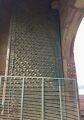
Lohagarh Gate Bharatpur brought from Delhi in 1764
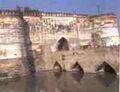
The Iron Fort of Bharatpur
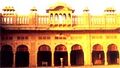
Bharatpur palace, Bharatpur
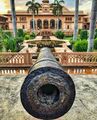
Bharatpur Museum, Bharatpur
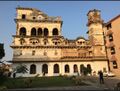
Mahal Khas Palace, Lohagarh Fort, Bharatpur
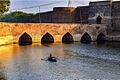
Lohagarh Fort Bharatpur


References
- ↑ History of Bharatpur/Chapter III, By Jwala Sahai , p.35
- ↑ History of Bharatpur/Chapter III, By Jwala Sahai , p.35
- ↑ History of Bharatpur/Chapter III, By Jwala Sahai , p.35
- ↑ History of Bharatpur/Chapter III, By Jwala Sahai , p.36
- ↑ Aitihasik Sthanavali by Vijayendra Kumar Mathur, p.660
- ↑ Col. G. B. Malleson: An historical sketch of the native states of India/Bharatpur,p.102
- ↑ Jat History Dalip Singh Ahlawat/Chapter VIII (Page 659)
- ↑ UN Sharma :Jaton ka Navin Itihas
Back to Jat Monuments