Yasodharman
| Author:Laxman Burdak, IFS (R) |

Yasodharman Virk (532 AD) (यशोधर्मा विर्क) (also called Yashôdharman) was the king of Malwa, in central India, during the early part of the 6th century.
Variants of name
History
The Gupta Empire had been weakened by the attacks of the Indo-Hephthalites, known in India as the Hunas, towards the end of the 5th century, which caused it to break up into smaller states. Yasodharman defeated a Huna army in 528, which checked the Huna expansion in India. Twin monolithic pillars at Sondani in Mandsaur District were erected by Yasodharman as a record of his victory. [1]
During the reign of Kumaragupta I his feudatory Bandhuvarman ruled over Mandasor as it was a major Centre of western Malwa. He belonged to the Aulikara family which perhaps ruled there up to the beginning of the sixth century A.D. Two stone pillar inscriptions from Mandasor in Madhya Pradesh, one of which is dated in 532 A.D., refer to a powerful king Yasodharman. One of these inscriptions reports the victories of Yasodharman. The inscription describes him as the victor of all those lands which had not been subdued even by the Guptas. But the names of the defeated powers have not been mentioned except that of Mihirkula. It appears that Yasodharman rose to power in about 528 A.D. and continued to rule till 532 A.D., (the date of Mandasor inscription) but by 543 A.D. his power must have been eclipsed. [2]
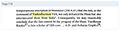
Three inscriptions of Yasodharman have been found in Mandsaur. One of these is of samvat 589 (532 AD). Yasodharman had acquired the title of Vikramaditya. [3] He started the vikram samvat calendar of Hindus based on Lunar movements. The Kashmiri poet Kalhana has mentioned about three Kalidasas. The second Kalidasa, who wrote the books 'Raguvansha' and 'Jyotirvidabharan', was court poet of Yasodharman. Kalidasa has mentioned the victories of Yasodharman as 'Raghu-digvijaya'. His rule extended from Himalayas in the north to Travancore in south. The ruler of Magadha had become his friend. Chinese traveler Faxian visited India during his rule. [4] The victory of Yasodharman is mentioned in the sentence “Ajay Jarto Hunan” in the grammer of Chandra of the fifth century. This mention in the phrase sentence अजय जर्टो हुणान or “Ajay Jarto Huṇān”, refers to the defeat of Huns by the Jats under the leadership of Yasodharman. [5]
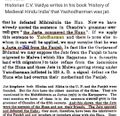
The Bijayagadh Stone Pillar Inscription of Vishnuvardhan shows that Yasodharman, the father of Vishnuvardhana, was a king of Virk gotra. [6]Thakur Deshraj and CV Vaidya have concluded that the inscription of Mandsaur indicate that Yasodharman, the ruler of Malwa, was a Jat king of the Virk gotra ( clan). [7][5]
Virk Dynasty of Malwa
Virk Dynasty of Malwa: Ram Sarup Joon[8] writes that .... V D Mahajan, in his History of Ancient India has called this dynasty Mokhari. The founder of this dynasty was Sangh Verma, The capital was Mandsor. They ruled during the period Gupta from 335 to 385 AD Two famous princes of this family were Chandra Verma and Nar Verma. Chandra Verma left Malwa and established his own Kingdom of Pusharen, Nar Verma ruled Mandsor. According to a tablet excavated at Ganga Dhar, his son Vishnu Verma was a ruler of independent ideas. His sons were Bandhu Verma and Bhim Verma. When Gupta power rose, Bhim Verma accepted their suzerainty and carried on as the Vassal of Kausambi.
Three edicts of this period were excavated at Mandsor.
These read as follows: -
"The country which was neither ruled by the great Gupta nor invaded by Huns was ruled by King Yashodharman."
"Kings from Lohita River in the East to the sea in the West and from Himalayas in the North to Mahendra Parvat in the South, prostrate before him."
"Even the Mighty ruler Mehrkul bows before him."
Yashodharman Virk: As a result of invasion by Huns, Guptas lost power, At the same time Yashodharman gained power. He has been described as the son of Sangh Varma.
History of the Jats, End of Page-60
The Guptas joined forces with Yashodharman and defeated the Huns. On a memorial pillar elected by Yashodharman at Biana, it is inscribed that Yashodharman's father Vishnu Vardhan had gained the title of Maharana. This is confirmed by what has been printed on Page 342 of a book Nagri Pracharni Patrika. In the same book are also mentioned the atrocities committed by the Huns.
Huns clashed with the Jats in continents, Europe and Asia. Huns were responsible for destruction of Jat Power Nevertheless they were not let off lightly. They invaded, they destroyed, but they never ruled. In Europe they rolled their way upto Italy where they met Jats, who have been called Goths in historical records, and were bounced back. In India Yashodharman who consequently conquered the whole of Northern India had repulsed them.
Mr. Alien quotes from Rajatarangini that while Bala Ditya defended Magadha, Yashodharman made Meherkul a prisoner but released him after sometime.
Benist on pages 318 and 319 of this book 'Early History' has also confirmed the fact that Mehrkul was imprisoned by Yashodharman.
Yashodharman's son Siladitya was a follower of Buddhism. Chinese Pilgrim Huen Tsang writes about him that a Vaisnavite king drove him out of his kingdom. Siladitya took asylum with the king of Kashmir. After some time, with the help of king Paro sen (Pravarasena), he re conquered his lost kingdom.
After the death Siladitya, his kingdom splintered into small groups and disintegrated.
History of the Jats, End of Page-61
Who was the conqueror of the Hunas?
Hukum Singh Panwar writes:[9] After all, who was this conqueror of the Hunas?
- Majumdar read the versions of Chandragomin as 'Ajay Gupto Hunan' and to him this conqueror was a Gupta monarch, but this erroneous view was later on corrected by himself and Belvalkar[10].
- Now the general consensus on chronological and ethnological grounds, among the scholars, is that this exterminator of the Hunas, was the Malwa King,named Yashodharma, of the Mandsor Inscription[11] (532-33 A.D.).
- Majumdar[12] connects him with Aulikaras where as
- Carlleyle and Cunningham[13] take him to be a Bains,
- But to all intents and purposes, as evidence by the said inscription, he belonged to the Virk dynasty.
It goes without saying that the Tukharas (Tusharas), Kankas or Kang, Aulikaras or Aulikas or Aulakhas, Bains or Bainswalas, Virkas or Birkas, are all the names of the Jat tribes and they claim no connection with the Jartikas of the Great Epic. But the Sanskrit scholars of the medieval period seen to have used the so-called sanskritised term Jarta for the warrior chiefs of such tribes without specifically mentioning their names. Hence they seem to have taken a cue from the suggested Jartikas thrown up by the Epic to perpetuate their gloomy picture in the popular mind, otherwise they could have easily used for those tribes the term Jat or Jatt or Zutt which had, without any shadow of doubt, come to be applied to various warrior tribes of north-western India since the time of Panini and Herodotus112.
A signal challenge here has been the evident intention of various subsequent scholars, acting as authorities but with apparent racial and religious bias to confuse Jat and Jarta in the mind of general public. The term Jartika or Jarta has come down to be notorious for symbolsing the people who don't follow the rules created by the Brahmins. The purpose of its use for the Virka
The Jats:Their Origin, Antiquity and Migrations: End of page 58
conquerors of the Hunas was not to represent the former as Jat but to decry them and to dilute and pollute the perfume of their heroic and historical deeds. The version of their absurd origin, highlighted by Buddha Prakash113, as "chimerical offspring of the union of a prince and a she-wolf, (a biological impossibility) further strengthens our suspicion regarding the intention of the scholar vis-a-vis the Jats. The Virkas were a republican Vahika warrior tribe. Instead of giving credit to their martial qualities they were denounced as sons of a she-wolf, if not those of a bitch. 'The etymology of Vahikas from the two imaginary demons, Bahi and Heeka, residing in the Vipasa river, is considered fanciful by the learned scholar, but even then, they are said to have degenerated the people of the Panjab, conveying probably the concealed sense that they, too, are the sons of the demons. Above all, the same scholar refreshes, rather authoritatively, in the popular psyche, the idea that the admixture of the Jarttikas or Jartas with the Madras etc. led to the degeneration of the latter's character. He seems to be so much convinced with the version of the Epic as if he himself accompanied the Jartas in the Madradesa. What a pity, that an insignificant "jarta-fish" spoiled the whole water of Vahika rivers and her warriors, and a pinch of Jarttika Yoghurt" turned the whole milk of all the Vahika Madras sour! The normal tendency is for new-comers to be coloured by the culture of the majority, for every body follows the dictum: "while in Rome, do as the Romans do". What a surprise, that the Jartikas escaped the civilizing influence and acculturation by the highly advanced Vahika tribes; instead, they barbarised the latter'. The Brahman writers have made wide use of the formula: "Give the dog a bad name and hang it". The Jats were named as Jartas and were defamed throughout Indian history.
No less confusing is the view of C.V. Vaidya, according to whom the Jats, on the one hand, are "the purest of the Aryans, belonging to the Solar race", but, on the other hand, the Shudras in modern opinion for following the Vedic practice of widow marriage and the noblest
profession of agriculture and animal husbandry besides their arms, and connects them with the denounced Jarttikas of the Karna Parva of the Mahabharata. He tries to establish his assertion with the statemate, 'Ajaya Jarto Hunan' of Chandragomin of the fifth century A.D. A close
analysis of Vaidya's assertion also compels us to remark that the Jats, as descendents of the Solar race of the Aryans, lose their ancestral lustre
The Jats:Their Origin, Antiquity and Migrations: End of page 59
As soon as they are connected with "the Jarttika or Jartas who were not created by the Prajapati."
This eminent scholar, too, had contributed
to build a psychosis that the Jats are the Jarttikas or Jartas, the immoral and the notorious people of the Mahabharata time. Had he, to whom "the: Jats are the purest [[Aryans and are the descendents of the first race,
the: Solar race", disenchanted himself from the racial and religious prejudices, he could have, in all fairness to them, identified the Jats, are also called Asuras, as the progeny of Jata114, one of the seven
sons of Brahma, probably from his Asuri wife. In common parlance in northern India there are only two 'devatas', the 'Jat devata' and the 'Brahmana devata' 114a, but the orthodox scholars can ill afford to pay this glowing tribute to their adversaries, the Jats, for their honourable origin from the son of Brahma.
Mandasor Pillar Inscription of Yashodharman 532 AD
This pillar was erected by Yashodharman commemorating his victory over the Hunas at Dashapura, (Modern Mandsaur). These are pieces of two Monolithic pillars. These bear inscription which also records the victory of Yashodharman. One of the pillar Capitals has lions seated back to back (C. 6th CAD).[14]
- May that very long banner of (the god) Shûlapâni destroy the glory of your enemies; (that banner) which bears (a representation of) the bull (Nandi), marked by the five fingers (dipped in some dye and then) placed on him by (Parvati) the daughter of the mountain (Himalaya), who causes the distant regions, in which the demons are driven wild with fear by (his) terrible bellowings, to shake; (and) who makes the glens of (the mountain) Sumeru to have their rocks split open by the blows of his horns!
- (Line 2.) He, to whose arm, as if (to the arm) of (the god) Shingapani, the fore-arm of which is marked with callous parts caused by the hard string of (his) bow, (and) which is steadfast in the successful carrying out of vows for the benefit of mankind, the earth betook itself (for succour), when it was afflicted by kings of the present age, who manifested pride; who were cruel through want of proper training; who, from delusion, transgressed the path of good conduct; (and) who were destitute of virtuous delights:
- (L. 3.) He who, in this age which is the ravisher of good behaviour, through the action simply of (his good) intentions shone gloriously, not associating with other kings who adopted a reprehensible course of conduct, just as an offering of flowers (is beautiful when it is not laid down) in the dust; he in whom, possessed of a wealth of virtue, (and so) falling but little short of Manu and Bharata and Alarka and Mandhatri, the title of "universal sovereign" shines more (than in any other), like a resplendent level (set) in good gold:
- (L. 4.) He who, spurning (the confinement of) the boundaries of his own house, enjoys those countries, thickly covered over with deserts and mountains and trees and thickets and rivers and strong-armed heroes, (and) having (their) kings assaulted by (his) prowess, which were not enjoyed (even) by the lords of the Guptas, whose prowess was displayed by invading the whole (remainder of the) earth, (and) which the command of the chiefs of the Hunas , that established itself on the tiaras of (many) kings, failed to penetrate:
- (L. 5.) He before whose feet chieftains, having (their) arrogance removed by the strength of (his) arm, bow down, from the neighbourhood of the (river) Lauhitya up to (the mountain) Mahendra, the lands at the foot of which are impenetrable through the groves of palmyra-trees, (and) from (Himalaya) the mountain of snow, the tablelands of which are embraced by the (river) Ganga, up to the Western Ocean, by which (all) the divisions of the earth are made of various hues through the intermingling of the rays of the jewels in the locks of hair on the tops of (their) heads:
(L.6.) He by whom (his) head has never been brought into the humility of obeisance to any other save (the god) Sthanu; he, through the embraces of whose arms (Himalaya) the mountain of snow carries no longer the pride of the title of being a place that is difficult of access; he to whose two feet respect was paid, with complimentary presents of the flowers from the lock of hair on the top of (his) head, by even that (famous) king Mihirakula, whose forehead was pained through being bent low down by the strength of (his) arm in (the act of compelling) obeisance:
- (L. 7.) By him, the king, the glorious Yashodharman, the firm beams of whose arms are as charming as pillars, this column, which shall endure to the time of the destruction of the world, has been erected here, as if to measure out the earth; as if to enumerate on high the multitude of the heavenly lights; (and) as if to point out the path of his own fame to the skies above, acquired by good actions; (this column) which shines refulgent, as if it were a lofty arm of the earth, raised up in joy to write upon the surface of the moon the excellence of the virtues of Yashodharman, to the effect that "His birth (is) in a lineage that is worthy to be eulogised; there is seen in him a charming behaviour that is destructive of sin; he is the abode of religion; (and) the (good) customs of mankind continue current, unimpeded (in any way) by him."
- (L. 9.) From a desire thus to praise this king, of meritorious actions, (these) verses have been composed by V sula, the son of Kakka. (This eulogy) has been engraved by Govinda.
- From: Fleet, John F. Corpus Inscriptionum Indicarum: Inscriptions of the Early Guptas. Vol. III. Calcutta: Government of India, Central Publications Branch, 1888, 147-148.
यशोधर्म : ठाकुर देशराज
ठाकुर देशराज [15] ने लिखा है ... यशोधर्म - यह मंदसौर में राज्य करते थे। वहां पर इनका स्तूप है। इनके पिता का नाम विष्णुवर्धन था। इनका राज्य मंदसौर से लगाकर बयाना तक था। बयाना में भी एक लाट है वह महाराजा विष्णुवर्धन की स्थापना की हुई है। यह वरिक गोत्र के जाट थे। महाराजा यशोधर्मन ने प्रबल आक्रांता हूणों को कई बार खदेड़ा था और अपनी जिंदगी में उन्हें कश्मीर से नीचे नहीं उतरने दिया। अजय जर्टो हूणान इनकी लड़ाइयों के कारण प्रसिद्ध हुआ था। लोग इन्हें दूसरा विक्रमादित्य समझते थे।
यशोधर्मा


ठाकुर देशराज लिखते हैं कि भारत क्या, संसार के इतिहास में हूणों के आक्रमण प्रसिद्ध हैं। इन्होंने यूरोप और एशिया दोनो ही जगह उथल-पुथल मचा दी थी। जाट-जाति के लिए यह सर्वत्र नाशकारी सिद्ध हुए। किन्तु यूरोप और एशिया दोनो ही स्थानों पर जाटों ने इनकी शक्ति का सामना किया। यद्यपि जाट भी इनके युद्धों में क्षीणबल हो गए, किन्तु उन्होंने हूणों के बढ़ते हुए प्रभाव को इतना धक्का पहुंचाया कि आज हूणों की न कोई स्वतंत्र जाति है और न राज्य। सुदूर कश्मीर में अवश्य कुछ दिन उनका राज्य रहा। यूरोप को रोंदते हुए इनका दल जब रोम पहुंचा तो वहां के गाथ (जाट) योद्धाओं ने ऐसा लोहा बजाया कि उन्हें उलटे पैरों लौटना पड़ा। भारत में आने पर भी जल-प्रलय की भांति जब ये आगे बढ़ने लगे तो मध्य-भारत के अधीश्वर महाराजा यशोधर्मा ने इनको ऐसा खदेड़ा कि कश्मीर में जाकर दम लिया।
यशोधर्मा के समय के तीन शिलालेख्स प्राप्त हुए हैं। ये तीनों ही मन्दसौर में पाए गए हैं। इनमें एक शिलालेख मालव संवत् 589 ईसवी (सन् 532) का है। इन लेखों में से पहले लेख में लिखा है-
|
ये भुक्ता गुंप्तनाथैर्न्न सकलवसुधाक्क्रान्तिदृष्टप्रतापै - र्न्नाज्ञा हूणाधिपानां क्षितिपतिमुकुटाध्यासिनी यान्प्रविष्टा।। ... ... ... ... ... ... ... ... आलौहित्योप मण्ठात्तलवनगहनोपत्यकादामहेंनद्रा- दागंगाश्लिष्टसानोस्तुहिनशिखरिणः पश्छिमादापयोधे।। सामन्तैर्यस्य बाहुद्रविणहृततदैः पादयोरानमद्भिः। ... ... ... ... नीचैस्तेनापि यस्य प्रणतिभुजबलावर्ज्जनक्लिष्टूर्ध्ना- चुडापुष्पोपहारैर्मिहिरकुलनृपेणार्चितं पदयुग्मं ।। |
| Mandasor Pillar Inscription of Yashodharman [16] |
अर्थात्- प्रबल पराक्रमी गुप्त-राजाओं ने जिन प्रदेशों को नहीं भोगा था और न अतिबली हूण राजाओं की ही आज्ञाओं का जहां तक प्रवेश हुआ था, (ऐसे प्रदेशों पर भी महाराज यशोधर्मन् का राज है)। पूर्व मे लौहित्य नदी अर्थात ब्रह्मपुत्र से लेकर पश्चिम में समुद्र तक और
जाट इतिहास:ठाकुर देशराज,पृष्ठान्त-711
उत्तर में हिमालय से दक्षिण में महेन्द्र पर्वत के सामन्त जिसके पैरों में गिरते हैं। जिसके चरणों पर प्रतापी (राजा हूणों के सरदार) भी सिर झुकाना पड़ता है।
महाराज यशोधर्मा ने मिहिरकुल हूण को हराकर अपने को उत्तरी-भारत का सम्राट घोषित किया।1 गुप्त-राज्य की समाप्ति भी इसी समय के कुछ काल के पश्चात् हो गई होगी।
हूणों से जिस समय यशोधर्मा का युद्ध हुआ था, उस समय उनकी अध्यक्षता में उज्जैन और मगध प्रदेशों के राजा इकट्ठे हुए थे। कोई-कोई इतिहास-लेखक कहरूर में इस युद्ध का होना बतलाते हैं और कोई-कोई मध्य भारत के किसी स्थान पर। मि. एलन लिखते हैं कि - “बालादित्य ने तो केवल मगध की रक्षा की होगी, परन्तु अन्त में यशोधर्मा ने ही उसे पूर्णतया परास्त कर कैद कर लिया होगा।” ‘अर्ली हिस्ट्री आफ इण्डिया’ के पृष्ठ 318-319 में मि. विनसेण्ट स्मिथ ने भी इस बात का समर्थन किया है कि महाराज यशोधर्मा ने मिहिरकुल को गिरफ्तार कर लिया था।
कुछ दिन कैद रखने के पश्चात् महाराज यशोधर्मा ने मिहिरकुल को छोड़ दिया और वह छूटने पर काश्मीर की ओर चला गया, क्योंकि इसी बीच साकल नगरी, जो कि आरम्भ में वहां के जाट-राज्य को इन्होंने नष्ट करके अपनी राजधानी बनाई थी, इसके हाथ से निकल चुकी थी। इसी के छोटे भाई ने उस पर अपना अधिकार जमा लिया।
महाराज यशोधर्मा के संबंध में यह भी कहा जाता है कि उन्होंने विक्रमादित्य की पदवी धारण की थी2 और मालवे के मालव संवत् को विक्रमी संवत के नाम से प्रसिद्ध किया था। अभी इस मत का समर्थन पूरी तरह से नहीं हुआ है। कुछ इतिहासकार इस मत का विरोध भी करते हैं।
काश्मीर के प्रसिद्ध संस्कृत-कवि कल्हण [1] ने तीन कालिदासों का वर्णन किया है। दूसरा कालिदास जिसने कि रघुवंश और ज्योतिर्विदाभरण आदि ग्रन्थ लिखें हैं इन्हीं महाराज यशोधर्मा की सभा का एक रत्न था। रघुवंश में राजा रघु की दिग्विजय के वर्णन को पढने से स्पष्ट हो जाता है कि महाराज यशोधर्मा ने किस भांति से किन-किन देशों को विजय किया था। कालिदास ने महाराज यशोधर्मा के ही विजय को रघु-दिग्विजय का रूप दिया है। जिन प्रदेशों का वर्णन रघुवंश में है, रामायणकाल में उनके इनसे कुछ भिन्न नाम थे। इनका राज्य उत्तर में हिमालय
- 1.भारत के प्राचीन राजवंश भाग 2
- 2. राजतरंगिणी काव्य ।
जाट इतिहास:ठाकुर देशराज,पृष्ठान्त-712
से लेकर दक्षिण में ट्रावनकोर तक फैल गया था। मगध का राजा इनका मित्र बन गया था। उसी समय भारत में फाहियान चीनी यात्री आया था। उसने भारत के बारे में लिखा है-
- “भारत में इस समय सुख-संपर्ति पूर्ण रूप से है। सदाचार उसके निवासियों का धर्म है। धार्मिक सत्रों में निर्धनों को अन्न बांटे जाते हैं। मुफ्त इलाज करने वाले औषधालय जगह-जगह स्थापित हैं। अपराध बहुत ही कम होते हैं। राज्य कर्मचारियों को ठीक समय पर वेतन मिलता है। रिश्वत लेना पाप समझा जाता है। समस्त देश में मांस-मदिरा का प्रचार बहुत ही थोड़ा है। प्याज और लहसुन खाना अच्छा नहीं समझा जाता। बौद्ध भिक्षुओं के खान-पान का प्रबन्ध धनिकों की ओर से होता है। डकैतियां और चोरियां भी नहीं होती हैं। प्राण-दण्ड किसी को भी नहीं दिया जाता। कठोर दण्ड देते समय पंचायत से राय ली जाती है। सिक्के थोड़े हैं, कौड़ियों का भी चलन है। लोग इतने ईमानदार हैं कि ताले नही लगाने पड़ते।”
Also Read
- आखिर जीत हमारी - सय्याह सुनामी का उपन्यास
External links
Gallery
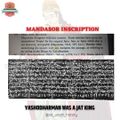




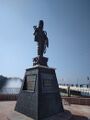
Yashodharman Statue Mandsaur
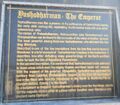
Yashodharman Statue Mandsaur - Inscription
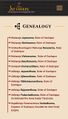
Genealogy of Yasodharman


References
- ↑ Fleet, John F. Corpus Inscriptionum Indicarum: Inscriptions of the Early Guptas. Vol. III. Calcutta: Government of India, Central Publications Branch, 1888, 147-148
- ↑ Post Gupta Kings in North India
- ↑ Kalhana: Rajatarangini
- ↑ Thakur Deshraj: Jat Itihas (Hindi), Maharaja Suraj Mal Smarak Shiksha Sansthan, Delhi, 1934, 2nd edition 1992 (Page 712)
- ↑ 5.0 5.1 CV Vaidya, History of Medieval Hindu India
- ↑ Fleet, John F. Corpus Inscriptionum Indicarum: Inscriptions of the Early Guptas. Vol. III. Calcutta: Government of India, Central Publications Branch, 1888, 254.
- ↑ Thakur Deshraj: Jat Itihas (Hindi), Maharaja Suraj Mal Smarak Shiksha Sansthan, Delhi, 1934, 2nd edition 1992 (Page 707)
- ↑ History of the Jats/Chapter IV ,p. 60-61
- ↑ The Jats:Their Origin, Antiquity and Migrations/The Jarta or Jartika or Jartrika theory, pp.58-60
- ↑ A New His. of Ind. Peop., Vol. VI, p. 197
- ↑ Des Raj, op.cit., pp. 57-58, Y.P. Shastri, op.cit., Hindi ed., p. 618. Urdu ed, p. 421; Vaidya, op.cit., Vol. I, p. 88.
- ↑ The His. and Cul. Of Ind. Peop., Vol. III (Class. Age) p. 39, fn. 1-2.
- ↑ Archae, Sur. of Ind., Vol. VI, (1871-73), p. 60.
- ↑ Archaeological Survey of India Bhopal
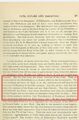
- ↑ Thakur Deshraj: Jat Itihas (Utpatti Aur Gaurav Khand)/Parishisht,p.166
- ↑ John F. Corpus Inscriptionum Indicarum: Inscriptions of the Early Guptas. Vol. III. Calcutta: Government of India, Central Publications Branch, 1888, 147-148.
Back to The Rulers