Dhillon
Dhillon (ढिल्लों)[1] Dhillan (ढिल्लन)[2] Dhillvan (ढिल्लवां) Dhallu (ढल्लू)[3] Dhillu (ढिल्लू)[4] [5] Dhilan (ढिलान)[6] Dhil (ढिल)[7] [8] Dhalan (ढलान) Dehlan (डहलान) Dhall (ढल्ल) Dhillwan (ढिल्लवां)[9] Dhilla (ढिल्ल) [10] is Gotra of Jats in India and Pakistan. [11] Dhillons are mainly found among Jat Sikh Gotras but Jat Hindus also exist in Hissar, Jind, Sirsa & Kurukshetra districts. Dhillon Jats, who are Muslim, also exist in West Punjab (now Pakistan). Delhi, the capital of India was founded by Dhillon gotra Jats.
Origin
Ferozepur tradition avers that Saroia, Jat, had five sons, Sangha, Mallhi, Dhindsa, Dhillon and Dusanj, eponyms of as many gots. [12]
History
Ram Swarup Joon[13] writes that about Dhillon, Chitralia, Dhilla, Aharyar: Dhillons are called the descendants of King Karna. There was a King Karna in the Bhin-baroliya gotra too. According to Radhe Lal, who quotes 'Waqiate-panch Hazarsala, 800 years before Christ, 13 rulers of Dhillon gotra - ruled for about 450 years. Their names are Birmaha, Mahaval, Sarupval, or Suryaval, Birsan, Sanghamia or Manipal, Singhpal or Kalik, Tejpal or Jitmal, Kamsen, or Kamdhan, Shatrumardhan, Jiwan Siagh, Hari Rao or Bir Bhujann, Birsen II, Udai Bhutt or Drutyaketu . It is after the name of Dhillon that we have the word Dhilli or Delhi. The Dhillon Sikhs belongs to the Bragyan and Karoriya Misls. According to the census of 1911 people belonging to the Dhillon gotra were 5200 only in Amritsar, and 40000 in the whole of the Punjab. They are also found in UP and Haryana. Bhariyar gotra is a branch of the Dhillon gotra.
Sometimes known as the "Raja Jats" (King Jats), this mainly due to the large number of Kings, royalty and warriors that have come from this tribe throughout history. It is considered to be one of the oldest Jat tribes with history dating back over 4000 years [14].
The Dhillons are called the descendants of Karna [15], the famed royal warrior mentioned in the great Hindu epic, the Mahabharata and he was also the eldest son of Queen Kunti. There was a King Karna in the Bhin-baroliya gotra too. Most Dhillons today trace their history back to Prince Dhillon[16], the first Dhillon, the grandson of Karna and great grandson of Queen Kunti.
According to the family tree of Dhillons of Amritsar, Prince Dhillon was the grandson of Mahabharat famed Karna and son of Loh Sen [17]. Karna the famed warrior mentioned in the great Hindu epic, the Mahabharata. Karna was killed at Kurukshetra. After Karna was killed at the Battle of Kurukshetra, his descendants first went to Rajasthan and then to Bhatinda in present-day Punjab. Even now, Dhillons are settled in large numbers in the areas of Bhatinda. They are also settled in the area of Moga, Sangrur, Ropar, Patiala and abroad.
In addition, Dhillons are linked to the royal house of the Pandavas. Yudhishtra, ruler of Hastinapur and Indraprastha, later known as Delhi. The third ruling Jat dynasty in this line was Dhillon whose descendants are the present Jat gotras. Dhillon, Dhilwal and Dhill. Swami Dayanand Saraswati, the founder of the Arya Samaj, has in his book "Satyarth Prakash" ("The Light of Truth"), quoted from the famous book "Chadrika Pushtika" that from Yudhishtra to Harsha Vardhan, 124 rulers ruled for 4257 years 9 months and 14 Days [18]. Six dynasties ruled during this period. The first three dynasties had their capitals in Hastinapur, Indraprastha and Kausambi. During the reign of the fourth generation, the capital was changed to Magadha. It is also mentioned that during the reign of the fourth generation of Yudhisthra, Hastinapur was destroyed due to changes in the course of the River Ganga.
The Dhillon Dynasty founded Delhi[19] and ruled there from 800 BC to 283 BC (about 450 years). It is from the name of Dhillon that we have the word Dhilli or Delhi. A ruler of the Dhillon dynasty, Raja Dhilu (King Dihlu) founded Delhi and the dynasty ruled from there from 800 BC to 283 BC. According to Radhe Lal, who quotes 'Waqiate-panch Hazarsala, 800 years before Christ, 13 rulers of Dhillon gotra - ruled for about 450 years. Some of their names are:
- Raja VirMaha (817 BC - 800 BC)
- Mahabal or Swarupbal (800 BC - 744 BC)
- Sarvdutt or Swarupdatt (744 BC - 708 BC)
- Virsen (708 BC - 668 BC)
- Singdaman or Mahipal (668BC - 624 BC)
- Kalink or Sanghraj (624 BC - 595 BC)
- Jitmal or Tejpal (595 BC - 515 BC)
- Kaldahan or Kamsen (515 BC - 506 BC)
- Shtrumardan (506 BC - 481 BC)
- Raja Jiwan (481 BC - 455 BC)
- Virbhujang or Hari Rao (455 BC - 424 BC)
- Virsen II (424 BC - 389 BC)
- Udaybhat or Adityaketu (389 BC - 372 BC)
This book[20] describes the Dhillon Jat rule from 800 BC to 350 BC. Dhillon is a big Jat gotra and is not found in any other community. A major part of this gotra adopted the Sikh faith.
Dhillon Jats ruled Delhi again in the 8th century. They are from among the Saroa Rajputs. In 8th century, Tomara/Toors had seized the throne and power of Delhi from Dhillons and their kinsman Sanghas, Malhis, Dosanjhs and Dhindsas who were descendants of Shah Saroa. Leaving Delhi, they moved towards Rajasthan. After some time they migrated to the Bangar areas of Sirsa in Haryana and Bhatinda. Some of them went beyond to Ludhiana and Ferozepur. Most of the Dhillons from Ferozepur went into Majha. Dhillons from Ludhiana went further into Doaba. Some of the Dhillons went as far as Gujjranwala.
The Dhillon Sikh Dynasty and their clan founded the Bhangi Army (Misl), who ruled and governed in the 18th century over most of the major cities of Punjab, including Amritsar, Lahore, Multan, Chiniot, Jhang, Bhera, Rawalpindi, Hasan Abdal, Sialkot, Gujarat and large areas of central and western Panjab[21].
B S Dahiya[22] writes: Dhillon is an important clan of ancient history. The fact that they are also found in the European population (Dillon) shows that they must have been older than the Christian era.
According to historian Qanungo, the city of Delhi is named after them and it was later on taken by the Chauhans. According to Farishta after the death of Kidar, Jaichand took the throne of Kannauj, to be succeeded by his brother, Dhill or Dahla, who founded the city of Delhi.[23] This happened in the fourth century B.C., i.e., before Porus's and Alexander's times. Its old name was Dhillika as is recorded in the inscription of Somesvara Chauhan, in V.S., 1226 (1169 A.D.).[24] Later on the suffix 'ka' was deleted and the city was named Dhilli. The inscriptions of V.S. 1337 found at Boher (Rohtak) reveal that the country of Haryāṇaka (Haryana) was first ruled by the Tomars and then by the Chauhans and then by the Ghori Sultans.[25] Gurdial Singh Dhillon, ex-Speaker of the Indian Lok Sabha is a scion of this clan. S. Prakash Singh Badal, Chief Minister of Punjab is also a Dhillon-the affix Badal, being the name of his ancestral village.
The Dhillon appear to have several Jatheras, Gaggowahna being mentioned in addition to those described on p. 238 supra. No particulars of these are forthcoming. But the fact that Dhillon was Raja Karn's grandson is commemorated in the following tale : — Karn used to give away 30 sers of gold every day after his bath but before his food. After his death the deity rewarded him with gold, but allowed him no food, so he begged to be allowed to return to the world where he set aside 15 days in each year for the feeding of Brahmans. He was then allowed to return to the celestial regions and given food.[26]
Religion
Dhillons are mostly Sikhs or Muslims. Dhillon Sikhs founded the Bhangi Army Misl. In Punjab (India) and Haryana, Dhillons are mostly Sikh. In Punjab (Pakistan), they are mostly Muslim.In Jammu (Samba and R.s.Pura) they are mostly Hindus.Majority of the Dhillons in Sirsa, Hisar, Ambala and Karnal areas of Haryana are Sikhs. Majority of the Dhillons in Sialkot, Lahore and Gujranwala have converted to Islam.
Secondary Dhillon Jat Surnames
Due to the age and size of the ancient royal Dhillon clan, it has some small number of derivative secondary family names that keep Dhillon as their main surname but have minor family name before main Dhillon surname. But in present time different parts of India, Dhillon Jats use surnames like Dhindsa, Chitralia, Malhi, Kairon. The Sikh Dhillon Jats of the village of Kairon take on the name of the village and keep the main royal Dhillon name as their fourth name. The most famous Dhillon 'Kairon' is probably Pratap Singh Kairon Dhillon.
Distribution in Haryana
Dhillon's with origin in the following villages in Haryana State.
Villages in Mahendergarh district
Deroli Jat, Mohanpur, Jatwas, Gehli, Jhigawan,
Villages in Hisar district
Pabra[27], Kanoh, Kanwari, Kharia Hisar, Nehla, Shavite,
Villages in Rewari district
Villages in Jind district
Shamdo (Jind) Dhola (Jind) Pabra, Kanoh, Balak, Faridpur and Kanwari (one family), Naguran, Dauhla[28]
Villages in Panchkula district
Bagwala ,
Villages in Karnal district
In Karnal there are several villages of Dhillon's
Villages in Yamunanagar district
Villages in Sirsa district
Villages in Gurgaon district
Distribution in Punjab
Population of Dhillons in Patiala was 31,500. This clan claim its descent from "king Karn" and the Dhillons are mainly to be found in the sub-district of Govindgarh as well as in scattered villages of sub-districts Bhikhi and Fatehgarh. [31]
There are many villages named Dhillon or Dhilwan( district (Kapurthala) in Punjab. For example, Harnam Singh Wala is a village with almost 95 percent have their last name as Dhillon. This village is 13km from Rampura Phul in Bhatinda District. The village is known for growing some of the best wheat and peas in Punjab. These peas are especially delicious in late winter.
Majara Dingarian is a village situated in District Hoshiarpur, Punjab. Another word for Dhillon Jats in the Punjabi language is "Dingaria". Almost all of the village land is owned by Jats, particularly Dhillon clan.[32]
In Punjab (British India), the majority of Dhillons inhabited Amritsar and Gujranwala. In joint Punjab, majority of Dhillons were in Amritsar and Gujjranwala. In the 1881 Census, Dhillons numbered at 86563 (one of the largest amongst the Jat tribes) [33]. Dhillons are a very influential section of Jats. Majority of the Dhillons in Sirsa, Hisar, Ambala and Karnal areas of Haryana are Sikhs. Majority of the Dhillons in Sialkot, Lahore and Gujranwala have converted to Islam. Most of the Jats in Sialkot, Lahore and Gujranwala are believed to be Dhillons.
Today, Dhillons are settled in large numbers in Bhatinda, Moga, Sangrur, Rupnagar and Patiala in Punjab (India) as well as the Sirsa, Hisar, Ambala and Karnal areas of Haryana. Dhillons from Ludhiana and Doaba have migrated to foreign countries e.g. Canada, US, UK and etc.
In Amritsar district the Dhillon population is 44,202: This clan as per Captain Falcon [34] holds 140 villages in the district. Some of the Dhillons' villages are Kasel, Dhand, Chabal, Kairon, Padri, Gaggobua, Panjwar, Lijan, and Gandiwind. [35], Sarhali Kalan
In Ludhiana district Dhillon population is 9,858: This clan is scattered all over the district and claims coming from the west of the Sutlej river.[36]
According to B S Dhillon the population of Dhillon clan in Jalandhar district is 9,000.[37] In Firozpur district the Dhillon population is 22,500. [38]
Distribution in Rajasthan
Villages in Jaipur district
In Jaipur they are located in Bagruwalon ka Rasta, Jawahar Nagar, Purani Basti. Dhalan Jats live in villages in Jaipur district:
Gopalpura Jhadala (1), Khora Larkhani, Sanwali,
Villages in Alwar district
Villages in Sikar district
Dhani Guman Singh, Ghasseepura,
Villages in Hanumangarh district
Villages in Jhunjhunu district
Distribution in Madhya pradesh
Villages in Shivpuri district
Villages in Gwalior district
Distribution in Uttar pradesh
Villages in Hapur district
Villages in Meerut district
Villages in Agra district
Dhillon Khap has 4 villages in Agra district. [39]
Villages in Amroha district
Khandsal Kalan, Ramhut (रामहुत),
Villages in Ghaziabad district
Historically Prominent Dhillon Jats
- Mai Bhago, famous Sikh warrior and Sikh saint.
- Chhajja Singh Dhillon, famous Sikh warrior & Leader of Jathâ.
- Bhuma Singh Dhillon, Raja of Dhillon Principality (misl) & famous Royal Sikh warrior.
- Hari Singh Dhillon, Maharaja of Dhillon Principality (misl) & famous Royal Sikh warrior.
- Jhanda Singh Dhillon, Maharaja of Dhillon Principality (misl) & famous Royal Sikh warrior.
- Ganda Singh Dhillon, Maharaja of Dhillon Principality (misl) & famous Royal Sikh warrior.
Distribution in Pakistan
Dhillon is Another famous central Punjab tribe, found in Lahore, Sialkot, Gujranwala, Shaikhupura, Sargodha and Gujrat districts. Prior to partition, found through East Punjab as well.
Prominent Dhillon Jats
- बाबा फाला - ढिल्लो गोत्री
- Major General Muhammad Javed Dhillon, former Pakistan army General, currently Chairman Pakistan Steel Mills.
- Brigadier General Zulfiqar Ahmad Dhillon, former Minster of Education for Punjab and prominent Member of the National Assembly of Pakistan.
- Gurbaksh Singh Dhillon, famous Sikh Indian independence movement leader and prominent member of the Indian National Army.
- Giani Pritam Singh Dhillon, famous close associate of Netaji and member of the Indian National Army.
- Pratap Singh Kairon, famous Sikh Indian independence movement leader and former Chief-minister of Punjab (India).
- Parkash Singh Badal, Chief-minister of Punjab (India) and head of the Shiromani Akali Dal.
- Sukhbir Singh Badal
- Vic Dhillon, Canadian politician and current member of the Legislative Assembly of Ontario.
- Sharanjit Singh Dhillon, Indian politician and Member of Indian Parliament.
- Balbir Singh Dhillon
- Sarabjit Singh Dhillon - Lieutenant-General in Indian Army
- Amrik Singh Dhillon, Indian politician and Member of the Punjab Legislative Assembly.
- Dr. Gurdial Singh Dhillon, Speaker of Parliament of India and Union Minster of Agriculture.
- Gaurav Dhillon, famous and highly successful international businessman. He is the founder and former CEO of Informatica Corporation, worth over a billion dollars, 2006, in Nasdaq.
- Bob Singh Dhillon, famous and highly successful international businessman. He is a Punjabi Indian-Canadian Sikh billionaire property businessman (the first Indo-Canadian billionaire).
- Kulwinder Dhillon, was a award-winning, internationally famous popular Punjabi Indian singer.
- Mangal Dhillon, famous Actor, Writer & Producer-Director.
- Poonam Dhillon, famous Bollywood actress.
- Lieutenant Colonel Chanan Singh Dhillon (retd), Punjabi Indian World War II hero & Veteran, and president of the ex-services league (Punjab & Chandigarh).
- Lieutenant General Joginder Singh Dhillon, Indian and Sikh military war hero.
- Lieutenant General Sarabjit Singh Dhillon, Indian General Commander of Kashmir (GoC) and Master General of the Ordnance of the Indian Army.
- Air Vice Marshal Satinder Singh Dhillon, Indian and Sikh military war hero.[40]
- Gurinder Singh, present guru of the Radhaswamis of Beas.
- Baljit Singh Dhillon, Olympic Games Indian Hockey team Captain.
- Baltej Singh Dhillon, first Royal Canadian Mounted Police officer to successfully legally challenge and be allowed to wear a turban in Canada.
- Professor Baldev Singh Dhillon, he is an internationally famous Agricultural scientist and former Director of Research at Punjab Agricultural University.
- Professor B.S. Dhillon is a world famous scholar on the Jat people and Chairman of Mechanical Engineering and Director of the Engineering Management Program at the University of Ottawa.
- Professor Gurpreet Singh Dhillon, famous scholar and author, Professor of Information Systems, Author of "Principles of Information Systems Security" (Wiley) and Editor of Journal of Information System Security.
- H. S. Dillon, famous Person of Indian Origin Indonesian Indian Sikh politician.
- Baba Fala (बाबा फाला) - Dhillon Gotra
- Gurdit Singh of Shamgarh, Dhillon - Jat, From Karnal district was in the List of Punjab Chiefs.
- Sher Singh Dhillon - World Record of crossing Indian Ocean on Pedal Boat. (Jat Samaj:11/2013,p.24)
- Baba Gurdit Singh Singh was born in 1860 at Sarhali Kalan, district Amritsar of the Punjab in the family of Sardar Hukam Singh Dhillon, a Dhillon Jat.
- Sardar Dalip Singh Dhillon of Malod
- Sandeep Dhillon - England

- Dharam Chand Dhillon (Signal Man) (01.08.1943 - 27.10.1962), Vira Chakra, became martyr during Indo-China War on 27.10.1962. He was from Babrauli village in tahsil Kosli of Rewari district in Haryana. Unit: Corps of Signal.
Gallery
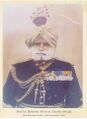
Jat-Sikh Noble Sardar Bahadur General Chanda Singh Dhillon .Sardar Bahadur General Chanda Singh: Confidant, Teammate and Humbled General to the H.H.Maharaja of Patiala .Sardar Bahadur General Chanda Singh Dhillon, was one of the best polo players of the world...

डॉ टोनी ढिल्लों ने आंत केंसर का टीका इजाद किया


References
- ↑ B S Dahiya:Jats the Ancient Rulers (A clan study), p.238, s.n.63
- ↑ O.S.Tugania:Jat Samuday ke Pramukh Adhar Bindu,p.42,s.n. 1082
- ↑ O.S.Tugania:Jat Samuday ke Pramukh Adhar Bindu,p.42,s.n. 1067
- ↑ Jat History Dalip Singh Ahlawat/Parishisht-I, s.n. 11
- ↑ O.S.Tugania:Jat Samuday ke Pramukh Adhar Bindu,p.42,s.n. 1067
- ↑ O.S.Tugania:Jat Samuday ke Pramukh Adhar Bindu,p.42,s.n. 1066
- ↑ Jat History Dalip Singh Ahlawat/Parishisht-I, s.n. 16
- ↑ O.S.Tugania:Jat Samuday ke Pramukh Adhar Bindu,p.42,s.n. 1084
- ↑ Jat History Dalip Singh Ahlawat/Parishisht-I, s.n. ढ-17
- ↑ Ram Swarup Joon: History of the Jats/Chapter V,p. 81
- ↑ Mahendra Singh Arya et al: Adhunik Jat Itihas, p. 251, 252
- ↑ A glossary of the Tribes and Castes of the Punjab and North-West Frontier Province By H.A. Rose Vol II/D, p.251
- ↑ Ram Swarup Joon: History of the Jats/Chapter V,p. 81
- ↑ Satyarth Prakash - Swami Dayananda Saraswati.
- ↑ Satyarth Prakash - Swami Dayananda Saraswati.
- ↑ History of the Jatt Clans - H.S Duleh.
- ↑ Satyarth Prakash - Swami Dayananda Saraswati.
- ↑ Satyarth Prakash - Swami Dayananda Saraswati (quoted from the famous book "Chadrika Pushtika").
- ↑ Satyarth Prakash - Swami Dayananda Saraswati.
- ↑ Satyarth Prakash - Swami Dayananda Saraswati.
- ↑ History of the Jatt Clans - H.S Duleh (Translation from original Punjabi work "Jattan da Itihas" by Gurjant Singh).
- ↑ Jats the Ancient Rulers (A clan study)/Jat Clan in India,p. 253-254
- ↑ Brigg's edition, quoted by Tribes and Castes, Vol. I, p.23.
- ↑ EI, Vol. XX, S. No. 344 of Inscriptions of Northern India.
- ↑ S. No. 598, op. cit., JASB, 01. XUl, pt. VI; p. 108.
- ↑ A glossary of the Tribes and Castes of the Punjab and North-West Frontier Province By H.A. Rose Vol II/J,p.373
- ↑ User:Chvickyhr20
- ↑ User:Sachinnehra
- ↑ User:Sukhbal
- ↑ User:Saharan88
- ↑ History and study of the Jats. B.S Dhillon. p. 126
- ↑ History and study of the Jats. B.S Dhillon. p.106
- ↑ History of the Jatt Clans - H.S Duleh.
- ↑ Falcon, R.W. (Captain), Handbook on Sikhs for the Use of Regimental Officers, Printed at the Pioneer Press, Allahabad, India, 1896, pp. 81-103.
- ↑ History and study of the Jats. B.S Dhillon. p.124
- ↑ History and study of the Jats. B.S Dhillon. p.123
- ↑ History and study of the Jats. B.S Dhillon.p.127
- ↑ History and study of the Jats. B.S Dhillon. Ip.127
- ↑ Jat Bandhu, Agra, April 1991
- ↑ [1]
Further reading
History of the Jatt Clans - H.S Duleh (Translation from original Punjabi work "Jattan da Itihas" by Gurjant Singh).
See also
Gallery
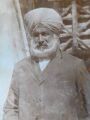
Sardar Kunda Singh Dhillon of Kotfateh, Estate:- Kotfateh, Dynasty:- Dhillon Jats.

Back to Gotras
- Jat Gotras
- Muslim Jat Gotras
- Jat Gotras in Pakistan
- Haryana
- Delhi
- Punjab
- Rajasthan
- Madhya Pradesh
- Gotras in Jaipur
- Gotras in Hanumangarh
- Gotras in Jhunjhunu
- Jat Sikh Gotras
- Gotras in Patiala
- Gotras in Amritsar
- Gotras in Ludhiana
- Gotras in Jalandhar
- Gotras in Firozpur
- Gotras in Sirsa
- Gotras in Hisar
- Gotras in Gurgaon
- Gotras in Yamunanagar
- Gotras in Shivpuri
- Gotras in Gwalior
- Gotras in Sialkot
- Gotras in Gujranwala
- Gotras in Lahore
- Gotras in Gujrat
- Gotras in Faisalabad
- Gotras in Mianwali
- Gotras in Khanewal