Burdak
| Author:Laxman Burdak, IFS (Retd.), Jaipur. |
Burdak
(Burdok, Bardak, Badak, Borrak, Burrak, Buldak, Wardak, Wurrak)
Location : Rajasthan
Country : India


- See Burdak History in Hindi बुरडक गोत्र का इतिहास
Burdak (बुरड़क)[1] Burdok (बुरडोक) Bardak (बरडक) Badak (बडक) Borrak/Bordak (बोरडक)[2] Burrak (बुर्रक)[3] Buldak (बुल्डक) Wardak (वरडक) Vardak (वरडक) Vurrak/Wurrak (वुर्रक)[4][5] is surname of Jat community found in northwest Rajasthan. They write Budak in Alwar district, Rajasthan. The surname Burdak, in India, is based on gotra Burdak.
Origin
- Exact origin of Burdak is not yet known but there may be following possible origins:
- The origin of Burdak surname seems probably to be of Iranian or Russian/Ukrainian.
- Mahendra Singh Arya et all consider Burdaks to be the descendants of Maharaja Bahuka (बाहुक), [6] who was a Suryavanshi King, son of Vrika. Bahuka had been 33 generations earlier than Rama of Ramayana in the ancestry of Suryavansha.[7]
- Burdak history seems to be associated with Wardak (वरडक), one of the thirty-four provinces of Afghanistan.
- Burdak is an Agnivanshi Jat clan included in Chauhans.[8]
- Spelled as Burdok in the north-east region of India. Origin of name may probably be from plant name Burdock found in temperate Eurasia having stout tap roots and producing burs.
- As per records of the Bards the Jat Gotra Burdak got prominance after Rao Burdakdeo. Rao Burdak Dev went to Lahore to help Raja Jai Pal. He died in war in V.S. 1057 (1000 AD) and his wife Tejal of gotra Shekwal became sati in Dadrewa. Her chhatri was built on the site of Dadrewa pond in samvat 1058 (1001 AD). [9] Here it is to be mentioned that Burdak existed earlier also but to remember the contribution of Rao Burdakdeo in history Bards have recorded so.
- Origin from Shiva - After an intensive research I have come to conclusion that Burdaks are descendants of Shiva. Aswamedha Parva, Mahabharata/Book 14 Chapter 8 gives us various names of Shiva which includes Varda (वरद)[10]. A portion of Varada were known by name Varadaksha (वरदाक्ष). By linguistic variation it changed to present name Vardak or Burdak. This theory gets historical support from Alexander Cunningham[11] who writes that the district of Kabul was also named Ortospana. In some copies of Pliny the name is written Orthospanum, which, with a slight alteration to Orthostana, as suggested by H. H. Wilson,[12] is most probably the Sanskrit Urddhasthana, that is, the " high place," or lofty city. The same name is also given to the Kabul district by the Chinese pilgrim Hwen Thsang. On leaving Ghazni, the pilgrim Hwen Thsang travelled to the north for 600 li, or 83 miles, to Fo-li-shi-sa-tang-na, of which the capital was Hu-phi-na. There can be no doubt, therefore, that Kabul must be the place that was visited by the pilgrim. The name of the capital, as given by the Chinese pilgrim, has been rendered by M. Vivien de St. Martin as Vardasthana, and identified with the district of the Wardak tribe. while the name of the province has been identified with Hupian or Opian. The Wardak valley receives its name from the Wardak tribe.
- According to Panini suffix -ka is used to denote : (i) Depreciation. [ Kutsite, Panini, V. 3.75, e.g. Puranaka, name of a servant.] (ii) Endearment. [Sanskrit-English Dictionary by Monier Williams p. 338, col. 3. ] According to Tej Ram Sharma[13] as interpreted for Khasaka, in Dhanaidaha copper-plate inscription of Kumaragupta I G.E.113. (AD 432), Barda is the name of a people and of their country (in the north of India). Bardaka can be native of that country or a man belonging to that race. It is a non-Sanskritic word most probably a local or dialectal feature.
- 'Burdak' word may be derived from prakrit word Budak. We find number of places named Budak. Budak is a village in Hisar tahsil and district in Haryana. Budak is a neighbourhood in the Lice District of Diyarbakır Province in Turkey. Budak is a village in the Gospić municipality in the Lika region in central Croatia. Budak, Zadar County is a village in Croatia. Budaközü, Başbudak are found in List of place names in Turkey. Budaklı is a village in the Gerger District, Adıyaman Province, Turkey. Budaklı is a village in the District of Göle, Ardahan Province, Turkey. Budaklı, Karaçoban is a town and district of Erzurum Province in the Eastern Anatolia region of Turkey.
Jat Gotras Namesake
- Burdak = Vardak = Varadasthana = Ortospana (Greek: Ὀρτόσπάνα) (Pliny.vi.21)
- Bardak = Berdrigæ (Pliny.vi.18)
Mention by Pliny
Pliny[14] mentions Nations situated around the Hyrcanian Sea.... Below the district inhabited by them (Mardi), we find the nations of the Orciani, the Commori, the Berdrigæ, the Harmatotropi,11 the Citomaræ, the Comani, the Marucæi, and the Mandruani.
The rivers here are the Mandrus and the Chindrus.12
11 This appears to mean the nations of "Chariot horse-breeders."
12 In former editions, called the 'Gridinus.' It is impossible to identify many of these nations and rivers, as the spelling varies considerably in the respective MSS.
Mention by Pliny
Pliny[15] (23–79 AD) mentions Ortospanum as place inhabited by Burdak clan in 'The Nations of India'....However, that we may come to a better understanding relative to the description of these regions, we will follow in the track of Alexander the Great. Diognetus and Bæton, whose duty it was to ascertain the distances and length of his expeditions, have written that from the Caspian Gates to Hecatompylon, the city of the Parthians, the distance is the number of miles which we have already12 stated; and that from thence to Alexandria,13 of the Arii, which city was founded by the same king, the distance is five hundred and seventy-five miles; from thence to Prophthasia,14 the city of the Drangæ, one hundred and ninety-nine; from thence to the city of the Arachosii,15 five hundred and sixty-five; from thence to Ortospanum,16 one hundred and seventy-five; and from thence to the city built by Alexander,17 fifty, miles. In some copies, however, the numbers are found differently stated; and we find this last city even placed at the very foot of Mount Caucasus!
13 See c. 25 of the present Book.
14 See c. 25 of the present Book.
15 See c. 25 of the present Book.
16 A town placed by Strabo on the confines of Bactriana, and by Ptolemy in the county of the Paropanisidæ.
17 See c. 25 of the present Book.
Ancient History

The famous Harsha Inscription of 961 AD by Chauhans contains name Uruk in Line 30 (L-30:गंगेश्वरभवने का चंडिकथ उरुक सुतेन भक्तेन), which translates 'In the house of the Lord of Ganga, what glorious easy-flowing praise, interspersed with the histories of his consort Chandi, was uttered by the prince of learned men, the religious son of Uruka!' This shows that the history of Burdaks is associated with Uruk.
Kings of Babylon
Uruk (उरुक) (Sumerian: Unug; Akkadian: Uruk; Biblical Hebrew: Erech; Latin: Orchoi; Arabic: وركاء, Warkā') was an ancient city of Sumer and later Babylonia, situated east of the present bed of the Euphrates river, on the ancient dry former channel of the Euphrates River, some 30 km east of modern As-Samawah, Al-Muthannā, Iraq.[Harmansah, 2007]
Uruk is eponymous of the Uruk period, the protohistoric Chalcolithic to Early Bronze Age period in the history of Mesopotamia spanning c. 4000 to 3100 BC, succeeded by the Jemdet Nasr period of Sumer proper. Uruk played a leading role in the early urbanization of Sumer in the mid 4th millennium BC. At its height c 2900 BC, Uruk probably had 50,000–80,000 residents living in 6 km2 of walled area; making it the largest city in the world at the time.[Harmansah, 2007]The semi-mythical king Gilgamesh, according to the chronology presented in the Sumerian king list, ruled Uruk in the 27th century BC. The city lost its prime importance around 2000 BC, in the context of the struggle of Babylonia with Elam, but it remained inhabited throughout the Seleucid and Parthian periods until it was finally abandoned during the Sassanid period shortly before the Islamic conquest of Mesopotamia. The site of Uruk was discovered in 1849 by William Kennett Loftus who led the first excavations from 1850 to 1854. The Arabic name of lower Mesopotamia, al-ʿIrāq, is thought to be derived from the name Uruk, possibly via Middle Persian transmission, and gave rise to the name of modern Iraq.[16]
When the Seleucid Empire was annexed by the Parthians in 141 BC, Uruk again entered a period of decline from which it never recovered. The decline of Uruk may have been in part caused by a shift in the Euphrates River. By 300 AD, Uruk was mostly abandoned, and by c. 700 AD it was completely abandoned.
The Mask of Warka, also known as the 'Lady of Uruk' and the 'Sumerian Mona Lisa', dating from 3100 BC, is one of the earliest representations of the human face. The carved marble female face is probably a depiction of Inanna.
Some prominent historical dates related with Uruk are:
- First Dynasty of Uruk (ca. 25th century BC) (Sumerian King List)
- Second Dynasty of Uruk (ca. 25th century BC) (Sumerian King List)
- Third Dynasty of Uruk (ca. 2296–2271 BC) (Sumerian King List)
- Urdukuga (1830-1828 BC) (List of Mesopotamian dynasties)
- Warad-Sin (ca. 1770–1758 BC) Possible co-regency with Kudur-Mabuk his father
- Rim-Sin I (ca. 1758–1699 BC) Contemporary of Irdanene of Uruk, Defeated by Hammurabi of Babylon, Brother of Warad-Sin (List of Kings of Babylon)
- Smerdis (Bardiya) (522 BC), Possibly a usurper, alleged son of Cyrus the Great (List of Kings of Babylon)
Bardak in Iran history
In the last quarter of the eighth century B.C., the area of Azerbaijan to the south of Lake Urmia was inhabited by various Jat clans. The two clans whose names had come down in history are called the Mannai and the Mandas. These two clans are nowadays called in India as the Manns and the Mandas. The ancient Mandas are even now a clan of the Jats in India. It was Dayaukku or Devaka, who established the first empire of the Manda Jats in about 700 B.C.[17]
Mandas and others came to India
When the Manda Empire falls, there wars and the first migration of the Jats took place and from the Manda Empire and from other parts of Central Asia they came to India. That is why Panini mentioned many cities of theirs in the heart of Punjab in the fifth century B.C. But memories die hard. Even today, we have our villages named after the cities lost in Iran. The names like Elam, Bhatona, Susana, Baga, Kharkhoda (Manda Kurukada), etc, are still the names of Jat village. It is these Jats whom Buddha Prakash Calls, “ exotic and outlandish people” who came to Indian at the time of successors of Cyrus, [18] and whom Jean Przyluski calls the Bahlikas from Iran and Central Aisa. [19], [20]
Bardak Siah Palace
Bardak Siah Palace[21] was the name of ancient Persian king's palace situated near township of Dashtestan in the northern part of Bushehr Province of Iran. In 2005, archaeologists discovered a fragmentary sculpture featuring the head of Darius the Great (r. 521 BC-485 BC) and a servant carrying an umbrella behind him. It was unearthed at the Persian king's palace, known as Bardak Siah Palace, which was discovered in 1977. An inscription was also recovered, with handwriting in Neo-Babylonian language.
The eagle was a symbol of power and wisdom during the Achaemenid era. The capitals of the palace had been decorated with the images of eagles and lions. Pieces of the capitals, including eyes, wings, fangs, and snouts, have been discovered during previous excavations. Such images can be seen at Persepolis as well. Six bronze coins were also discovered beside the statue.
The archaeologists have also discovered some ornaments made of ivory and several fragments of lapis lazuli and ironstone with the handle.
The archaeological team began the excavations in early winter under the supervision of Yaghmaii, whose earlier team had discovered the Darius Palace in 1977. The Darius Palace, also known as the Bardak Siah Palace, is somewhat similar to the Apadana Palace in Persepolis. The palace had 36 columns. Sixteen bases of the columns were unearthed during the first phase of the excavations. Each column rose to about 20 to 23 meters.
Bardak Siah Palace is located near the city of Borazjan in Iran's southern province of Bushehr. Built during the Achaemenids' zenith, the palace had been destroyed by fire in a war.
Bardak in Lake Urmia
Lake Urmia (Persian: دریاچه ارومیه) is a salt lake in northwestern Iran between the provinces of East Azarbaijan and West Azarbaijan, west of the southern portion of the similarly shaped Caspian Sea. Lake Urmia has 102 islands. Bardak name appears in three of the islands, which are: Bard (Bardak), Bardak (Bardak), Bardin (Bardak).
In Parthian Stations

Parthian Stations by Isidore of Charax, is an account of the overland trade route between the Levant and India, in the 1st century BCE, The Greek text with a translation and commentary by Wilfred H. Schoff. Transcribed from the Original London Edition, 1914. This record mentions about city named Barda. Burdaks are probably associated with city called Barda, the place is the royal residence of the Sakas in Sistan. The presence of the Sakas in Sakastan in the 1st century BCE is mentioned by Isidore of Charax in his "Parthian stations". He explained that they were bordered at that time by Greek cities to the east (Alexandria of the Caucasus and Alexandria of the Arachosians), and the Parthian-controlled territory of Arachosia to the south:
- "Beyond is Sacastana of the Scythian Sacae, which is also Paraetacena, 63 schoeni. There are the city of Barda and the city of Min and the city of Palacenti and the city of Sigal (Cf. Nimrus of the Rustam story in the Shah Nama); in that place is the royal residence of the Sacae; and nearby is the city of Alexandria (and nearby is the city of Alexandropolis), and six villages." Parthian stations, 18.[22]
Beyond is Arachosia, 36 schoeni. And the Parthians call this White India; there are the city of Biyt and the city of Pharsana and the city of Chorochoad and the city of Demetrias; then Alexandropolis, the metropolis of Arachosia; it is Greek, and by it flows the river Arachotus. As far as this place the land is under the rule of the Parthians." Parthian stations, 19.[23]
In Barnala pillar Inscription
Barnala pillar Inscription of 227 AD about a person named Vardhaka of Sohart (सोहर्त) Gotra indicates the presence of these people around Jaipur in third century.[24]
Wardak province in Afghanistan
Again we find mention of them in the form Wardak وردګ (Pashtoپښتو/ wardak vardag vardak, Hindi:(वरडक)) which is one of the thirty-four provinces of Afghanistan. It is in the centre of the country. Its capital is Meydan Shahr. Chaki Wardak (also known as Chak) is a district in the south of Wardak Province, Afghanistan.The records of Kushan ruler Havishka have been unearthed at Wardak, to the west of Kabul.[25] Bhim Singh Dahiya has mentioned about an inscription of Wardak near Kabul of the year 51 of Saka era (129 AD), which relates the establishment of the relic of Lord Buddha in a stupa by Vagramarega who is shown as a scion of Kama Gulya. Here it is related with clan name Gulya of the Jats. [26] Wardak is associated with the history of Burdak Jat clan.
Chinese Pilgrim Xuanzang Visited Kabul in 630 AD & 644 AD. Alexander Cunningham[27] writes about Kophene, or Kabul: The district of Kabul is first mentioned by Ptolemy, who calls the people Kubolitaea, and their capital Kabura, which was also named Ortospana. The latter name alone is found in Strabo and Pliny. In some copies of Pliny the name is written Orthospanum, which, with a slight alteration to Orthostana, as suggested by H. H. Wilson,[28] is most probably the Sanskrit Urddhasthana, that is, the " high place," or lofty city. The same name is also given to the Kabul district by the Chinese pilgrim Hwen Thsang.
The name of the capital, as given by the Chinese pilgrim, has been rendered by M. Vivien de St. Martin as Vardasthana, and identified with the district of the Wardak tribe, while the name of the province has been identified with Hupian or Opian. But the Wardak valley, which receives its name from the "Wardak tribe, lies on the upper course of the Logarh river, at some distance to the south, of Kabul, and only 40 miles to the north of Ghazni, while Hupian or Opian lies 27 miles to the north of Kabul, or more than 70 miles distant from Wardak. My own researches lead me to conclude that both names refer to the immediate neighbourhood of Kabul itself.
Thus Hu-phi-na will represent Kophene, or Kipin, the country on the Kabul river, and Fo-li-shi-sa-tang-na, or Urddhasthana, will represent Ortostana, which, as we know from several classical authorities, was the actual capital of this province.
M. Vivien de St. Martin has objected[29] to the name of Urddhasthana that it is a " conjectural etymology without object." I am, however, quite satisfied that this reading is the correct one, for the following reasons : — 1st. The name of Ortospana is not confined to the Paropamisadae ; but is found also in Karmania and in Persis. It could not, therefore, have had any reference to the Wardak tribe, but must be a generic name descriptive of its situation, a requirement that is most satisfactorily fulfilled by Urddhasthana, which means literally the "high place," and was most probably employed to designate any hill fortress. 2nd. The variation in the reading of the name to Portospana confirms the descriptive meaning which I have given to it, as porta signifies "high " in Pushtu, and was, no doubt, generally adopted by the common people instead of the Sanskrit urddha.
The name of Kophes is as old as the time of the Vedas, in which the Kubha river is mentioned as an affluent of the Indus ; and as it is not an Arian word, I infer that the name must have been applied to the Kabul river before the Arian occupation, or, at least, as early as B.C. 2500. In the classical writers we find the Khoes, Kophes, and Khoaspes Rivers, to the west of the Indus, and at the present day we have the Kunar, the Kuram, and the Gomal rivers to the west, and the Kunihar river to the east of the Indus, all of which are derived from the Scythian ku, " water."
In Ptolemy's ' Geography ' the city of Kabura and the Kabolitae, with the towns of Arguda, or Argandi, and Locharna, or Logarh, are all located in the territories of the Paropamisadae along the Kabul river. Higher up the stream he places the town of Bagarda, which corresponds exactly in position, and very closely in name with the valley of Wardak. All the letters of the two names are the same; and as the mere transposition of the guttural to the end of the Greek name will make it absolutely identical with the modern name, there is strong evidence in favour of the reading of Bardaga instead of Bagarda. According to Elphinstone,[30] the Wardak tribe of Afghans occupy the greater part of the Logarh valley. This is confirmed by Masson,[31] who twice visited the district of "Wardak ; and by Vigne,[32] who crossed it on his way from Ghazni to Kabul. The only objection to this identification that occurs to me is, the possibility that Bagarda may be the Greek form of Vackereta, which is the name given in the ' Zend Avesta ' to the seventh country that was successively occupied by the Arian race. From its position between Bactria, Aria, and Arachosia, on one side, and India on the other, Vackereta has usually been identified with the province of Kabul. This, also, is the opinion of the Parsis themselves. Vackereta is further said to be the seat or home of Duzhak, which further tends to confirm its identification with Kabul, as the acknowledged country of Zohak. If the Wardaks had ever been a ruling tribe, I should be disposed to infer that the name of Vackereta might, probably, have been derived from them.
Burdak in Inscriptions
Hathigumpha inscription
Hathigumpha inscription is at Udayagiri about king Kharavela at Bhubaneswar in Orissa. There is one small inscription in Udayagiri caves about Prince Vaḍukha. That is III-Manchapuri cave inscription 'B' (Lower storey)' - This inscription has been engraved on the right wall of Veranda, to the right of the entrance to the right-hand side chamber of the main wing, consisting of one line. The text in Devanagari script is: कुमारो वडुखस लेणं (kumāro vadukhas lenam). This means - [This is] the cave of Prince Vaḍukha. The prince Vaḍukha has not yet been identified by the historians. Had the historians knowledge about Jat clan Burdak, it would have been easy to interpret it.
On palaeographic ground Prof Banergy considers this inscription to be a little earlier than the inscription of king Kudepasiri. According to Sadananda Agrawal, Prince Badukha stands an obscure figure in history, but Badukha seems to be the son or brother of Kudepasiri.
Here Badukha is the prakrat form of Barduk or Burdak, where 'r' is missing in inscription. Burdak is again a Jat clan of northwest India.
Bharhut inscription
There is an inscription in a scene at ancient Buddhist site Bharhut in Madhya Pradesh which reads - Vadukokatha dohati nadode pavate (No. VIII. Coping). This long label inscription shows a curious scene but could not be made out by historians. Infact Vaduko has been used for Burdak in prakrit language.
Sanchi inscription
They are mentioned by Cunningham[33] in an inscription at the Buddhist Stupa of Sanchi of the Ashoka period as under:
No 33. — Gotiputasa Bhadukasa bhichhuno dānam. Meaning - "Gift of Goti's son, Bhaduka, the mendicant monk." This is the most valuable of all the inscriptions on the Sanchi colonnade ; as it belong-s to the family of Goti, whose eldest son Gotiputra was the teacher of the celebrated Mogaliputra. This inscription there- fore serves to fix the date of the Sanchi enclosure in the early part of Asoka's reig'n.
Gunaighar Copper-plate Inscription
Gunaighar Copper-plate Inscription of Vainyagupta Gupta Year 188 (=A. D. 507) has been recently discovered. The plate records a gift of land from the camp of victory at Kripura by Maharaja Vainyagupta made at the instance of his vassal Maharaja Rudradatta in favour of a Buddhist congregation of monks belonging to the Vaivarttika sect of the Mahayana, which was established by a Buddhist monk, Acaryya Santideva in a Vihara dedicated to Avalokitesvara. Gunaighar (Gunāighar) village belongs to the large pargana 'Bardakhat (formerly Baldakhal) in Comilla district (18 miles to the north-west of Comilla) in Bangladesh. This inscription mentions Buddhāka-kṣetra (बुद्धाक-क्षेत्र) (No.52, L.25). See Place-Names and their Suffixes book by Tej Ram Sharma, p.249.
Burdak is probably sanskritized form of word Buddhāka mentioned by Tej Ram sharma[34] as Buddhāka-kṣetra (बुद्धाक-क्षेत्र) in inscription No.52, L.25 (Gunaighar Copper-plate Inscription of Vainyagupta Gupta Year 188 (=A. D. 507)[35] Chapter - Place-Names and their Suffixes. This change in sanskrit is possible because Abhidhanachintamani of Hemacandra mentions Ujjayanta mountain which becomes Urjayat in Gupta inscriptions.[36]
Burdaks in Harsha Inscription
In a paper read before the Asiatic Society on August 5, 1835, Sergeant E. Dean delivered the inglorious epitaph to an extraordinary tenth-century Indian temple - Harsha Mandir which he, along with Dr. G.E. Rankin had discovered previous year. This site of Harsha Inscription is known as Harshagiri, near the village of Harasnath about 7 miles south of Sikar in Rajasthan. This Inscription is very important for Chauhan history as it gives the genealogy of Chauhan rulers. In verse 48 it mentions names of villages donated by various Chauhan rulers for the temple of Harshanatha. The Lines 34 and 37 Harsha Inscription mention villages Ekalaka, Krisānu-kūpa and Urusara granted from Pattabadaka vishaya (Patta = Royal grant, Badak = Burdak) i.e. the paragana of Burdaks.
- L-34: The great king, the king of kings, the blessed Sinharaja, in the 12th day of the sun's mansion in the sign of Libra, attached [to this temple the village of] Sinhaprostha, with its revenues and produce, which were his own.
- He likewise made over by deed of gift, as long as moon, sun, and ocean should endure, Ekalaka , Krisānu-kūpa (Kari + Sandau) and Urusara (Rewasa), in the district Patta-Badaka, together with the hamlet of ....[37]
- L-37: did religiously convey Patakaddaya and Pallika villages from svabhoga district Pattabadaka , whose revenues were possessed by themselves, with a deed of gift entirely written with their own hand, even to the prescribed formal enumeration [of name, family, date, etc], having first taken the holy water; thus having made a record to all future times.
- The blessed Dhandhuka, though unconquered by the subjects of Sinharaja, did, nevertheless, by permission of his liege lord, make over the village of Mayūrapura, whose revenues were received by himself, in the district of Khadgakupa. [38]
Burruk peak in Sihana Chittor
James Tod[39] visited Sihana place on 23 October, 1820. Sihana village is in tahsil Rashmi in district Chittorgarh in Rajasthan. and gives us the information:
Sihana, 23d, October, 1820. eight miles and three furlongs. — We are now in the very heart of Mewar, plains extending as far as the eye can reach. Traces of incipient prosperity are visible, but it will require years to repair the mischief of the last quarter of a century. Passed through Ojhanoh, Amli, Nereoh — all surrendered in consequence of the treaty of AD. 1818 : the last-mentioned, together with Sihana, from the "Red Riever," as we have nicknamed the chieftain of Bhadesar. The prospect from this ground is superb : the Udaipur
[p.626]: hills in the distance ; those of Poorh and Gurla, with their cupolas, on our right ; the fantastic peak of Burruk rising insulated from the plain. We are now approaching a place of rest, which we all much require ; though I fear Cary's will be one of perpetuity. Saw a beautiful Mirage (see-kote) this morning, the certain harbinger of the cold season. The ridge of Poorh underwent a thousand transformations, and the pinnacle of Burruk was crowned with a multitude of spires. There is not a more delightful relaxation than to watch the changes of these evanescent objects, emblems of our own ephemeral condition. This was the first really cold morning.
The 'punchaet, or elders of Poorh, with several of the most respectable inhabitants to the number of fifty, came all this way to see me, and testify their happiness and gratitude ! Is there another nook in the earth where such a principle is professed, much loss acted on ? Hear their spokesman's reply to my question, "why did they take the trouble to come so far from home? I give it verbatim : " Our town had not two hundred inhabited dwellings when you came amongst us ; now there are twelve hundred : the Rana is our sovereign, but you are to us next to Parmesawar (the Almighty) ; our fields are thriving, trade is reviving, and we have not been molested even for the wedding-portion. We are happy, and we have come to tell you so ; and what is five coss, or five hundred, to what you have done for us ?" All very true, my friends, if you think so. After a little wholesome advice to keep party feuds from the good town of Poorh, they took leave, to return their ten miles on foot.
Since the town council left me, I have been kept until half-past seven by the Baba of Mungrope, and the Thakoor of Rawardoh, whose son I redeemed from captivity in the fortress of Ajmer. Worn out ; but what is to be done ? It is impossible to deny one's self to chiefs who hare also come miles from the best motives. Now for coffee and the charpae.
Burdaks in Buddhism
The Burdak gotra of Jats are probably related with Virudhaka. Virudhaka (विरूढक) (Virūḍhaka), Pali: Viḍūḍabha) was son of Raja Prasenjit and king of Kashi. Soon after usurping the prosperous kingdom built up by his father Bimbisara, the parricide Ajatashatru went to war with his aged uncle Prasenjit, and gained complete control of Kashi. Just after this Prasenjit, like Bimbisara, was deposed by his son Virudhaka, and died. The new king, Virūḍhaka (in Pali Viḍūḍabha), then attacked and virtually annihilated the little autonomous tribe of Shakyas, in Himalyan foothills, and we hear no more of the people which produced the greatest of Indians, the Buddha. [40] Probably Virudhaka, like Ajatashatru of Magadha, had ambitions of empire, and wished to embark on a career of conquest after bringing the outlying peoples, who had paid loose homage to his father, more directly under the control of the centre; but his intentions were unfulfilled, for we hear no more of him except an unreliable legend that he was destroyed by a miracle soon after his massacre of Shakyas. A little later his kingdom was incorporated in Magadha. [41] Alexander Cunningham found a sculpture of Virudhaka at Bharhut stupa in Satna district in Madhya Pradesh. [42]
Jat community had adopted Buddhism during the Mauryan Empire (321-184 BC), whose most renowned emperor, Ashoka, Converted to Buddhism in 261 BC. According to Jat historians Mauryans were Jats.
The fall of the Gupta Empire, which held dominance in northern India for nearly 300 years until the early 5th Century, was followed by a period of instability as various local chieftains sought to gain supremacy. Power rose and fell in northern India.
The ancestry of Kshatriyas can be divided into two main branches: the Suryavansh, or Race of the Sun (Solar Race), which claims direct descent from Rama; and the Chandravansh (Induvansa), or Race of the Moon (Lunar race), which claims descent from Krishna, Later in the 6th and 7th centuries a third branch was added, the Agnivansh, or 'Fire Born'. These people claim they were manifested from the flames of a sacrificial fire on Mount Abu in Rajasthan. Agnivansh Kshatriyas were Solanki, Pratihara, Chauhan and Paramara. Burdaks are found to be placed amongst Chauhans in this period.
Burdak in Bharhut history
The ancient name of Bharhut was Vardavati. Ptolemy in his 'Geography' has mentioned a city named 'Bardaotis' situated on the route from Ujjain to Pataliputra, which according to Alexander Cunningham is related with Bharhut. According to Tibetan 'Dhulva' a Shakya monk named Samyak was expelled from Kapilavastu and came to Bagud and built a stupa here. Alexander Cunningham tells us that Bagud is Bharhut. It has been mentioned to be within the Ātavī province of the ancient literature. Samudragupta has mentioned Atavi in the list of places won by him. KP Jayaswal has identified Atavi with Bundelkhand and eastern Baghelkhand. [43]
Vardavati was a very prosperous town in ancient times and it was one of important centres of trade. The Koshambi ruler, Prasenjit's purohit has mentioned in the book 'Bavri', about this city as 'Balsevati'. A. Cunningham also supports this view. In samvat 197 (140 AD) the Bharshiv people became ruler of this region and renamed it as 'Bharbhukti' after them. The 'Bardadeeh' village , situated 2 miles north of Satna city, gets the name from Bardavati. Deeh means the abondoned place. [44]
In Indian epics
In Ramayana - Kishkindha Kanda Sarga 41 mentions that Sugreeva sends Vanara-s in search of Sita to southward which troop includes Hanuman, Jambavanta, Nila and others and Angada is its leader. Sugreeva gives a vivid picture of the southern side of Jambu dvipa up to the south-most part of passable regions. he narrates the auspicious River Varada in shloka 9 which is an adoration to great Nagas. And the territories of Mekhala, Utkala, the cities of Dasharna, kingdoms of Abravanti, Avanti, and Vidarbha, also thus the charming kingdom of Mahishaka. are to be searched thoroughly. [45]
In Mahabharata - Adi Parva, Mahabharata/Mahabharata Book I Chapter 57 gives the Names of all those Nagas that fell into the fire of the snake-sacrifice:Bahuka (बाहुक) was from Nagavanshis of the race of Kauravya. [46]
Manavarjaka (मानवर्जक) has been mentioned as The Mahabharata Tribe, in Mahabharata 'geography' (VI. 10.48). It is in combination of Maan + Burdak (d=j). Probably both clans ruled together.[47]
Mahabharata Aswamedha Parva, Mahabharata/Book 14 Chapter 8 mentions about a peak named Munjaban on the summits of the Himalaya mountains, where the adorable Lord of Uma (Mahadeva) is constantly engaged in austere devotional exercises. On all sides of that mountain, there exist mines of gold, resplendent as the rays of the sun. The attendants of Kuvera, desirous of doing good to him, protect these mines of gold from intruders, with uplifted arms. Hie thee thither, and appease that adorable god who is known by the names which include Varada (Burdak) in shloka 25.[48]
Shalya Parva, Mahabharata/Book IX Chapter 44 mentions names of combatants armed with diverse weapons and clad in diverse kinds of robes and ornaments, All of them came to the ceremony for investing Kartikeya with the status of generalissimo. In shloka 59 Varada (Burdak) is mentioned along with Kalingas. [49]
In Bhagavata Purana: Bahuka - In the list of thirty Andhra clan kings of Magadha we find eight Bahus or Bahuka rulers, from 12-20th generation of of Krishna, from whom descended the Burdak clan. [50]

'A study of the Bhagavata Purana; or, Esoteric Hinduism' by Purnendu Narayana Sinha, pp 226-227 mentions that (10) ten kings of the Sunga dynasty shall reign for 112 years. These are:Pushyamitra → Agnimitra → Sujyestha → (Vasumitra + Bhadraka + Pulinda): Pulinda → Utghosha → Vajramitra → Bhagavata → Devabhuti
Vasudeva, the minister of Devabhuti, shall kill his master and become himself the king.
- Vasudeva
- ↓
- Bhumitra
- ↓
- Narayana
- ↓
- Susarman
These four kings shall be called Kanvas. They shall reign for 345 years. Susarman shall be killed by his servant Balin, a King of the Andhra clan, who shall himself usurp the throne. Balin shall be succeeded by his brother Krishna.
Krishna → Srisantakarna → Pournamasa → Lambodara → Chivilaka → Meghasvati → Atamana → Anishta Karman → Haleya → Talaka → Purishabhiru → Sunandana → Chakora → 8 Bahuka or Bahus ending in Sivasvati → Gomati → Purimat → Medasira → Sivaskanda → Yajnasri → → Vijaya → Chandravijna → Salomadhi
These thirty kings of the Andhra dynasty shall rule the earth for 456 years. Seven Abhiras, kings of Avabhriti, ten Gardabhins (men of Gardabha) and sixteen Kankas shall then be the rulers. They shall be followed by 8 Yavanas, 14 Turushkas and ten Surundas. These 65 kings shall reign for one thousand and ninety nine years. Eleven Moulas shall then be the kings for 300 years.
Bhuta-Nanda, Bangiri, Sisunandi and Yaso-Nandi shall then become kings. Their sons, all known as Bahlikas, shall succeed them. Then Pushpamitra shall be the king, then his son Durmitra. Seven Andhras, seven Kosalas, Vidurapatis and Nishadhas shall then become kings, at one and the same time, over the lands of these names. They shall be the descendants of the Bahlikas.
Visvasphurji, otherwise called Puranjaya, shall be the king of the Magadhas. He shall make havoc of the caste system. His chief town shall be Padmavati (Modern Patna) but his kingdom shall extend from Hardwar to Prayag.
Reference - A study of the Bhagavata Purana; or, Esoteric Hinduism by Purnendu Narayana Sinha, pp 226-227
Burdaks in history of Chauhans
The agnikul clans of Rajputs are mentioned by Chand Bardai, the court poet of Prithviraj Chauhan, in his book 'Prithviraj Raso'. According to him, when Parshurama had destroyed the Kshatriyas and there was no one left to protect the Brahmins, they assembled and performed a yajna on Mount Abu.
They kindled the sacred fire and prayed to God to produce a brave class to protect them. In response to their prayers, four great heroes sprang from this sacred fire. These founded the four great Rajput families - Parmaras, Pratiharas, Chalukyas and Chauhans.
James Tod in his annals has explained the Agnikula theory to be the acceptance of warrior groups coming from Central India into the Kshatriyas. Sanskrit text of Mount Abu Vimala Temple Inscription of v.s. 1378 of Parmara provides historical base for the creation of Parmars from the Agnikula. James Todd has written that Parmaras (Panwar) rulers of Arbud (Abu) were Jat (vansha). [51]

As per the bards of Burdaks, Burdak gotra Jats were included in Chauhans. Harshagiri Inscription of 961 AD confirms that Harsha Nagari was central place for the later Chauhan rulers.
Chauhans of the Agnikula Race emerged in the 12th century and were renowned for their valour. Their territories included the Sapadalaksha kingdom, which encompassed a vast area including present- day Jaipur, Ranthambhore, part of Mewar, the western portion of Bundi district, Ajmer, Kishangarh and even, at one time, Delhi. Branches of the Chauhans also ruled territories known as Ananta (in present-day Shekhawati) and Saptasatabhumi.
Rajatarangini[52] tells us that Trilochanapala the Shahi having asked for help against his enemy, the king of Kashmira sent Tungga to his country in the month of Mārgashirsha. He was accompanied by a large and powerful army with feudatory chiefs and ministers and Rajpoots. The Shahi welcomed them to his country, and advanced to meet them ; and they spent five or six days in pleasure and congratulation. Shahi saw their want of discipline and told them that since they did not mean to fight with the Turushkas, they might remain at ease at the flank of a hill. But Tungga did not accept this good advice and he as well as his army was anxious for the battle. The Kashmirians crossed the river Tonshi, and destroyed the detachment of soldiers sent Hammira to reconnoiter. But though the Kashmiriaus were eager for the fight, the wise Shahi repeatedly advised them to take shelter behind the rock, but Tungga disregarded the advice, for all advice is vain, when one is doomed to destruction. The General of the Turks was well versed in the tactics of war and brought out his army early in the morning. On this the army of Tungga immediately dispersed, but the troops of the Shahi fought for a while. When these latter fled, three persons were still seen in the field, gallantly fighting against the cavalry of the enemy. They were Jayāsinha , Shrivardhana and Vibhramārka the Damara. And there too was the valiant Trilochanapala, whose valor passes description and who, though Overwhelmed by unequal numbers remained unconquered. Rajatarangini[53] mentions that The heroism of the Shahi king, however, was unavailing he was beaten, and his kingdom was destroyed for ever. Now who was this Hammira (a Mahomedan name apparently) and who were these powerful Turashkas who defeated the Kashmirians and the Rajputs and annexed the " Shahirajya," an ally or dependent of Kashmira ? The dates show at once that Kalhana is speaking of the invasion of India by the invincible Mahmud of Ghazni.
Burdaks moved from Sambhar- Ajmer - Dadrewa- Sarnau. They settled at Sarnau around Harsh and Jeenmata and ruled from 975 AD - 1258 AD. Burdaks survived at Sarnau till 1258 AD. when they were exterminated by Dhakas under the rule of Delhi Badashah Nasir-ud-din Mahmud (1246–1266). They grew from sole survivor Nanak Burdak (1259-1319) and spread to other parts of Rajasthan.
With the defeat of Prithiviraj Chauhan in the 2nd Battle of Tarain 1192 C.E. and establishment of Muslim rule in North India in the form of the Slave dynasty, the first of the Delhi Sultanates, majority of Jat rulers lost their jagirs and moved to the country-side and started tilling the land. Some branches of Chauhans established their kingdoms in some parts of India later also.
History of Burdaks from Sambhar - Ajmer - Dadrewa - Sarnau

Burdaks founded village Sarnau near Jeenmata in Sikar Rajasthan and made their capital. Sarnau was made Jagirdari of Burdaks under Raja Mahi Pal of Delhi in samvat 1032. Burdaks ruled at Sarnau Fort from samvat 1032 to samvat 1315 (975 AD - 1258 AD). In samvat 1315 (1258 AD) Sarnau falls to Delhi Badashah Nasir-ud-din Mahmud (1246–1266) son of Iltutmish (1211–1236) of Slave dynasty. At that time Chaudhary Kalu Ram, Kunwar Padam Singh and Jag Singh were Jagirdars from Burdak clan. There were 84 villages in this Jagir.
History of Burdak clan is recorded and maintained by Bard (traditional record keeper) Rao Bhawani Singh (Mob:09785459386) of village Maheshwas, tahsil Phulera, district Jaipur, Rajasthan. As per his records Burdak clan is integral part of Chauhan Confederacy. Here is produced below the historical account based on bards of Burdak clan.
- Vansha – Agnikula
- Shakha – Madhanika
- Kuladevi – Jeenmata, Sakarayamata, Ashapurimata
- Guru – Vashishtha
- River – Ganga
- Pooja – Tulsi, Pipal
- Pravara Panch – Flag: White, Nagara: Ranjit, Horse: Shavakarna, Veda: Yajurvaveda, Tree: Akshyavata
- Origin – Mount Abu
Burdak Capitals: Burdak's First capital as Chauhan rulers was at Chauhanpur. Later capitals were Patan, Achal Nagari, Ajmer, Makrana, Ajaygarh, Indragadh, Thathobhi (?), Hastinapur, Patan, Hisar, Hansi, Dadrewa, Bhanwargarh, Chittorgarh, Asot, Indraprastha, Gagraungarh, Asot, Abhaynagari, Toshin, Nadol, Jalore, Sanchor, Godhu, Sambhar, Sarnau.
Rao Burdakdeo gave fame to Burdak Gotra: Raja Ratansen begot son Biramrao. Biramrao came from Ajmer to Dadrewa and founded a fort here in samvat 1078 (1021 AD). He had 384 villages in his kingdom. Biramrao got married to Jasmadevi daughter of Virabhana Garhwal. Biramrao begot three sons namely,
- 1. Sanwat Singh - Sanwat Singh begot son Mel Singh, who begot son Raja Dhandh who begot son Indra Chand who begot son Har Karan. Har Karan had son Harsh and daughter Jeen. Jeen became deity in samvat 990 (933 AD).
- 2. Sabal Singh - Sabal Singh begot sons Alan Singh and Balan Singh. Sabal Singh won the Jaitaran fort on ashwin badi 938 (881 AD).
- 3. Achal Singh
Alan Singh son of Sabal Singh got three sons: Rao Burdakdeo, Bagdeo and Biramdeo. Alan Singh constructed a temple at Mathura in samvat 979 (922 AD) and gifted a gold chhatra.
Rao Burdakdeo of Dadrewa begot three sons: Samudra Pal, Dar Pal and Vijay Pal. Rao Burdak Dev went to Lahore to help Raja Jai Pal. He died in war in 1057 (1000 AD) and his wife Tejal of gotra Shekwal became sati in Dadrewa . Her chhatri was built on the site of Dadrewa pond in samvat 1058 (1001 AD). Rao Burdak Dev gave fame to the Jat Gotra Burdak.
Rao Burdakdeo’s elder son Samudra Pal begot two sons: Nar Pal and Kusum Pal. Samudra Pal went to Vaihind near Peshawar in Pakistan to help Raja Anand Pal and was killed there in war. Samudra Pal’s wife Punyani became sati in samvat 1067 (1010 AD) at Sambhar.
Here it is to be noted that Jayapala, the son of Asatapala and father of Anandapal, was the first king and founder of the Hindushahi dynasty of Afghanistan and Northwest Pakistan. He succeeded the last Shahi king Bhimadeva in about 964 CE. He is celebrated as a hero in his struggles in defending his kingdom from the Turkic rulers of Ghazni. Anandapal took part in various unsuccessful campaigns against Ghazni, and were eventually exiled to Kashmir Siwalik Hills.[54]
Nar Pal begot two sons Uday Singh and Karan Singh and daughter Abhal De. Abhal De was married to Karam Singh Godara of Runiya in samvat 1103 (1046 AD).
Uday Singh begot sons Raj Pal, Rao Udan Singh and Bharatoji.
Raj Pal begot sons Abhay Pal, Dheer Pal, Bhole Rao, Bhim Deo and Jit Rao. Raj Pal was appointed the pradhan senapati of Raja Somesar of Ajmer in samvat 1191 (1134 AD)
Burdak capital at Sarnau Rajasthan:

Chaudhari Balan Singh Burdak came from Sambhar and founded village Balrasar in samvat 821 (765 AD) on magh sudi basant panchami. He constructed a pakka well 85 hath deep and 4-3/4 hath wide. he also dug a pond named it Balanu after him in north of the village. Left 525 bigha land under it. He constructed a Shiva temple here named Seo Badrinarayan.
Chaudhari Mal Singh moved from village Balrasar to Kari and founded it on chaitra sudi ram navami samvat 825 (768 AD). He constructed a pakka well 90 hath deep and 4-3/4 hath wide facing north. He also constructed Gopinath temple and granted 51 bigha land for the temple. A land of 225 bigha was left in west of Karanga Bara village during the rule of Virabhan Chauhan of Hansi in Samvat 835 (778 AD).
Bhim Deo’s son Jeen Deo and Mahi Deo founded Sarnau village and fort and constructed boundary wall around 12 villages.
Chaudhary Malu Ram, Dharani Jakhar, Kunwar Alan Singh and Veer Bhan came from Kari village and founded Sarnau-Kot and constructed Sarnau fort with gate in eastern side. They constructed Janana and Mardana Mahals, Bara Dari and boundary wall around Sarnau village and Sarnau fort. A separate front gate was constructed for safety. A ditch was dug around the fort and it was further protected by a sand-barrier-wall (dhulakot).
In samvat 1032 (975 AD) the Delhi ruler Raja Mahi Pal Tanwar gave Jagir of 84 villages to Burdaks with capital at Sarnau. Halani Baori was constructed at Sarnau after Chaudhary Halu Ram. A baori was constructed after Jeenmata with 104 steps. A garden was developed. The constructed plinth of the fort was 1515 yards. Three temples were constructed at Sarnau namely, Shivabadri Kedarnath temple, Ashapuri Mata temple and Hanuman temple. Pooja was performed by Rughraj Brahman. 152 bigha of land was gifted for maintenance of the temples on paush badi 7 samvat 1033 (977 AD).
On falgun badi fularia dooj samvat 1035 (979 AD) two pakka wells were constructed, one at Sarnau Fort and other at Sarnau village.
Chaudhari Malu Ram, Dharani Jakhar, Alan Singh and Veer Bhan went to Haridwar, Kedarnath, Dwaraka, Gangasagar, Kumbh pilgrims and returned after three years. On return they got performed Panchakundiya Yagya by Pandit Girdhar Gopal of Kari village. This was done in regime of Chaudhary Halu Ram at Sarnau and Raja Mahi Pal Tanwar at Delhi in samvat 1042 (985 AD).
Chaudhari Malu Ram, Dharani Jakhar, Alan Singh and Veer Bhan got recorded Sarnau village, Sarnau Kot and Sarnau Baori etc with Bard Jag Roop.
Thus Sarnau was made Jagirdari of Burdaks under Raja Mahi Pal Tanwar of Delhi in samvat 1032. Burdaks ruled at Sarnau Fort from samvat 1032 to samvat 1315 (975 AD - 1258 AD).
In samvat 1315 (1258 AD) Sarnau falls to Delhi Badashah Nasir-ud-din Mahmud (1246–1266) son of Iltutmish (1211–1236) of Slave dynasty. At that time Chaudhary Kalu Ram, Kunwar Padam Singh and Kunwar Jag Singh were Jagirdars from Burdak clan. There were 84 villages in this Jagir.
The wars of Dhakas and Burdaks

Sarnau Fort falls to Delhi Badashah Nasir-ud-din Mahmud (1246–1266) in samvat 1315 (1258 AD). Nasir-ud-din Mahmud had appointed Mom Raj Dhaka of Ganora village as mansabdar.
There was tension between Dhakas and Burdaks. There seem apparently two reasons regarding this tension. Firstly as par bard records Sukhi Devi, the Wife of Mom Raj Dhaka , uttered bad words for Kunwar Padam Singh Burdak while he was passing through village Ganora. Offended Kunwar Padam Singh Burdak took Sukhi Devi to the Sarnau Fort. Secondly as per local tradition some Dhaka woman came for water on well of Burdaks and Dhakas took it otherwise.
As per records of Bards there were 6 wars between Burdaks and Dhakas as under:
First war – Mom Raj Dhaka attacked Sarnau Fort on Chaitra Badi 9 samvat 1308 (1251 AD) with an army of 10000 soldiers. Mom Raj Dhaka was defeated with a loss of 1500 people. Padam Singh Burdak lost 500 people. Total loss 2000 people.
Second war – Mom Raj Dhaka attacked Sarnau Fort second time on Kartik Sudi 13 samvat 1309 (1252 AD) with an army of 15000 soldiers. Mom Raj Dhaka was defeated with a loss of 600 people. Burdaks lost 200 people. Total loss 800 people. The chief of Burdak army was Ridmal Jakhar of Riri- Bigga.
Third war – Mom Raj Dhaka attacked Sarnau Fort third time on Falgun Badi 5 samvat 1310 (1254 AD) with an army of 20000 soldiers. War continued for three days (Falgun Badi 5-8). Mom Raj Dhaka was defeated with a loss of 2000 people. Burdaks lost 500 people. Total loss 2500 people. The chief of Burdak army was Kunwar Jag Singh Burdak.
Fourth war – Mom Raj Dhaka attacked Sarnau Fort fourth time on Chaitra Badi 9 samvat 1311 (1254 AD) with an army of 20000 soldiers. War continued for five days (Chaitra Badi 9-13). Mom Raj Dhaka was defeated. The total loss was 13515 people. The chief of Burdak army was Kunwar Jag Singh Burdak.
Fifth war – Mom Raj Dhaka attacked Sarnau Fort fifth time on Jeshtha Badi 2 samvat 1313 (1256 AD) with an army of 25000 soldiers. War continued for Seven days (Jeshtha Badi 2-9). Mom Raj Dhaka was defeated with a loss of 5000 people and injury to 2000 people. The Dhaka Army was badly defeated as they did not get drinking water. The chief of Burdak army was Kunwar Padam Singh Burdak.
Sixth war – Mom Raj Dhaka attacked Sarnau Fort sixth time on Paush Badi 5 samvat 1313 (1257 AD). War continued for nine days (Paush Badi 5-13). Mom Raj Dhaka was defeated. The chief of Burdak army was Kunwar Padam Singh Burdak.
Mom Raj Dhaka conspires
Thus Mom Raj Dhaka could not defeat Burdaks in six direct wars. He started conspiracy how to defeat Burdaks. He got the secret information about Burdaks that they all gather and take bath unarmed at Halani Baori at Sarnau on the amavashya tithi of Ashwin month for performing the annual shradha of their ancestors. On such occasion on amavashya tithi of Ashwin month of samvat 1315 (1258 AD) when all Burdaks gathered to take bath unarmed at Halani Baori at Sarnau, Mom Raj Dhaka attacked them with an army of 25000. All Burdaks were killed. The village and Fort of Sarnau was reduced to ashes.
Who was Mom Raj ? H.A. Rose[55] writes that The Ahulana tradition traces their origin to Rajasthan. Their ancestor was coming Delhi-wards with his brothers, Mom and Som, in search of a livelihood. They quarrelled on the road and had a deadly fight on the banks of the Ghātā, naddi. Mom and Som, who were on one side, killed their kinsman and came over to Delhi to the king there who received them with favour and gave them lands : to Som the tract across the Ganges where his descendants now live as Rajputs. Mom was sent to Rohtak, and he is now represented by the Jats there as well as in Hansi and Jind. The Rohtak party had their head-quarters at Ahulana in that district, and thence on account of internal quarrels they spread themselves in different directions, some coming into the Delhi district.
Revival of Burdaks from Nanakji

It so happened that Rambha of gotra Kharra, the wife of Kunwar Padam Singh Burdak, was not in the Sarnau fort at that time. She was away with his in-laws at village ‘Kharra-Ka-Gothra’ and hence was saved. She had a pregnancy of three months at that time. She gave birth to a child in nanihal village ‘Kharra-Ka-Gothra’ at ‘Dungar ki Ghati’ on chaitra Sudi Navami Samvat 1316 as per blessings of Gusainji. He was named Nanak. He was married to Kushalji Tetarwal’s daughter Mankauri.
Burdaks in Rajasthan are descendant of this sole child. The sole survivor woman Rambha was a devotee of god Gusainji. Burdaks consider Gusainji as their kuladevata and pay homage to the deity at place called Junjala near Nagaur city.
Established village Gothra Tagalan
Nanakji begot three sons: Sahraj, Dhanraj and Karma Ram. As per the blessings of Deity Gusainji, Nanakji along with his sons: Sahraj, Dhanraj and Karma Ram, left village ‘Kharra-Ka-Gothra’ and founded new village Gothra on Akha Teej of samvat 1351 (1294 AD). This village at present is known as Gothra Tagalan.

Nankji constructed a Pakka well here in samvat 1353 (1296 AD). He took the help of Khandela Raja Bhoj Raj. This was in the reign of Alaudin Khilji (1296-1316) at Delhi. The pooja was performed by Pandit Har Narayan. In samvat 1353 Nanakji founded a Kachcha temple of Gusainji and gifted a land measuring 52 bighas for the maintenance of temple. In samvat 1353 Nanakji, Kunwar Sahraj, Dhanraj and Karma Ram left a gauchar land measuring 1111 bigha in the name of Rambha Kharra's father Indraji and constructed Indolav talab in the name of grandfather Indra Ram.
Nanakji died on paush Sudi Navami samvat 1375 (1319 AD ).
The village Gothra founded by Nanakji became Gothra Tagalan during the period of Aurangzeb. Aurangzeb (1618–1707) had sent army to destroy temples of Harsh and Jeenmata. After destroying the temples of Harsh when the army reached Jeenmata temple it was attacked by honey-bees. Jeenmata is also called Bhramaramata after honey-bees. The honey-bees caused a great loss to Aurangzeb’s army. Local tradition says it was due to the annoyance of Jeenmata. Aurangzeb was told to pay respect to Jeenmata to get rid of honey-bees. When he did so the honey-bees fled away. Aurangzeb promised to send savaman tel and bakala as offerings for harsh temple every year and gifted Jagir of village Gothra to Harphool Tigala Jat who was the priest of Jeenmata at that time. It was after Tigala Jats the village came to be known as Gothra Tagalan.
At present a grand and beautiful temple of Gusainji has been erected by the devotees on the site of old temple of Gusainji. On the temple complex there is also a notice board revealing its history and the history of village. The priest of the temple at present is Mohandas Maharaj (Mob:9772344906).
Present condition of Sarnau


It was a curiosity to see the present condition of Sarnau, the old capital of Burdak clan. The initial information about Sarnau had been gathered by Bhanwar Lal Bijarnia of Sikar. Author requested him to accompany on tour to old places connected with the Burdak history. On 12 December 2010 we visited the places Harsh Parvat, Jeenmata Dham, Jeenwas, Gothra Tagalan, the abandoned Sarnau Kot and Sarnau village.
When we go on road from village Ranoli, situated south of Sikar town on NH-11, to Kochhor we find a village Khandelsar near Kochhor. In the rohi (Agricultural land) of Khandelsar village there is a site with some ancient ruins of habitation. This site is about 7 kms from Jeenmata in the east and is closer to village Raipura. We have to take a kachcha road from Raipura in east to south direction to approach Sarnau. The village Raipura is situated between Khandelsar and Gowati. Local people pronounce Sarnau as Sandau. Here are the sites connected with Sarnau:
Sandau Ki Johdi - The local people remember the history of war of Burdaks and Dhakas and call this site as ‘Sandau Ki Johdi’ or ‘Sandau Ki Rohi’. From Raipur village at a distance of 1 km we first reach ‘Sandau Ki Johdi’. As per records of the bards there were three temples of Shiva, Hanuman and Ashapuri Mata respectively. We could see the Shiva temple which is being expanded at present. Second temple was probably Ashapuri Mata which bears some Inscription at the top. There was third temple of Hanuman which we could not see due to lack of time.
Sandau Fort – In the east of ‘Sandau Ki Johdi’ is situated ‘Sandau Fort’. It has old ruins. When we climb from west direction we can see the traces of deep ditch and the sand wall protection system. One old well and Baori can be easily identified. The hills surround the place from three directions except east. It was in east where a wall and double gates were constructed as per records of bards. There are old Bargad trees on the site. Bargad is recorded in the records of bards as one of the five symbols of Chauhan rulers. There are more ancient trees which indicate development of garden. There is one hillock in the middle of the Fort site from where one can see view in the east direction. From this hillock we can see in east open side on left a village called ‘Garhwalon Ki Dhani’ and on right village ‘Bajiyon Ki Dhani’. We can also see from here the site of Ladhana Fort of Bijarnias who ruled in east of Sarnau at that time.
Sandau village – The abandoned Sandau village has no direct approach. This is a very productive land. We took the help of old person Shri Ugam Singh Shekhawat of Raipura village who led us to the site passing through cultivated fields. Shri Ugam Singh Shekhawat’s farm is in east of the site of Sandau. While moving on foot through field he narrated the story of war of Burdaks and Dhakas. We reached the place Sandau at last at bout the time of Sunset.
On the site of Sandau village there is a small temple of Bhaumiaji. It is called ‘Bhaumiaji ka Deora’. Local people worship him as deity. He is considered by the local people as the protector deity.
The land on which ‘Bhaumiaji ka Deora’ is situated at present is in the possession of one person of Meena community. A piece of land measuring 2 bighas was earlier earmarked for ‘Bhaumiaji ka Deora’ but at present it is under cultivation.
The traces of ancient habitation can be seen all around. In the process of cultivation villagers find stones, boulders, pot sherds etc. People in the past have dug some places in search of gold and silver also.
There is a need to protect and develop the place being of historical importance. Genealogy of Burdaks
Genealogy of Burdaks
|
• Raja Ratansena → • Biramrao → • Sabalsi → • Alansi →
|
| [56] |
The author obtained the genealogy of Burdaks from the records of the Bard. Here is given the genealogy of Burdaks up to the Sarnau capital:
Genealogy of Burdaks (As per Bard Rao Bhawani Singh)
- Raja Ratnasena
- ↓
- Viramarao (came from Ajmer to Dadrewa)
- ↓
1.Sanwatsi {+ 2.Sabalsi (Jaitaran V.938) + 3. Achalsi}
1.Sanwatsi → Malsi (V.825) → Ghangh → Indrachandra (+Mohil1) → Harakarana → Jina (V.990) + Harsha
- ↓
- Alansi (V.979) {+ Balansi (V.821)}
- ↓
- Rao Burdakdeo (V.1057) + Bagadeo + Biramadeo
- ↓
- Samudrapala (V.1067) (+ Darapala + Vijayapala)
- ↓
- Narapal (+Kusumpal)
- ↓
- Udayasi {+ Karansi + Amalade (V.1103 ?)}
- ↓
- Rajapala (V.1191) + Rao Udanasi + Bharatoji
- ↓
- Bhimadeva (+ Abhayapala + Bholerao + Jaitarao)
- ↓
- Jinadeva + Mahideva (Sarnau: V.1032)
3. Achalsi
- ↓
- (?)
Notes -
- 1. Chauhan Ghanghu's son was Indra whose descendant Mohil started this branch. (K. Devi Singh Mandawa,p.132)
Villages founded by Burdak clan
- Ajeetpura,
- Anklod,
- Atraikhera,
- Arjunpura (अर्जुनपुरा) - village in Sikar tehsil of Sikar district in Rajasthan.
- Balrasar - Chaudhari Balansi Burdak came from Sambhar and founded this village in samvat 821 (765 AD) on magh sudi basant panchami.
- Bar Ka Charanwas,
- Buldakon Ki Dhani (बुरड़कों की ढाणी) - village near Bheema in tahsil Danta Ramgarh in Sikar district in Rajasthan.
- Burdak Ki Dhani,
- Dhani Burdakan Badet,
- Dheejpura (धीजपुरा) - village in Danta Ramgarh tahsil in Sikar district in Rajasthan.
- Ghatwa Nawa
- Gothra Tagalan (गोठडा तगालान) - village in Sikar tahsil of Sikar district in Rajasthan was founded in year 1294 by Sahraj, Dhanraj and Karma Ram, the three sons of Nanakji Burdak, the ancestor of Burdaks.
- Gumanpura Ramgarh (गुमानपुरा) - village in Danta Ramgarh tehsil of Sikar district in Rajasthan.
- Harsh (हर्ष) or [Harasnath]] (हर्षनाथ) - village in Sikar tehsil in Sikar district in Rajasthan. It was founded by Harsh in the ancestry of Burdaks.
- Jeenmata (जीण माता)- village of religious importance in tahsil Danta Ramgarh in Sikar district, Rajasthan, India. it was founded by Jeenmata (d.933 AD) in ancestry of Burdaks.
- Jeenwas (जीणवास) - village in Danta Ramgarh tahsil in Sikar district in Rajasthan. It is near Jeenmata Dham in Harsh. It was founded by Jeenmata (d.933 AD) in ancestry of Burdaks.
- Junsiya Kalan,
- Kaladera,
- Kankra (कांकरा) - village in Danta Ramgarh tehsil of Sikar district in Rajasthan.
- Kari (768 AD) - Chaudhari Mal Singh moved from village Balrasar to Kari and founded it on chait sudi ram navami samvat 825 (768 AD).
- Khori Doongar (खोरी डूंगर) - village in Sikar tehsil of Sikar district in Rajasthan.
- Mailasi (मैलासी) - village in Sikar tehsil of Sikar district in Rajasthan is mainly a village of Burdak Jat Gotra. Mailasi was founded by Malsi in V.S. 825 (=768 AD) son of Sanwatsi the ancestor of Burdaks
- Mandeta,
- Mei,
- Mordunga (मोरडूंगा) - village, near the border of Nagaur district, in Dhod tehsil of Sikar district in Rajasthan.
- Norangpura Sambhar,
- Palri,
- Palthana (पलथाना) - village in tehsil Sikar of Sikar district in Rajasthan. It was founded by Palaram Jat of Burdak gotra in 1480 AD
- Piprali,
- Saali,
- Sali Jaipur
- Sarnau (सरणाऊ) - or Sandau (संडाऊ) Sarnau Kot (सरणाऊकोट) is the site of an abandoned village in Danta Ramgarh tahsil in Sikar district of Rajasthan. The site is associated with the history of Burdak clan. As per records of the bards of Burdak clan the village Sarnau and Sarnau-Fort were founded by Burdak Jats. They ruled here from samvat 1032 to samvat 1315 (975 AD - 1258 AD) with Sarnau as their capital. They had 84 villages under them.[57]
- Sarnau-Kot,
- Shyampura,
- Tulsirampura.
- Udaypura,
Burdak History in Hindi
See Burdak History in Hindi बुरडक गोत्र का इतिहास
Burdak: Badwa
Burdak: Badwa - Bhawani Singh Rao of village Maheswas, tahsil Phulera, district Jaipur, Rajasthan, Mob:07742353459, 09785459386 पंडा - पंडित हंसराज हरीराम और सुरेन्द्रकुमार, मोबा: 09927715627, 09837132092. पता: अतिथि निवास, मनसादेवी फुटपाथ के सामने, रामप्रसाद गली, पंजाबी बेड़ा हरिद्वार. आपके द्वारा बुरड़क वंश के व्यक्तियों की मृत्यु का अभिलेख रखा जाता है और हरिद्वार में अस्थि विसर्जन किया जाकर अंतिम धार्मिक क्रियाएँ सम्पन्न की जाती हैं.
Images of Pages from Bahi of Badwa of Burdaks
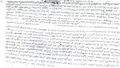
Burdak Bhat Bahi:Page-1
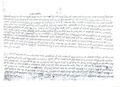
Burdak Bhat Bahi:Page-2
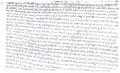
Burdak Bhat Bahi:Page-3
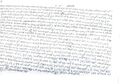
Burdak Bhat Bahi:Page-4
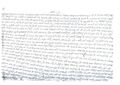
Burdak Bhat Bahi:Page-5
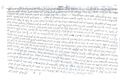
Burdak Bhat Bahi:Page-6
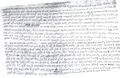
Burdak Bhat Bahi:Page-7


Distribution of Surname Burdak in the world

Burdak surname is found in the countries of Eurasia, Australia and America. Some of the countries where Burdak surname is found are as under:
Afghanistan, America, Australia, Belarus, Bulgaria, Canada, Denmark, Ellis Island, England, Galician, Germany, Hungary, India, Latvia, Lebanon, Lithuania, Moldavia, Poland, Romania, Russia, Slovakia, Turkey, Ukraine, Yugoslavia
The name Burdak has a web popularity of 184,000 pages as on 14.10.2014. As per online source an analysis of Burdak surname is Russia (83), USA (43), Canada (4), Ukraine (3), Australia (3), others (rest). What is the origin of name Burdak? Probably Russia or Ukraine.[58]
Distribution of Burdaks in Rajasthan
Palthana, Mandeta and Gothra (Tagalan) villages in Sikar district are the main villages of Burdaks in Rajasthan. Major concentration of Burdak population is in Danta Ramgarh tahsil in Sikar district in Rajasthan. Presently there are about 400 families of Burdaks in village Gothra (Tagalan) of Sikar district. Many Burdak families moved from Gothra (Tagalan) village to Mandeta village in Sikar district. There are about 400 families of Burdaks in village Mandeta. Palthana village is inhabited with about 250 Burdak families, 50 families in Ghirania Bara.
Village in Alwar district
They write Budak or Burdak in Alwar district. Villages where they live are: Badsu (tah:Kathumar), Dayothana (tah:Kathumar), Dhand (tah:Lachhmangarh), Dhankroli (tah:Kathumar), Dusrahera (tah:Lachhmangarh), Hanumanbas (tah:Lachhmangarh), Nizamnagar (tah:Lachhmangarh), Sajanpara (tah:Kathumar), Soorajgarh (tah:Lachhmangarh), Mohanbas (Tah. Kathumar), Raipur Lachhmangarh Alwar
Locations in Jaipur city
Imliwala Phatak, Indira Nagar, Jhotwara, Kailaspuri, Mokhampura, Murlipura Scheme, Narayan Nagar, Purani Basti, Shanti Nagar, Tejaji ki Bagichi,
Villages in Jaipur district
Akhepura, Biharipura Sawli (6), Datuli (12), Dhamana (4), Gopalpura Mandawri (1), Jekampura, Jhag (50), Junsiya, Keria Khurd (1), Patoori, Rampura, Rampura Malikpura, Sakhoon (40), Sholawata, Surmalikpur, Turkyawas,
Villages in Jhunjhunu district
Burdak inhabited Villages in Jhunjhunu district are:
Badet, Bai Jhunjhunu (2), Bhadunda Khurd (10), Birol (40), Burdak Ki Dhani (Patoda Tain), Chetpura, Dhani Burdakan Kaliyasar, Dhani Burdakan Badet, Kaliyasar, Patusar, Pipal Ka Bas (Bajisar), Rayla Jhunjhunu,
Villages in Tonk district
Aranya Jhadli (2), Bagdi (2), Ghareda (5), Jhadli (2), Kurad (5), Devoli Gaon ,
Villages in Churu district
Villages with number of families in Churu district are:
Balrasar, Beeslan, Bhinchari (1), Khari Khudi (3), Khandwa, Khandwa Patta Peetheesar (15), Loonas, Sulkhania (20), Ratangarh (15), Sujangarh (9), Thathawata (15).
Villages in Sikar district
Akhaipura (अखैपुरा), Aloda, Arjunpura (200), Badagaon (30), Bandha Ki Dhani (Jeenwas) (22), Banuda (11), Bar Ka Charanwas, Bara Gaon, Bhagatpura, Bhagwanpura(Aloda), Bhakharo Ki Dhani, Bharija, Bhauji ki Dhani (1), Bhuma Chhota, Bijarnia Ki Dhani (Khud), Birol, Burdakon Ki Dhani (80)(Bheema), Chachiwad Bara, Chainpura, Chandeli Ka Bas, Chandeli Ki Dhani, Chandpura (100), Chelasi, Chokha Ka Bas (Losal), Danta, Dhani Kharinta, Dheejpura (100), Dhod, Dookia Sikar, Ghirania Bara, Ghirnia Chhota, Gothra (Tagalan) (400), Govati, Gumanpura Ramgarh, Gungara, Guwardi (5), Jajod (Srimadhopur), Jeenwas, Jewli, Jhajhar Sikar (5), Kalyanpura Shekhisar, Karanga Bara, Khachariawas, Khatiwas Sikar, Khatushyamji, Kheri Jajod, Khoor, Khud, Kochhor, Laxmi Pura, Mailasi (200), Mandeta, (400) Mei (30), Mohanpura, Nani, Nashanwa, Nathdwara, Palas, Palthana, Piprali, Raghunathpura Sikar, Rajanpura (10) Rajpura Sikar, Rampura Dhayalan, Ranoli, Rasidpura, Roopgarh, Rulyana Mali, Rulyana Patti, Sangalia, Sankhu, Sanwali, Sarnau, Sarwari, Sawai Laxmanpura (20), Sihot Bari, Sihot Chhoti, Sikar, Sulyawas, Sutot, Teja ki Dhani, Thethalia, Thimoli (10), Tulsirampura, Udaipura (50), Umara (20), Vijaipura (4),
Villages in Nagaur district
Akoda, Asha Ki Dhani (Peepakuri), Baldoo (4), Bhakaron ki Dhani, Bharnava, Bhincharon Ka Bas (Nalot), Bodala Bera, Budsoo (100), Buldakon Ki Dhani (Jhareli), Charanawas, Chitawa Nawa, Dabra (Jhareli), Daudsar, Der Ki Dhani (Jusari), Dodwari Nagaur, Dugoli, Ghatwa Nawa, Girdharipura, Jusari, Kacholiya Nagaur (10), Kalwa, Karwan Ki Dhani (Daudsar), Khojas, Kuriyon Ki Dhani (Borawar), Lalashri (5), Loonoda, Motipura Nagaur, Naurangpura (200), Payali (5), Rampura, Rasal, Ratia Ka Bas (Suratpura Nawa), Saniya, Sardarpura Khurd, Sheshma Ka Bas, Tiloti,
Villages in Rajsamand district
Nathdwara (60),
Villages in Hanumangarh district
Dabli Kalan (डबली कलां) village in Hanumangarh district has majority of Burdak clan with 500 families. Villages with Burdak population are:
Bhairu Chhani (भैरू छानी) (Bhadra), Kurda Chhani (कुरड़ा छानी) (Bhadra), Dabli Kalan (500), Sikrodi,
Villages in Chittorgarh district
Bhootya Khurd (भूत्या खुर्द) (45 f), Dhamana Kapasan,
Villages in Bikaner district
Distribution in Punjab
Khawaja Wardag named Village is in Dera Baba Nanak tahsil in Gurdaspur district in Punjab.
Distribution in Haryana
Villages in Sirsa District
Ding (40),
Villages in Bhiwani District
Alampur Bhiwani (10), Isarwal (12) Lalhana(12),
Villages in Fatehabad District
Dangra (1), Khumber (7), Gorakhpur (20),
Variants of Burdak
Variants of the Burdak surname include:
Bardak, Bardak, Berdak, Bordak, Boldak, Buldak, Burdács, Burdak, Burdák, Burdakas, Burdakevich, Burdakin, Burdakoff, Burdakov, Burdakova, Burdán, Burdáts, Burdavkiné, Burdick, Burdik, Burdok, Burdock, Burjak, Burrak, Burraq, Buryat, Spin Buldak, Buldick, Buldock, Buldok, Vardak
Meaning of Variants of Burdak
India:
Mythological account - Parshurama had destroyed the Kshatriyas and there was no one left. Myth is that one boy was saved by a Jat woman pretending that boy was buried (Bura) and covered (Dhaka) by sand. Hence the name Burdak (Bur=Buried, Dak=Covered). This boy was named Burdak in Hindi. Burdaks descended from him. Burdak clan Jats were included in Chauhans when yajna was performed on Mount Abu.
Italy: - Goku lives in Quartu - We find some interesting content from Italian site[59] Which translates to English as under:
- Once upon a time in the distant planet named Vegeta, it was a battle between Friser and racial Sajan.
- The father of Goku (Burdak) Friser faced, but was killed.
- Friser left alive only three Sajan name: Vegeta, Nappa is Radish.
- Friser had left alive Sajan a baby named Goku.
- Atterrò on earth, in a town named Quartu Sant'Elena.
- It was found from Son Gohan.
- He was trained and educated, Goku became ever stronger allenandosi in various places.
- Then he married in Quartu in the parish of St. Luca. Luke.
- He had a son named Gohan.
- Over the years, Goku had another son, named Gothen.
- Goku over time became increasingly strong, and sfidò against enemies always strongest type: Friser, Cell and the strongest in the series Z Bou Bou, which destroyed all Quartu, but with spheres of dragon ripristinarono everything.
- After so long, allenò with a new friend named Ub.
- To blame Pilaf Goku and have done little back, then Goku with Trunks and Pan left for the area in search of the dragon balls.
Australia: - BURDAK is translation of ANT in NYUNGAR language spoken in parts of Australia. [60]
America: - In America, in the region of OHIO, word Burdak is common as a name of a tree.[61]
Eurasia: - In Eurasia region the word Burdock is most common. Here it is the name of a plant. It has been defined in various dictionaries as under: Hyper dictionary - Pronunciation: 'burdâk Definition: [n] any of several erect biennial herbs of temperate Eurasia having stout tap roots and producing burs.
Webster's 1913 Dictionary - Definition: Bur"dock, n. [Bur + dock the plant.] (Bot.) A genus of coarse biennial herbs ({Lappa}), bearing small burs, which adhere tenaciously to clothes, or to the fur or wool of animals. Note: The common burdock is the {Lappa officinalis}.
Wikipedia - Burdock refers any of a group of perennial flowering plants in the Genus Arctium -- thistles in the Daisy family Asteraceae.
Europe and Asia: - Burdock grows wild throughout most of Europe and Asia where it is noted primarily for its burrs that cling to clothing and hair. The taproot of young burdock plants can be harvested and eaten like parsnip. While generally out of favor in modern European cuisine, it remains popular in Asian cuisine.
Japan: - Edible Burdock is called gobo in Japanese. Plants are cultivated for the slender roots that can grow up to 1 meter long and 2 cm across. Burdock root is very crispy and has a sweet, mild pungent flavor. Immature flower stalks may also be harvested in late spring, before flowers appear; the taste resembles artichoke, to which the burdock is related.
United Kingdom - "Dandelion and Burdock" is a soft drink that has long been popular in the United Kingdom and health food shops sell authentic recipes, but it is not clear whether the cheaper supermarket versions still contain either plant.
- Bardak - Bardak is a Ukrainian word of Turkic origin. Russian - It means disorder, mess; English - glass, Turkish - glass ; drinking glass, Sanskrit - चषकः[62][63] [64]
- Berdak - (Armenian: Բերդակ, Russian: Бердак), a village in Goghtn Region of Armenia, currently included into Ordubad region of Nakhichevan autonomy of Azerbaijan. There was another Berdak village in Turkey in Tunceli Province which was renamed to Pertek. It was known by various names in past: Pertek, Pertag, Pertage, Pertaq, Partage, Pertak, Berdak. Pertag, means "tiny fortress" in Armenian.
- Buldak - Buldak is a Korean dish made from heavily spiced chicken. The term "bul" translates into "fire" in Korean and "dak" means chicken. Also written as Puldak. [65]
- Burdock - Burdock is any of a group of plants of biennial thistles in the genus Arctium, family Asteraceae. Native to the Old World, several species have been widely introduced worldwide.[66]
- Burjak - Burjak is a village in Slovenia. Its latitude and longitude are 46° 28' 31N and 14° 46' 53E. It is situated at an altitude of 842m (2762 feet).[67]

- Burrak - Burrak or Buraq (Arabic: البُراق al-buraaq, meaning lightning; Turkish: Burak), is according to Islamic tradition a creature from the heavens that carried Muhammad from Mecca to heaven and back during the Isra and Miraj (Night Journey), which is the title of one of the chapters of the Koran.[68]
- Burraq - Burraq is a village in Syria. Its other names are Bouraq, Bourâq, Burāq, Bouraa, Al Burak, Burak, Buraq, Burrāq, Bourak. It is at 33°11′6″N, 36°28′47″E at an altitude of 2001 feet.It is one of the towns Syrian Turkmens living at southern Syria.[69]
- Buryat - The Buryats or Buriats, numbering approximately 436,000, are the largest ethnic minority group in Siberia and are mainly concentrated in their homeland, the Buryat Republic, a federal subject of Russia. They are the northernmost major Mongol group.[70]
- Spin Boldak or Spin Buldak - is a town belonging to Kandahar province in southern Afghanistan, right next to the Durand Line border with Pakistan. It is linked by a highway with the city of Kandahar to the north and Chaman in Pakistan to the south. Spin Boldak has the second major port of entry between Afghanistan and Pakistan. It is also a major transporting, shipping and receiving site between the two neighboring countries.[71]
- Wardak - Wardak (Pashto/Persian: وردک, also spelt Vardak) is one of the thirty-four provinces of Afghanistan. It is in the centre of the country. Its capital is Meydan Shahr.
- Burdaka - Turkish, Polish, Italian and Kurdistan surname
- Burdács - Burdács, Burdák, Burdak, Burdák, Burdán, Burdáts, Burdavkiné, are Hungarian surname[72]
- Burdakov - Burdakov, Burdakoff are Russian surnames[73] [74]
- Bordak - The Ellis Island Passenger Arrival Records [75]contains details for more than 24 million passengers and crew who arrived through the Port of New York at Ellis Island between January 1, 1892 and December 31, 1924. Ellis Island Passenger Arrival Records (1892 - 1924) contains names of 17 Bordaks who came from Hungary, Russia, Austria etc.
- Boldak - The Ellis Island Passenger Arrival Records contains details for more than 24 million passengers and crew who arrived through the Port of New York at Ellis Island between January 1, 1892 and December 31, 1924. Ellis Island Passenger Arrival Records (1892 - 1924) contains names of 3 Boldaks who came from Russia.
- Burdak - The Ellis Island Passenger Arrival Records contains details for more than 24 million passengers and crew who arrived through the Port of New York at Ellis Island between January 1, 1892 and December 31, 1924. Ellis Island Passenger Arrival Records (1892 - 1924) contains names of 30 Burdaks who came from Hortalko , Hungary, Germany, Russia, Austria, USA, Poland, Galicia. [76]
- Burak - 'Burak' is the Ukrainian word for beet.
- Burdika - The Buledhi or Burdi tuman derives its name from Boleda in Makran and was long the ruling race till ousted by the Gichki. It is also found in the Burdika tract on the Indus, in Upper Sindh and in Kachhi. [77]
Gallery of Burdaks
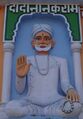
Nanak Burdak (1259-1319)
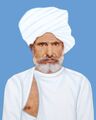
Hari Singh Burdak (1884-1966)
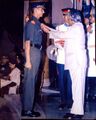
Arvind Kumar Burdak receiving Saurya Chakra
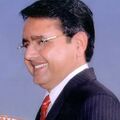
Mahavir Prasad Burdak,
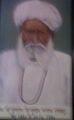
Luna Ram Burdak, Bharnawa
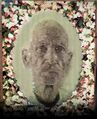
Mali Ram Burdak, Ratangarh
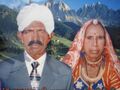
Smt & Sh.Ladu Ram Burdak (1918-1996), Thathawata
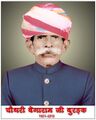
Bega Ram Burdak (1921-2012), Thathawata
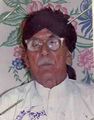
Gulab Singh Burrak (1916-2007), INA
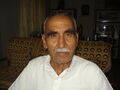
Jagan Sinh Burrak, Lalhana


Gallery of Burdak Monuments
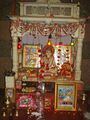
Gusainji statue temple Gothra Tagalan
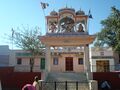
Gusainji temple Dwar Gothra Tagalan
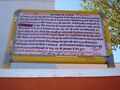
गोठड़ा तगालान स्थित गुसाईंजी मंदिर पर लगाया गया सूचना पटल


Notable persons
- Boudica (60 AD) was a queen of the British Celtic Iceni Kingdom in England who led an uprising against the occupying forces of the Roman Empire in AD 60-61. She is considered a British folk hero.
- Rao Burdakdeo (b.-d.1000 AD) - Rao Burdakdeo went to Lahore to help Raja Jai Pal. He died in war in V.S. 1057 (1000 AD) and his wife Tejal of gotra Shekwal became sati in Dadrewa. Her chhatri was built on the site of Dadrewa pond in samvat 1058 (1001 AD).
- Samudra Pal (b.-d.1010 AD) - Rao Burdakdeo’s elder son Samudra Pal, who went to Vaihind near Peshawar in Pakistan to help Raja Anand Pal and was killed there in war. Samudra Pal’s wife Punyani became sati in samvat 1067 (1010 AD) at Sambhar.
- Kunwar Padam Singh (b.-d.1258 AD) - Burdak Jat ruler of Sarnau in Sikar district in Rajasthan.
- Kunwar Jag Singh Burdak (b.-d.1258 AD) - Who fought wars with Momraj Dhaka at Sarnau.
- Nanak Ji Burdak (1259-1319) - The sole survivor and epi-person of all Burdaks
- Laxman Ram Burdak - IFS (Retd.), Madhya Pradesh, 1980, Wiki Moderator. Founder President Teja Foundation, Residence: 28 New Colony, Khatipura Bridge, Jhotwara, Jaipur, Rajasthan. Mob:9826092101, 9680066814. Bhopal Address: A-504, Shree Krishna Heights, 80 Feet Road, Katara Hills, Barrai, Bhopal- (M.P.) 462043
- Harji Ram Burdak (15.7.1931-19.12.2013) - Ex. Cabinet Minister, Govt. of Rajasthan
- Narayan Singh Burdak - Ex. Cabinet Minister ,Govt.of Rajasthan and RPCC President, Rajasthan
- Shyobaks Ram Burdak - Father of Hari Singh Burdak, Palthana
- Hari Singh Burdak (1884-1966) - Freedom fighter
- Hardeva Singh Burdak - Freedom fighter and leader of Shekhawati farmers movement
- Dhanna Ram Burdak - Freedom fighter and leader of Shekhawati farmers movement, one of panch of Sikar Jat Panchayat, his sister was married to Ishwar Singh Bhamu of Bhairupura, who gathered women and struggled with thikanedars of Sikar.
- Chandra Singh Palthana (Burdak) (चन्द्र सिंह पलथाना) - शेखावाटी किसान आन्दोलन के नेता
- Khaman Singh Palthana (Burdak) (खमाण सिंह पलथाना) - शेखावाटी किसान आन्दोलन के नेता
- Narayan Singh Burdak Palthana - Freedom fighter
- Panne Singh Burdak (चौधरी पन्नेसिंह) from village Palthana (Sikar), was a leading Freedom fighter who took part in Shekhawati farmers movement in Rajasthan.
- Jagan Singh Burdak (चौधरी जगन सिंह), from village Palthana (Sikar), was a leading Freedom fighter who took part in Shekhawati farmers movement in Rajasthan.
- Jagan Singh Burdak (चौधरी रामू जी), from village Palthana (Sikar), was a leading Freedom fighter who took part in Shekhawati farmers movement in Rajasthan.
- Teja Ram Burdak - S/O Uda Ram, He was freedom fighter. He had a title of '23 Rai' awarded by Jat Panchayat Sikar. He was imprisoned many times. His eldest son Hardeva Singh Burdak] was also freedom fighter. Hardev Singh's younger brother Narayan Singh Burdak father of Keshardev was also freedom fighter. Youngest son Nop Ram was also freedom fighter. He was sarpanch of Palthana for about 28 years. Vidyadhar son of Nop Ram is AAO in Housing Board Jaipur.
- Pema Ram Burdak - Freedom fighter
- Birda Ram Burdak - Freedom fighter
- Hari Singh Burdak Pathana (चौधरी हरीसिंह जी), another Hari Singh, from village Palthana (Sikar), was a leading Freedom fighter who took part in Shekhawati farmers movement in Rajasthan.
- Ganpati Ram Burdak (born:1913) (चौधरी गणपतिराम जी बुरड़क]]), from Palthana (Sikar), was a leading Freedom fighter who took part in Shekhawati farmers movement in Rajasthan. [78]
- Keshardev Burdak - Yoga Guru, Teacher Govt Sec. School Bandiawas Sikar, State Auditor Patanjali Yoga Samiti Rajasthan, Secretary Scout Guide Sikar, DOB: 1.8.1959. Son of Narayan Singh Burdak Palthana S/O Teja Ram Burdak S/O Uda Ram S/O Rattu Ram . Mob: 9460168530
- Baldeva Ram Burdak- Freedom fighter
- Dhir Singh Bardak, IFS, Haryana, 1978
- Kailash Chaudhary (Burdak) - Social worker, Born at Nathdwara district Rajsamand.
- Tiloka Ram Burdak - Freedom fighter and social worker from village Guleriya (Sujangarh) Churu,Rajasthan.
- Shiv Karan Burdak, Rajsamand, Rajasthan
- Late Sh. Subhash Burdak - (d. 3 March 2001), was a martyr of militancy
- Gangadhar Burdak - Associated with Jat Mahasabha Sikar. His role in awakening and uniting Jats of the area was highly appreciated.[79]
- Nunda Ram Burdak - Martyr of Operation Pawan with LTTE
- Ishwar Singh Burdak - Convener Jat Officers' Social Forum Rajasthan
- Shrawan Kumar Burdak - Social worker, Phone-01576-220265, Mob:9899219610
- Mr. Ganesh Ram Khoji (Burdak) - A famous person of village Sakhoon in Dudu Tehsil, Jaipur. He bears the title of Dairy President of Jaipur Dairy (Saras Dairy) of Rajasthan Co-oprative Dairy Fedration Ltd.
- Narendra Singh Choudhary (Burdak) - Head Ice cream & Dahi at Dudhmansagar Dairy Manesar (AMUL).
- Pratap Singh Jat (Burdak) - Managing Director in Ajmer Vidyut Vitran Nigam Ltd. Ajmer, Rajasthan.
- Ganesh Ram Burdak (Forest) - ACF,9413141990. VPO - Lalashri, Teh.- Didwana, Distt.- Nagaur. Present address: 38-C, Giriraj Vihar, Vaishali Nagar, Jaipur.
- Mahaveer Prasad Burdak - IAS, Address: 47, Sachivalay Vihar, near RIICO Kanta, New Sanganer Road, Mansarovar, Jaipur-302020, Joint Secretary, Law &Legal Affiars Department, Govt of Rajasthan. Date of Birth : 7.10.1966. VPO - Piparali, Distt.- Sikar, Resi Phone : 0141-2394786, Mob: 9461046911, Email: burdakmp@gmail.com
- Arvind K. Burdak - AEN, Address: 47, Sachivalay Vihar, near RIICO Kanta, New Sanganer Road, Mansarovar, Jaipur-302020, AEN, Rajasthan Vidhyut Prasaran Nigam, Date of Birth: 1.01.1994. VPO - Piparali, Distt.- Sikar, Resi Phone : 0141-2394786
- Mahendra Kumar Burdak - A. En. Irrigation Deptt. Date of Birth : 10-March-1967. V&PO- Palthana ,Distt.- Sikar. Present Address : Jyoti Nagar, Piprali Road,Sikar, Resident Phone Number : 01572-228010, Mobile Number : 9461536105, Email Address :mahendrakr_burdak@yahoo.com
- Sukhdeo Singh Burdak - Associate Professor Rajastjan Agri. University, Udaipur, Date of Birth : 15-September-1957. Village.- Bhauji ki Dhani, PO- Batranau, Sikar, Present Address : (a)32-A, Narayan Nagar, Tonk Road, Jaipur (b)E-25, University Quarters, Durga Nursery Road, Udaipur,(Rajasthan), Resident Phone Number : 0294 -2413211, Mobile Number : 9414808151, Email Address : burarkss@rediffmail.com
- Anand Behari Burdak - Manager (Retd.) RBI, Present Address : D-699, Malviya Nagar, Jaipur, Phone: 0141-2547598, Mob: 9887805067. Originally came about 10 generations back from village Jhag Majad in Jaipur district.
- Gulab Singh Burrak (1916-2007) - From village Lalhana, PO: Golagarh, District:Bhiwani, Haryana. He was freedom fighter. His son Jagan Singh Burrak Retd. Subedar (Mob:09255346158), Born:29.9.1938, Presently residing at H.No. 3057, Sector-13, Bhiwani, Haryana.
- Jagan Singh Burrak (Born:29.9.1938) - Gulab Singh Burrak's son is Retd. Subedar (Mob:09255346158), who is presently residing at H.No. 3057, Sector-13, Bhiwani, Haryana.
- Dhanraj Burdak - MBBS & his father late shahid Nunda Ram Burdak was martyr in Shri Lanka against LTTE. His statue was installed on 28 April 2013. He belongs to village Chitawa Nawa of Nagaur.
- Rakesh Burdak - Businessman
- Sunita Burdak - RAS (2012), from Palthana (Sikar) [80]
- Rita Singh Burdak - Ex. Pradhan Sikar District, Mob:9929872861, Res: 01572-250003
- Ramjas Burdak - From Dabli Kalan, Rawatsar, Hanumangarh, Social worker, Parshad Nagarpalika Rawatsar, Mob: 9414535354
- Chandan Singh Burdak - Executive, Honda Motors, Gurgaon, from Rampura Malikpura, Phulera, Jaipur
- Richhpal Singh Burdak - RAS, DOB: 07/03/1968, PR:12, SUB-DIVISIONAL OFFICER, PIPADCITY (JODHPUR)

- Dev Karan Burdak (d.19.02.2023) (Naib Subedar) became martyr on 19.02.2023 in Kargil area of Jammu and Kashmir. He was from Dhani Burdakan Kaliyasar village in Jhunjhunu tahsil in Jhunjhunu district of Rajasthan. Unit: 15 Jat Regiment.
- Rajendra Kumar Burdak - RPS (2016) (70th Rank), from village Sawai Laxmanpura, Fatehpur tahsil of Sikar district in Rajasthan.
- Mool Singh Burdak - Compounder (Retd), Mob: 9413280905. His sons Richhpal Singh (Burdak), Santosh Chaudhary, MANIT, Daughter: Sushila Chaudhary, SK College Sikar. Resident :Birol, Nawalgarh, Jhunjhunu
- Vijaypal Singh Burdak - J.En, AVVNL, Date of Birth : 1-March-1976. Village- Birol, teh.- Nawalgarh, distt.- Sikar , Rajasthan, Present Address : Choudhary Colony, Nawalgarh Road, Sikar, Phone: 01572-271355, Mobile: 9414467667. Resident :Birol, Nawalgarh, Jhunjhunu
- Richhpal Singh (Burdak) - SE, Shiksha Sankul, Electricity Depptt, Date of Birth : 5-January-1972, Village- Birol, teh.- Nawalgarh, distt.- Sikar , Rajasthan, Present Address : 94, Chandrakala Colony, Near Hotel Clarks, Durgapura, Jaipur, Phone: 01572-271355, Mob: 9414141409, Email : richhpal72@gmail.com. Resident :Birol, Nawalgarh, Jhunjhunu
Out of India: It is not known if they have any linkage with Indian Burdaks
- Burak Hajib: A Khitan who founded a dynasty in the southern Persian province of Kirman the early 13th century.
- Abdul Rahim Wardak - General Abdul Rahim Wardak (عبدالرحیم وردگ) (born: in 1940, Wardak, Afghanistan) is the Defense Minister of Afghanistan. He is an ethnic Pashtun from the Wardak province. See at http://en.wikipedia.org/wiki/Abdul_Rahim_Wardak
- Dr Zbigniew Burdak - Katedra Zastosowań Matematyki, ul. Balicka 253c, 30-198 Kraków, tel. (12) 662 45 74 lub sekretariat (12) 662 40 21, e-mail:rmburdak@cyf-kr.edu.pl
- Nadine Burdak - Marketing Manager/Designer, Toronto, Ontario, Canada.
- Małgorzata Burdak - Talent Acquisition Specialist for Bristol-Myers Squibb at Alexander Mann Solutions, Gdansk, Pomeranian District, Poland
- Kevin A. Burdak - Director Sales, Large New Enterprise at CA Technologies, Detroit, Michigan, Information Technology and Services
- Sara Burdak - Senior Director of Education and Audiology; Starkey Hearing Technologies, Victoria, MN
- Pamela Burdak - Trainer in San Francisco, California
- Ania Burdak, Sambir, Ukraine
- Ivan Burdak - Prominent diplomat in Ukraine
See also
- Badak
- Barak River
- Sarnau
- Burdak Gotra Ka Itihas - Burdak history in Hindi
- Bardak Siah Palace - A palace in Iran
- Wardak - About inscription of Wardak near Kabul of the year 51 of Saka era and Wardak people of Afghanistan.
- Warada - A village in Sirohi tahsil in Rajasthan.
- Budhaka - A village in Aligarh district, Khair tahsil.
- Bardeke - A village in Ludhiana district, Jagraon Tahsil.
- Burdikarka - A Village in Dantewada tahsil & district in Chhattisgarh.
- Rajor - Rajor Inscription of V.S. 1016 (960 AD)
- Warakshe
- Budjak or Budzhak - a historical region in the Odessa Oblast (province) of Ukraine.
External links
- http://www.genealogy.com/users/b/u/r/Laxman-Burdak/
- http://en.wikipedia.org/wiki/Burdak
- Research on Burdak clan history discussed on Jatland
- Analysis of Burdak surname
References
- ↑ O.S.Tugania:Jat Samuday ke Pramukh Adhar Bindu, p.53, s.n. 1801
- ↑ O.S.Tugania:Jat Samuday ke Pramukh Adhar Bindu, p.53, s.n. 18001
- ↑ O.S.Tugania:Jat Samuday ke Pramukh Adhar Bindu, p.53, s.n. 1801
- ↑ Jat History Dalip Singh Ahlawat/Parishisht-I, s.n. व-29
- ↑ O.S.Tugania:Jat Samuday ke Pramukh Adhar Bindu, p.53, s.n. 1801
- ↑ Mahendra Singh Arya et al: Adhunik Jat Itihas, p. 269
- ↑ Bhaleram Beniwal:Jāton kā Ādikālīn Itihāsa, Jaypal Agencies, Agra 2005, pp. 135-136
- ↑ Ompal Singh Tugania: Chauhanvanshi Lakra Jaton ka Itihas, Jaypal Agencies, Agra. Ch 32
- ↑ Records of Rao Bhawani Singh (Mob:09785459386), village Maheshwash, tahsil Phulera, district Jaipur, Rajasthan.
- ↑ कपर्दिने करालाय हर्यक्ष्णे वरदाय च | त्र्यक्ष्णे पूष्णॊ दन्तभिदे वामनाय शिवाय च (XIV.8.13), (XIV.8) पिनाकिनं महादेवं महायॊगिनम अव्ययम | त्रिशूलपाणिं वरदं त्रयम्बकं भुवनेश्वरम (XIV.8.25), (XIV.8)
- ↑ The Ancient Geography of India/Kabul,pp. 32-33
- ↑ 'Ariana Antiqua,' p. 176.
- ↑ Personal and geographical names in the Gupta inscriptions/Names of Local Officers,p.64
- ↑ Natural History by Pliny Book VI/Chapter 18
- ↑ Natural History by Pliny Book VI/Chapter 21
- ↑ "The name al-ʿIrāq, for all its Arabic appearance, is derived from Middle Persian erāq 'lowlands'" W. Eilers (1983), "Iran and Mesopotamia" in E. Yarshater, The Cambridge History of Iran, vol. 3, Cambridge: Cambridge University Press.
- ↑ Bhim Singh Dahiya, Jats the Ancient Rulers, p. 127
- ↑ Buddha Prakash, Studies in Indian History and Civilisations, P. 35
- ↑ Journal Asiatique, 1926 , pp.11-13
- ↑ Bhim Singh Dahiya, Jats the Ancient Rulers, p. 135
- ↑ Archaeology news about Bardak Siah of Iran
- ↑ Parthian stations
- ↑ Parthian stations
- ↑ डॉ. गोपीनाथ शर्मा, राजस्थान के इतिहास के स्त्रोत, 1983 , पृ.44, Epigraphia Indica, Vol.26, p.120 सिद्धं कृतेहि चैत्र शुक्लपक्षस्य पंचदशी सोहर्त सगोत्तस्य (राज्ञो) पुत्रस्य (राज्ञो) वर्धनस्य यूपसत्त को प्रण्य वर्द्धकं भवतु
- ↑ RC Majumdar: An Advanced History of India, Page 116, ISBN 0333 90298 X
- ↑ Bhim Singh Dahiya:"Jats The Ancient Rulers", p.41
- ↑ The Ancient Geography of India/Kabul,pp. 32-39
- ↑ 'Ariana Antiqua,' p. 176.
- ↑ 'Hiouen Thsang,' iii. 416.
- ↑ Kabul; i. 160.
- ↑ ' Travels,' ii. 223.
- ↑ ' Ghazni,' p. 140.
- ↑ [http://www.archive.org/stream/bhilsatopesorbud00cunn#page/238/mode/2up The Bhilsa topes: Inscriptions, P. 239
- ↑ Tej Ram sharma: Personal and geographical names in the Gupta inscriptions, pp.249
- ↑ Indian Historical Quarterly, Calcutta.VI,p.63; Select Inscriptions by D. C. Sircar. p. 340
- ↑ Tej Ram sharma: Personal and geographical names in the Gupta inscriptions, pp.299-300
- ↑ L-34:समनं[तर*]मत्रावलिख्यते ।महाराजाधिराजश्रीसिंहराज: स्वभोगैरनद्ध यूकद्दादशके सिंहप्रौष्ठं । तथा पट्टबड़क विषये च एकलक-कृशानूकूप-उरुसर: कोह विषये
- ↑ L-37: वाप्तपट्टबड़कविषयोदर्ककथनं [कृत्व*]ा संख्यान- स्वहस्तांकितशास नौ गृ[हीत उ]दके पाटकद्दयपल्लिकाग्रामौ भक्तया वितेरतु:।
- ↑ James Todd Annals/Personal Narrative, Vol.II, pp.625-626
- ↑ A.L. Batham, The Wonders that was India, 1967, p. 47
- ↑ A.L. Batham, The Wonders that was India, 1967, p. 47
- ↑ Alexander Cunningham, The Stupa of Bharhut : A Buddhist Monument Ornamented with Numerous Sculptures Illustrative of Buddhist Legend and History in the Third Century B.C. Reprint. First published in 1879, London. 1998
- ↑ Abha Singh, Bharhut Stoopa Gatha (Hindi), Ed. Ramnarayan Singh Rana, Satna, 2007, p. 119
- ↑ Dr Bhagwandas Safadia, Bharhut Stoopa Gatha (Hindi), Ed. Ramnarayan Singh Rana, Satna, 2007, p. 89
- ↑
- वरदाम् च महाभागाम् महोरग निषेविताम् ।
- मेखलान् उत्कलाम् चैव दशार्ण नगराणि अपि ॥४-४१-९॥
- अब्रवंतीम् अवंतीम् च सर्वम् एव अनुपश्यत ।
- विदर्भान् ऋष्टिकान् चैव रम्यान् माहिषकान् अपि ॥४-४१-१०॥
- ↑
- ऐण्डिलः कुण्डलॊ मुण्डॊ वेणि सकन्धः कुमारकः
- बाहुकः शृङ्गवेगश च धूर्तकः पातपातरौ Mahabharata (1.57.12)
- ↑
- अन्ध्राश च बहवॊ राजन्न अन्तर्गिर्यास तदैव च
- बहिर्गिर्य आङ्गमलदा मागधा मानवर्जकाः (VI. 10.48)
- ↑
- ↑
- पुत्र मेषः परवाहश च तदा नन्दॊपनन्दकौ
- धूम्रः शवेतः कलिङ्गश च सिद्धार्दॊ वरदस तदा (IX.44.59)
- ↑ Mahendra Singh Arya et al: Adhunik Jat Itihas, p. 269
- ↑ Encyclopedea of Archives (Ghos Memorial) Volume 11 page 733
- ↑ Rajatarangini of Kalhana:Kings of Kashmira/Book VII,p.172
- ↑ Kings of Kashmira Vol 2 (Rajatarangini of Kalhana)/Preface,pp. xxvi-xxvii
- ↑ http://en.wikipedia.org/wiki/Jai_pal
- ↑ A glossary of the Tribes and Castes of the Punjab and North-West Frontier Province By H.A. Rose Vol II/D, p.221
- ↑ Bahi of Rao Bhawani Singh
- ↑ Bahi of Badwa Bhawani Singh Rao of village Maheswas, tahsil Phulera, district Jaipur, Rajasthan, Mob:09785459386
- ↑ Burdak - details and analysis
- ↑ http://www.lucaoggianu.it/s2k/giua1/goku.htm
- ↑ http://en.wiktionary.org/wiki/Ant
- ↑ http://Socioto.org/Ross/article/ohio-infair.html
- ↑ Etymology of Bardak
- ↑ http://en.wikipedia.org/wiki/List_of_Ukrainian_words_of_Turkic_origin
- ↑ http://en.wiktionary.org/wiki/bardak
- ↑ http://en.wikipedia.org/wiki/Buldak
- ↑ http://en.wikipedia.org/wiki/Burdock
- ↑ http://en.wikipedia.org/wiki/Burjak
- ↑ http://en.wikipedia.org/wiki/Burrak
- ↑ http://en.wikipedia.org/wiki/Burraq
- ↑ http://en.wikipedia.org/wiki/Buryats
- ↑ http://en.wikipedia.org/wiki/Spin_Buldak
- ↑ http://www.jatland.com/forums/showpost.php?p=38868&postcount=23
- ↑ http://feefhs.org/blitz/frgblitz.html
- ↑ http://www.jatland.com/forums/showpost.php?p=38868&postcount=23
- ↑ http://www.ellisisland.org/
- ↑ http://www.ellisisland.org/search/matchMore.asp?LNM=BURDAK&PLNM=BURDAK&first_kind=1&kind=exact&offset=0&dwpdone=1
- ↑ A glossary of the Tribes and Castes of the Punjab and North-West Frontier Province By H.A. Rose Vol II/B,p.46
- ↑ Thakur Deshraj:Jat Jan Sewak, 1949, p.313
- ↑ Jat Samaj: Agra, December 2008, p.93
- ↑ Jat Gatha, September-2015,p. 15
Back to Jat Gotras /
- Jat Gotras
- Rajasthan
- Haryana
- Punjab
- Madhya Pradesh
- Gotras in Churu
- Gotras in Bikaner
- Gotras in Jaipur
- Gotras in Sikar
- Gotras in Nagaur
- Gotras in Rajsamand
- Gotras in Hanumangarh
- Gotras in Chittorgarh
- Gotras in Sirsa
- Gotras in Gurdaspur
- Ancient Jat Gotras
- The Mahabharata Tribes
- The Ancient Jats
- Chauhan History
- Jat History
- Jat Kingdoms in Ancient India
- Shivagotri
- Shiva
- Genealogy
- Bard History